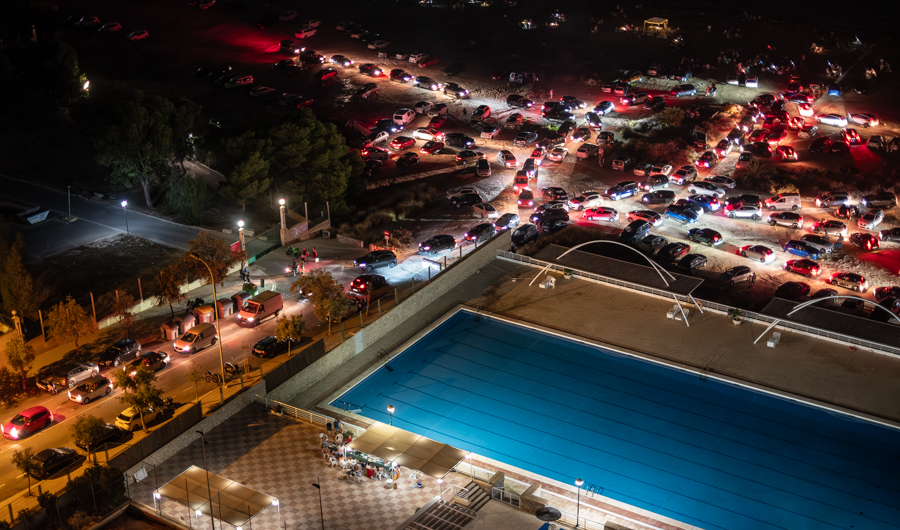
The week leading up to San Juan, 24th June, is a week-long orgy of festivities and fireworks in Alicante. All over the city, large installations called Hogueras (same as the name of the holiday) are set up for a few days, only to be burned at midnight on the 24th. I generally avoid the city in the evening during that week, but I did stop by the centre on my home from work one day, and I also went there on the 24th in the afternoon to have a look.
Even after the big event, festivities continue for a couple of days, with fireworks displays over the city every day at midnight. This year, we got together at a friend’s 17th floor apartment to have a good view.
26_1
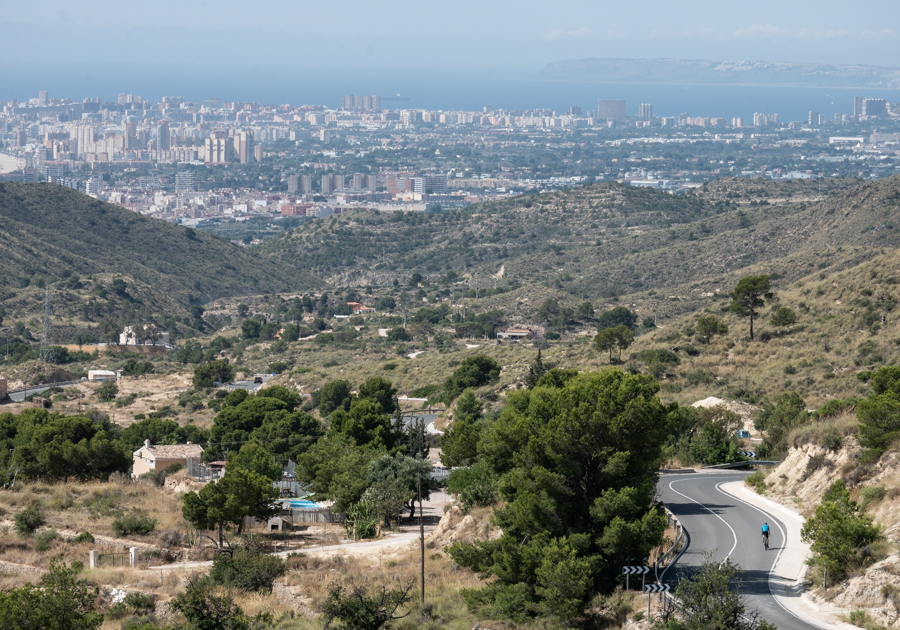
Of course I also cycled every morning, enjoying views like this on my way back:
26_2
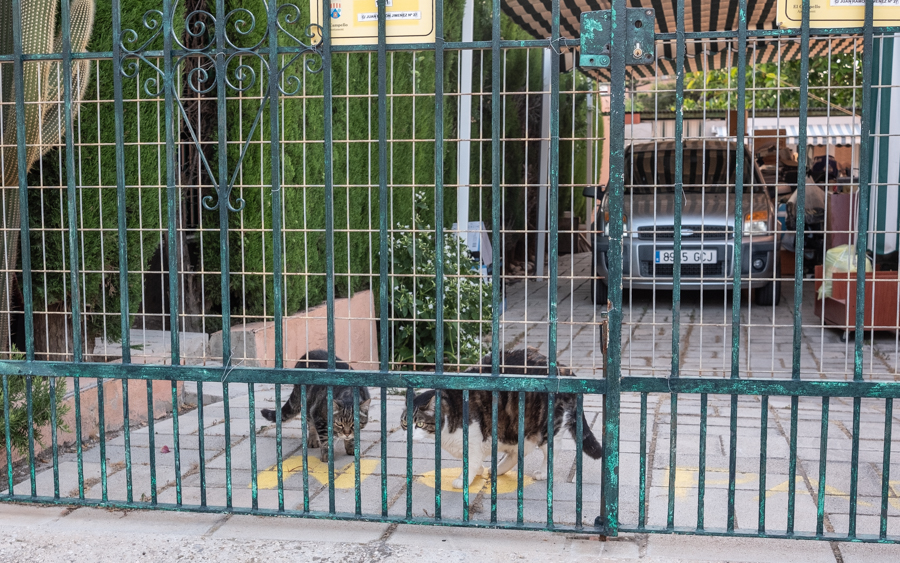
An image from a morning walk with Mochi. Some people have guard dogs, this house has guard cats:
26_3
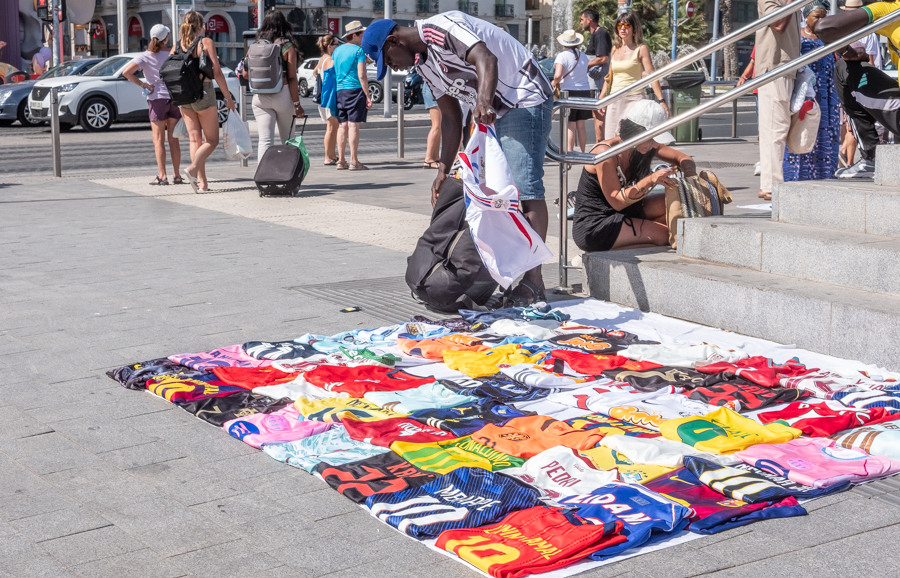
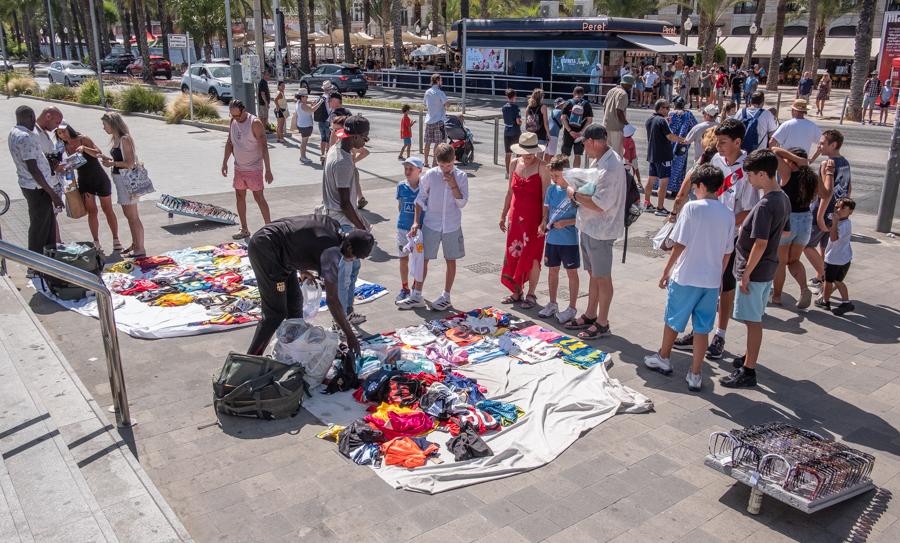
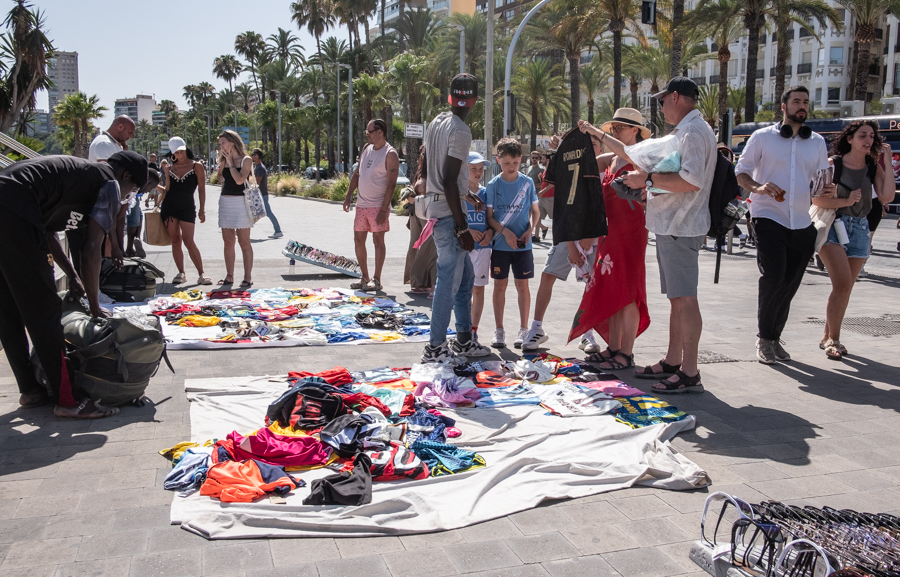
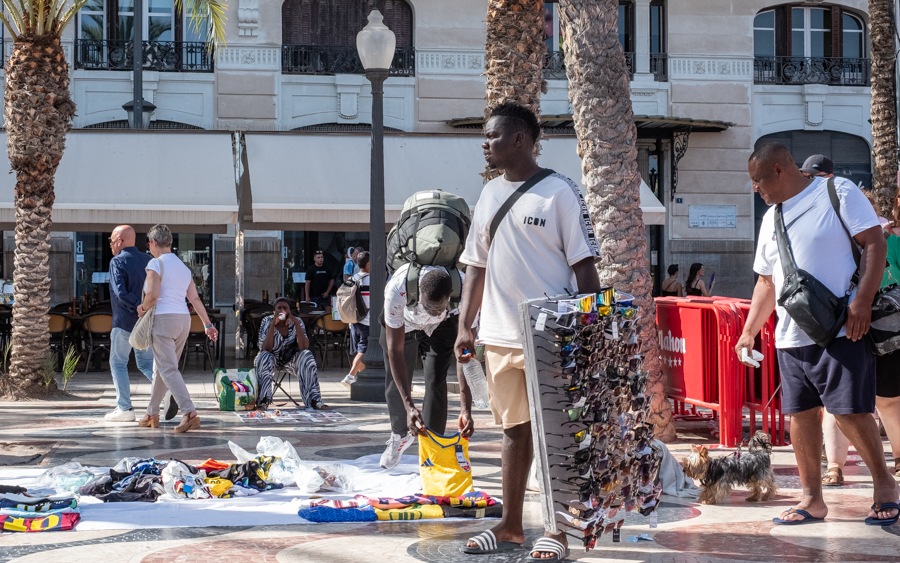
Now to my walks in the centre. On the 24th I drove to the square Plaza Puerta del Mar at one end of the seafront promenade, close to Alicante’s city hall. I parked in the underground car park and set out to explore on foot. On the Esplanada de España, the African sellers of fake football shirts, designer sunglasses and similar wares were doing brisk business. From time to time the police chase them away, but invariably they return:
26_4
26_5
26_6
26_7
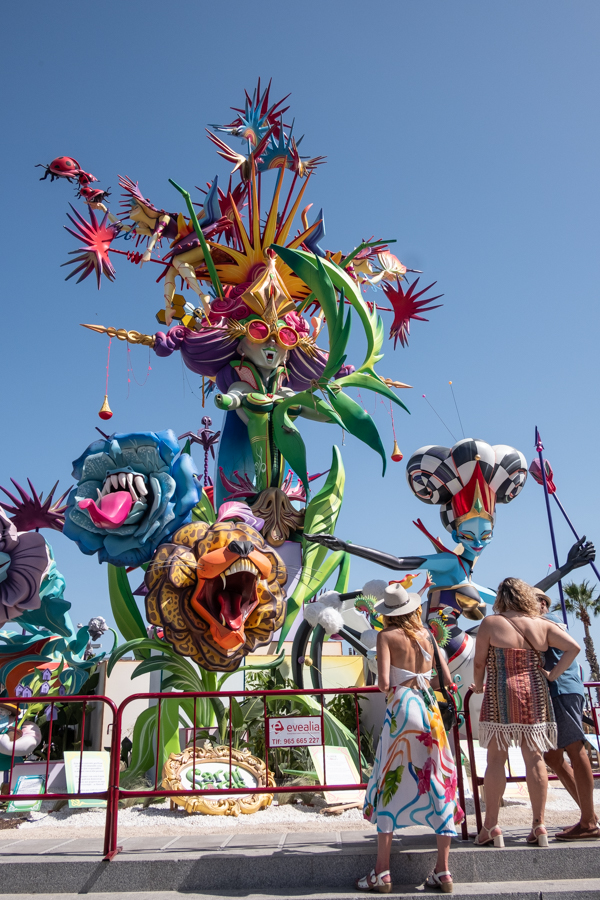
The first Hoguera I looked at was on Plaza Puerta del Mar:
26_8
It was a bit difficult to discern an overall theme, but here food seems to be the subject:
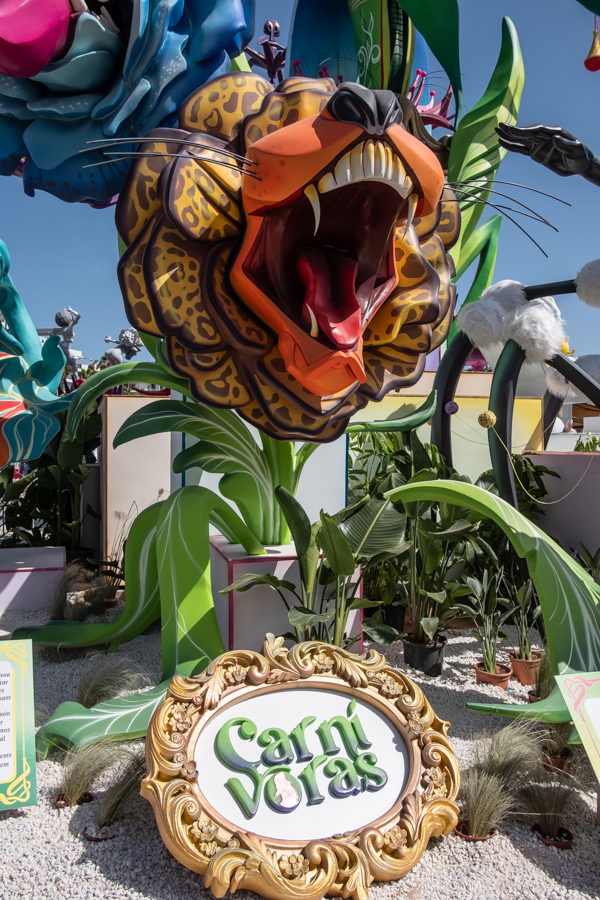
26_9
Across the street, on the Esplanada there was another Hoguera:
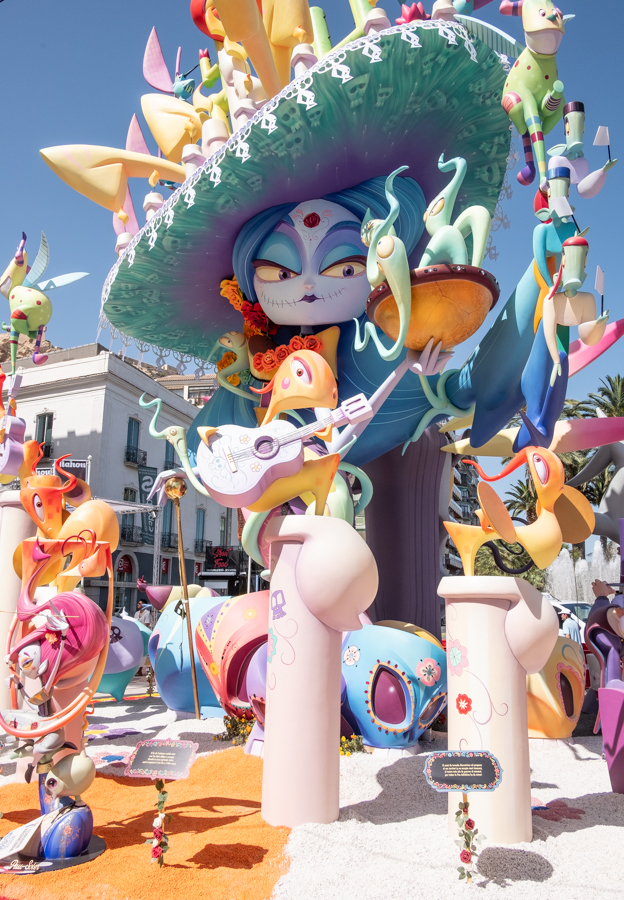
26_10
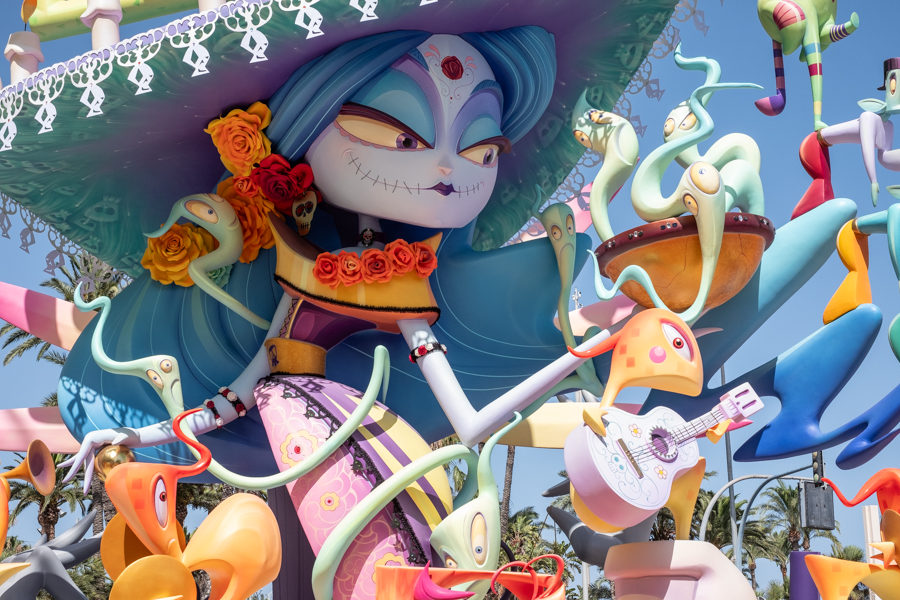
26_11
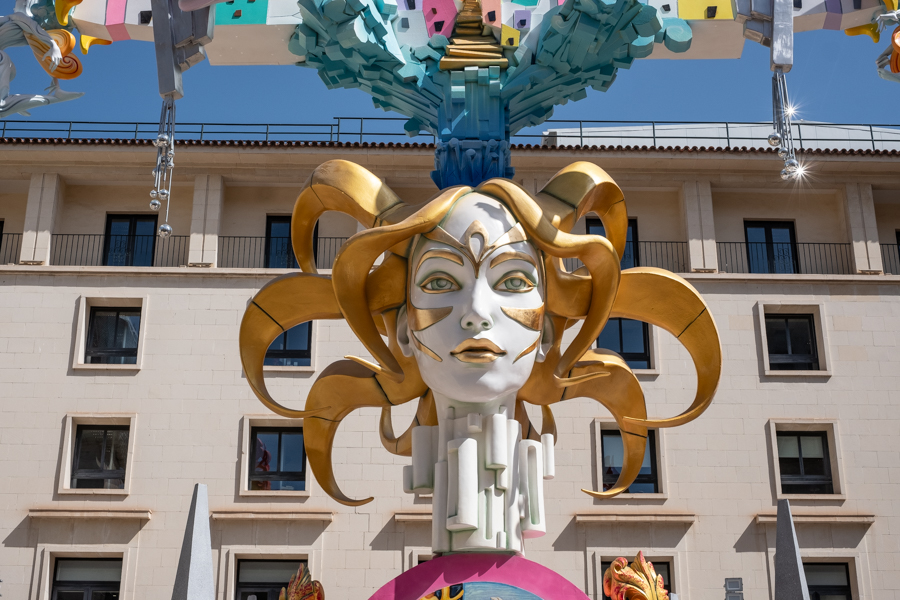
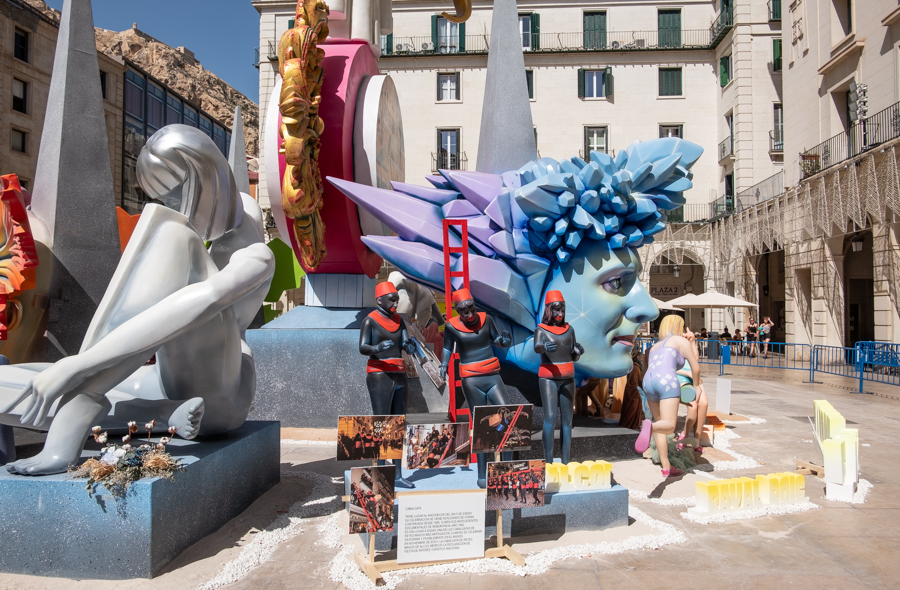
On the Plaza del Ayuntamiento (city hall square) is what one considers the main “official” Hoguera of Alicante:
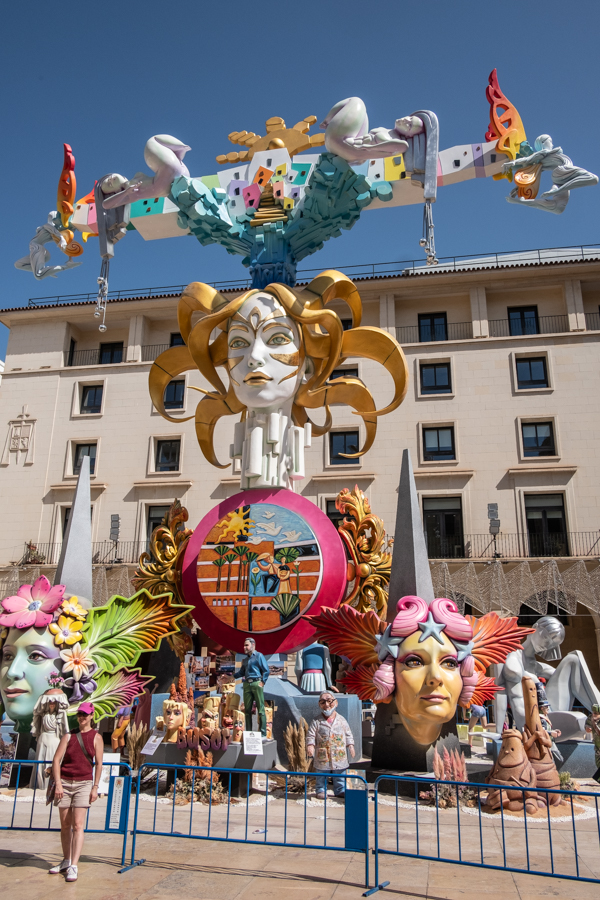
26_12
26_13
26_14
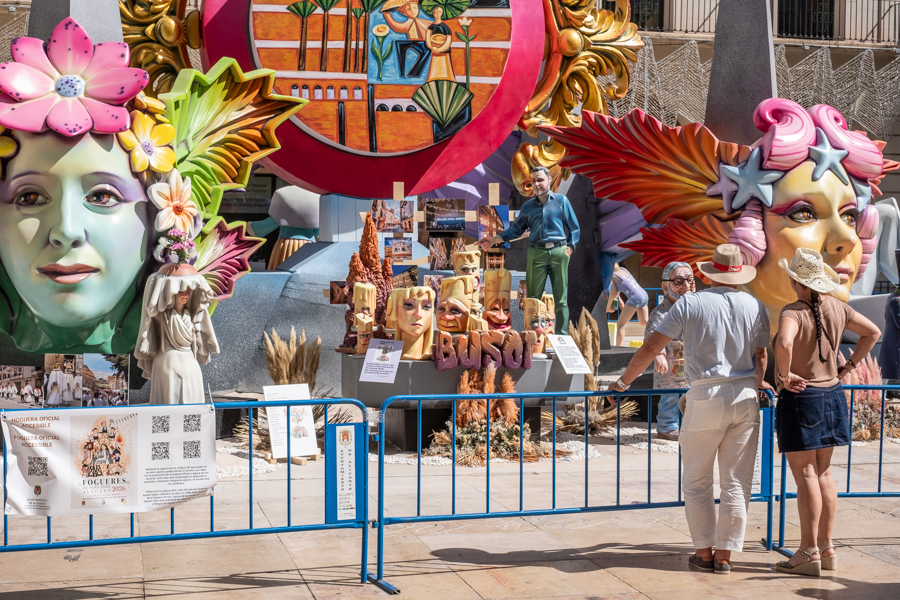
People come and look at the Hogueras–this is the last chance before they are burned at midnight:
26_15
The city hall Hoguera focused on the surrounding towns, including one of my cycling destinations Busot:

26_16
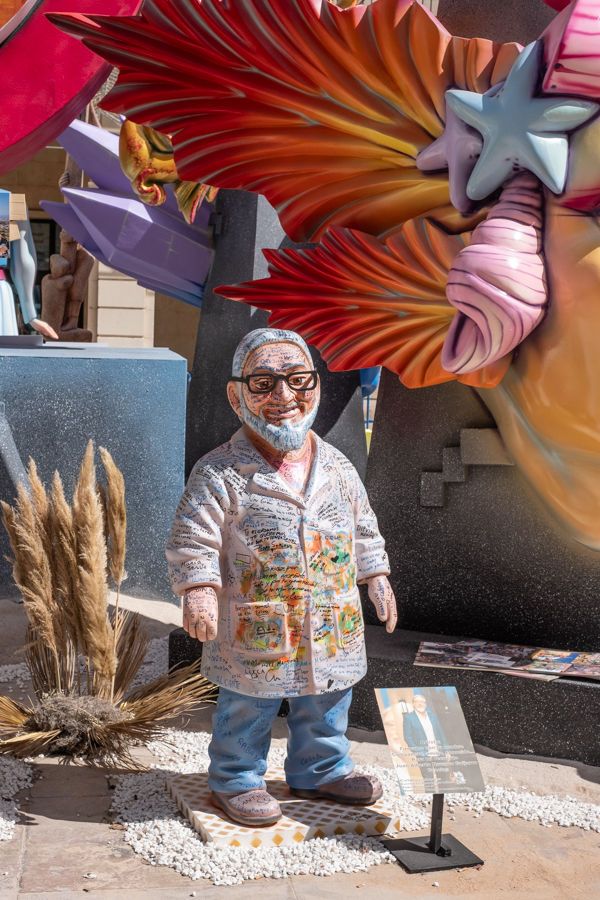
Not sure what the scientist is doing here:
26_17
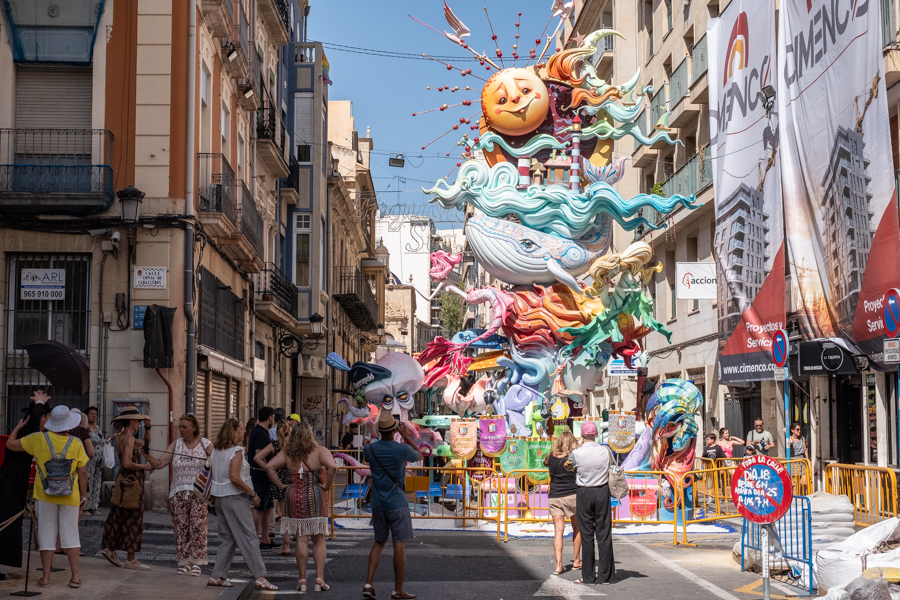
Just down the street from city hall there is another Hoguera on Calle Jorge Juan:
26_18
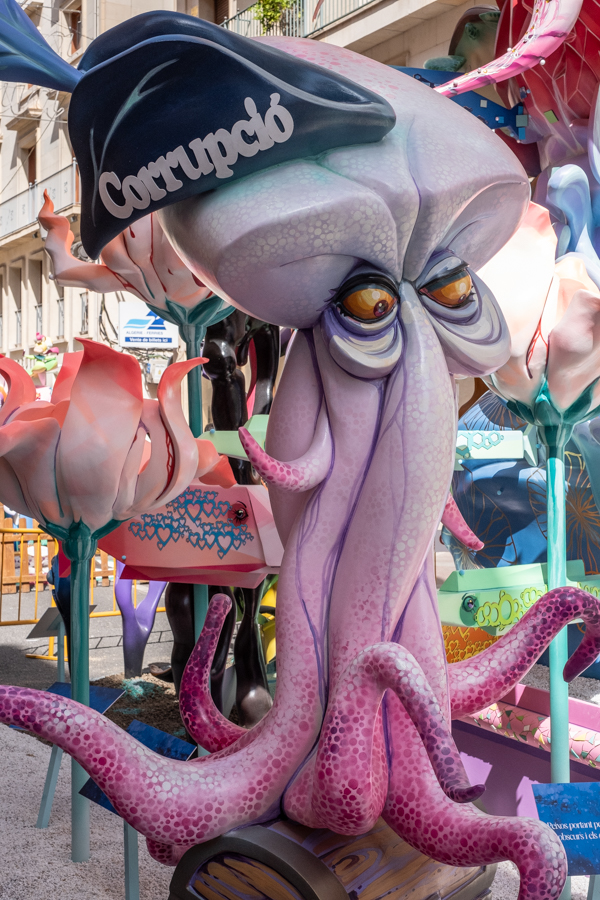
As opposed to the “official” Hoguera which is pretty bland, the neighbourhood installations tend to be more edgy and political:
26_19
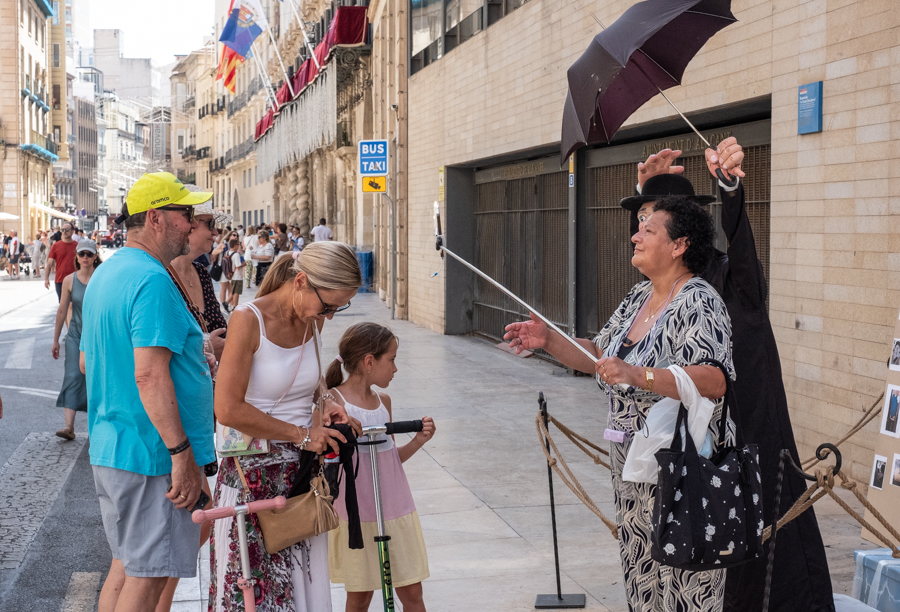
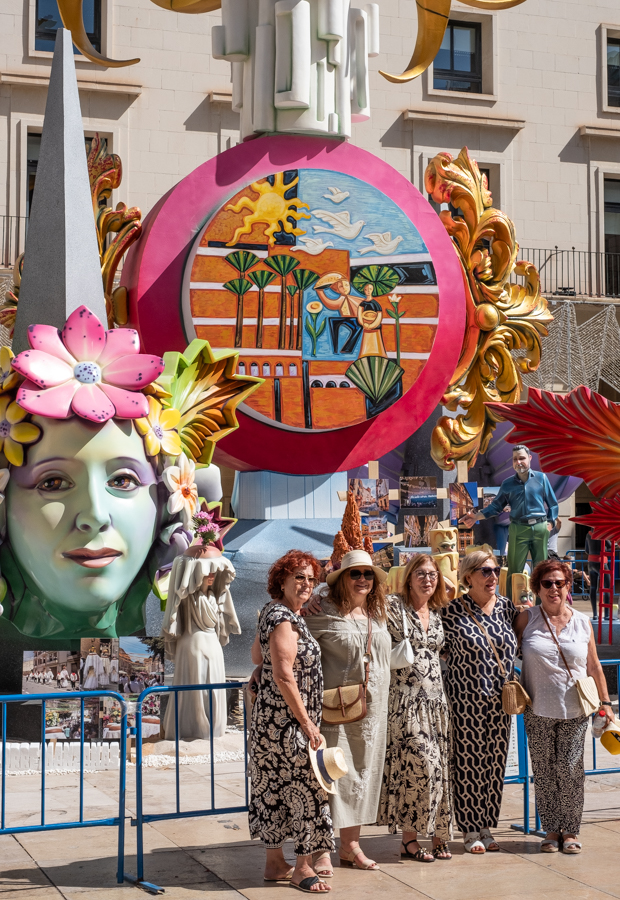
Lots of photos were being taken, including many selfies:
26_20
26_21
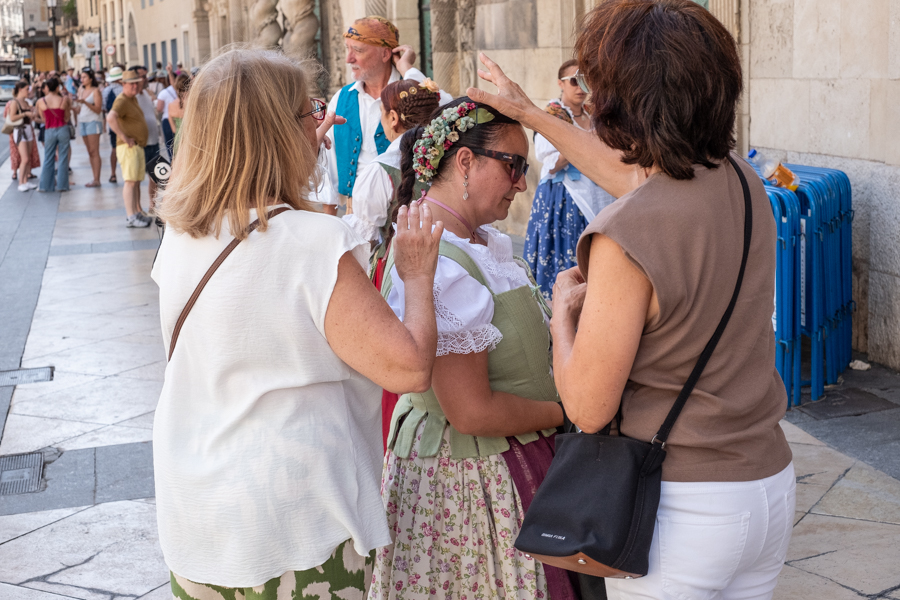
There were some people dressed up for a parade or some other event, of which there are many during the week. A headgear adjustment:
26_22
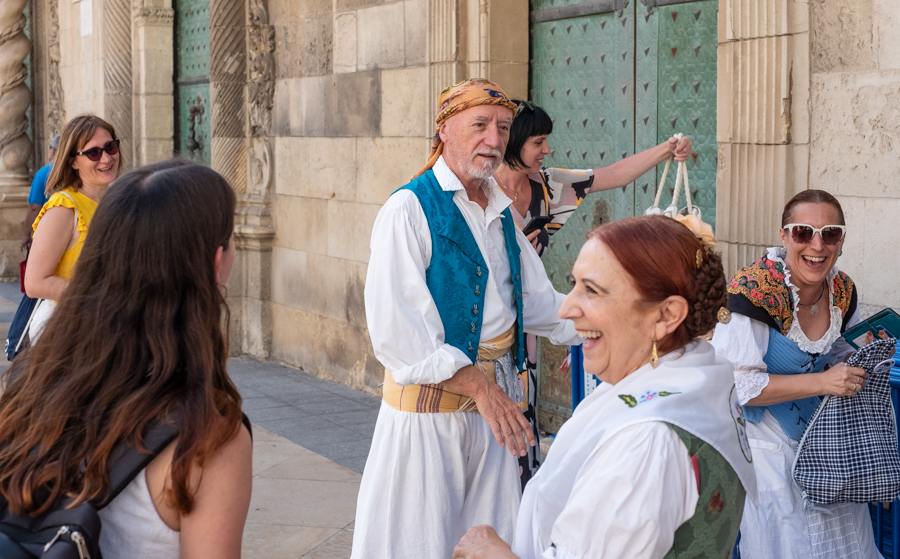
I was discovered sneaking photos, but they didn’t mind:
26_23
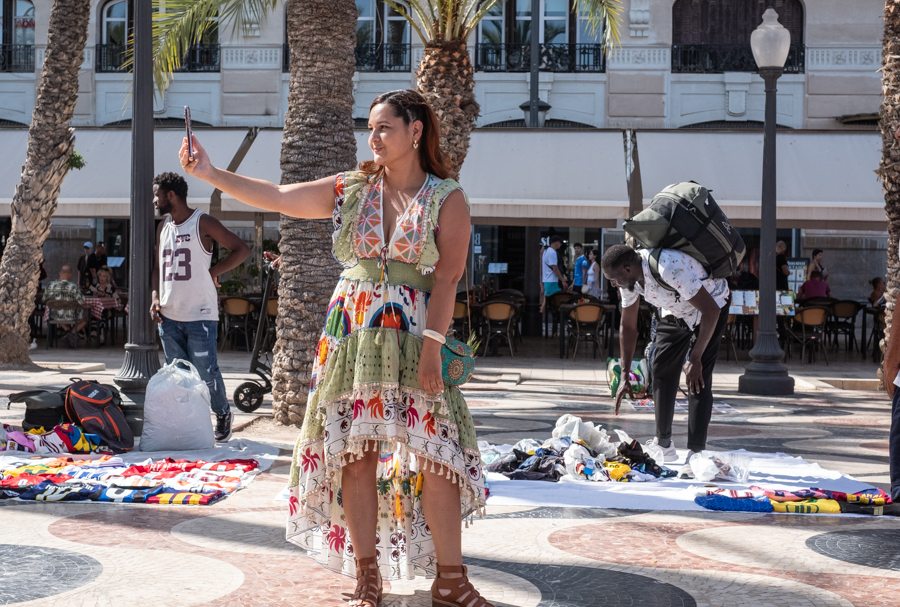
Another selfie:
26_24
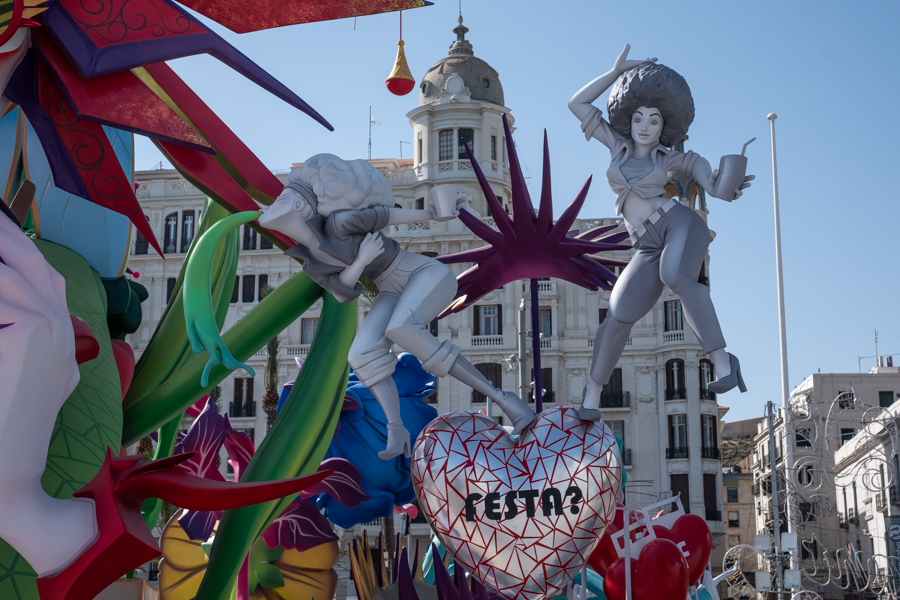
Further down on the Esplanada there was yet another Hoguera:
26_25
Food was one of the themes here:
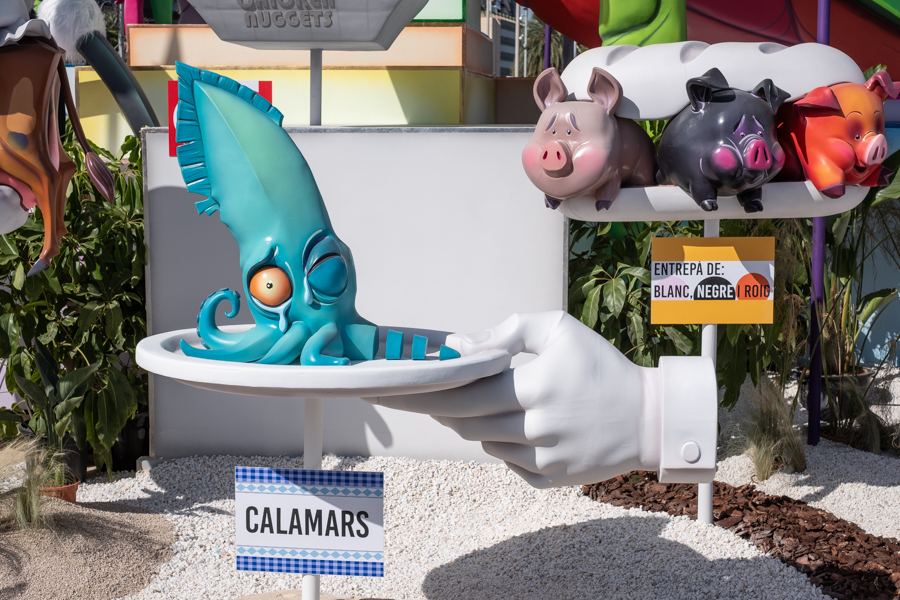
26_26
Corrupt politicians:
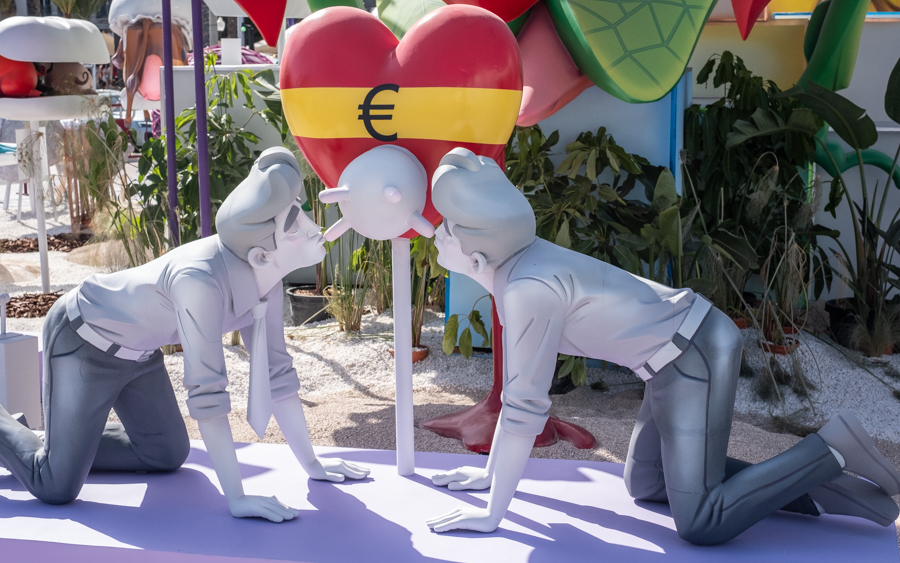
26_27
A teenager in zombie state due to social media:
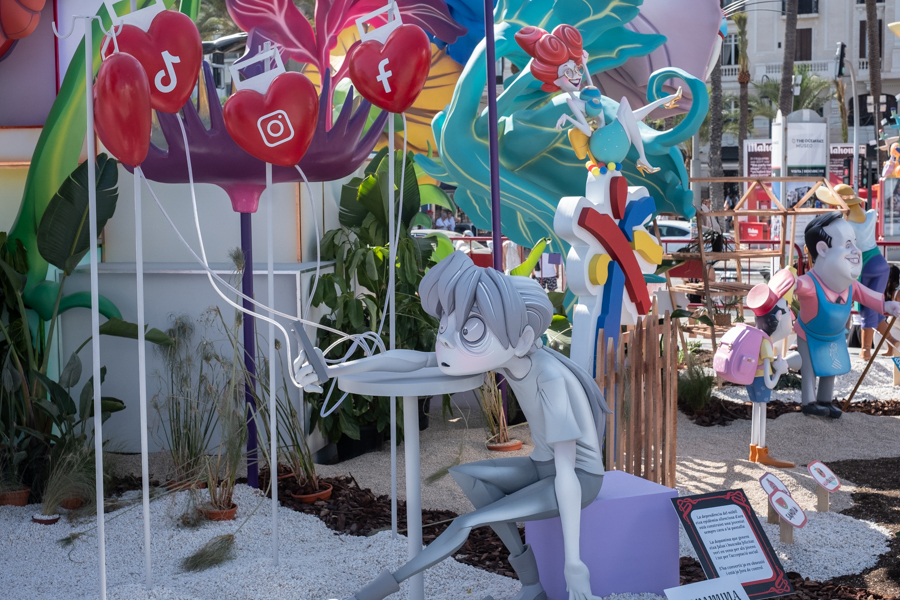
26_28
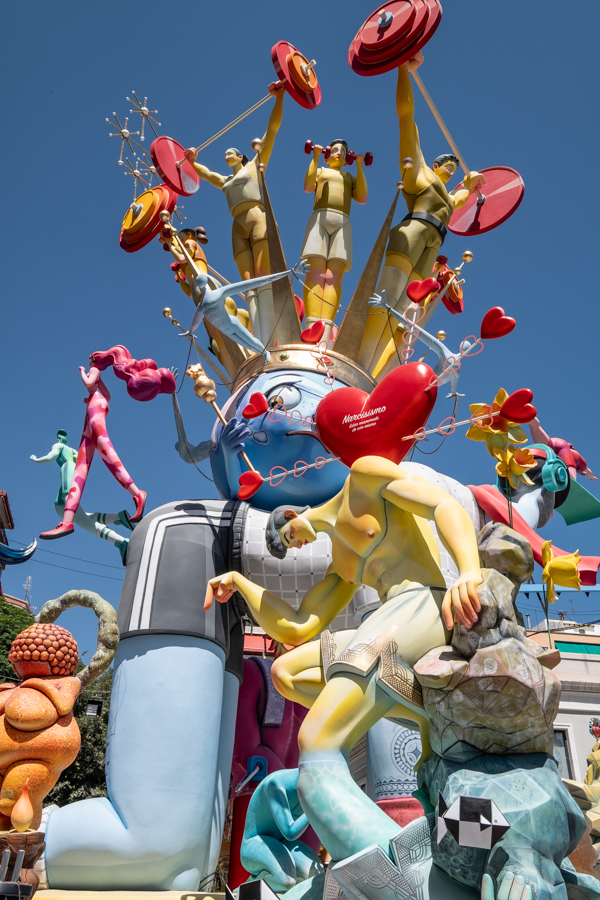
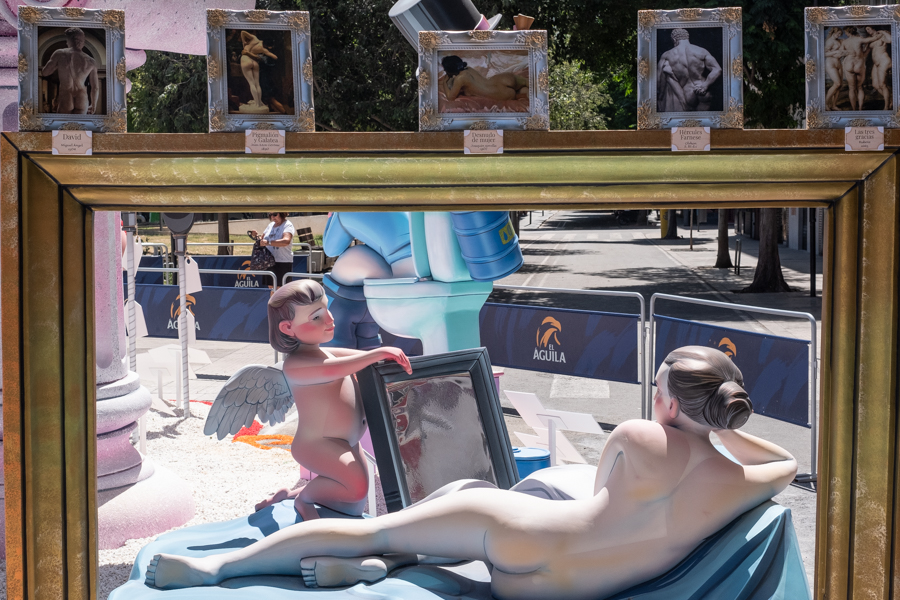
I walked on to Plaza Seneca, a small square in a modest neighbourhood which tends to have the most interesting Hoguera. This year, they had chosen narcissism as the main theme:
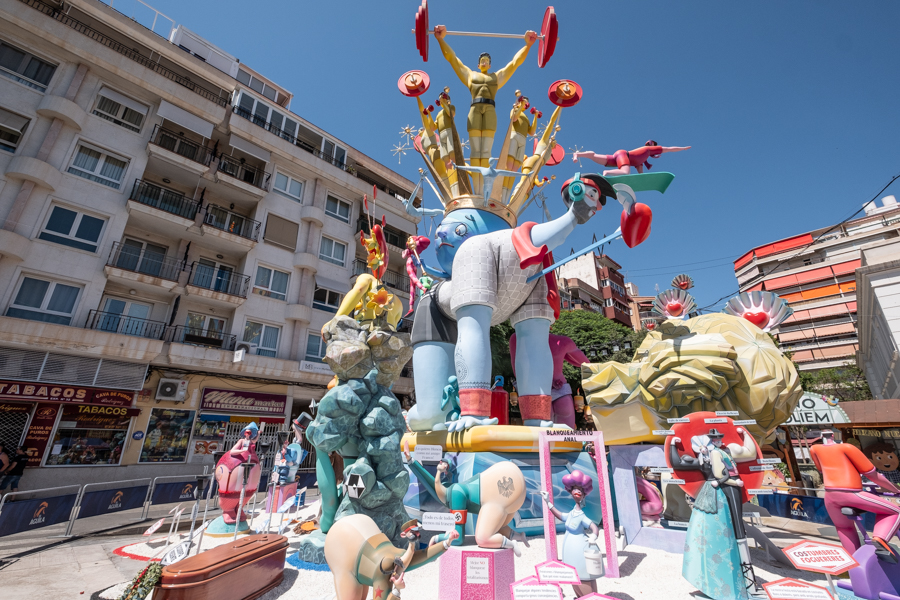
26_29
26_30
26_31
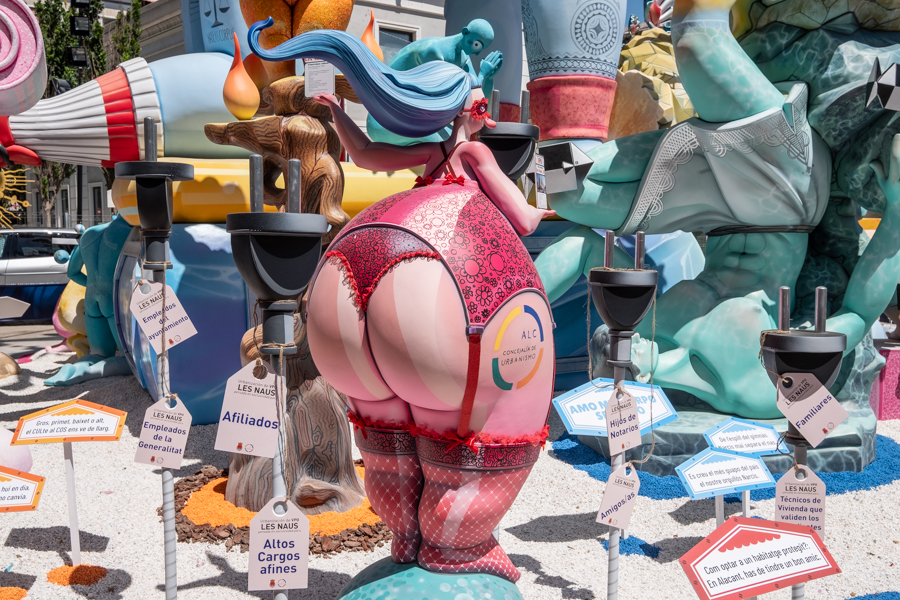
A prostitute, surrounded by signs referring to a recent scandal involving the allocation of subsidized apartments to friends of the mayor:
26_32
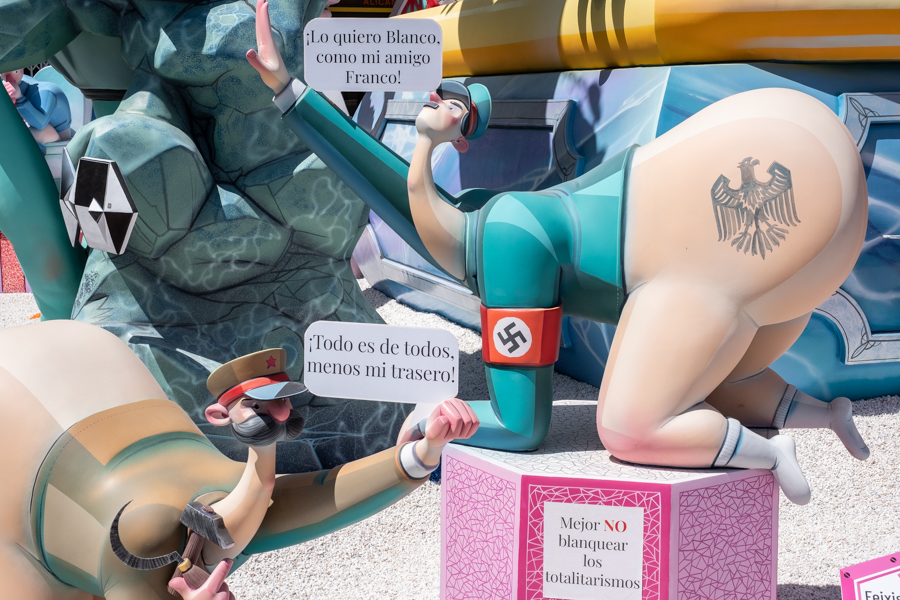
“Culos blancos” means “white arses”:
26_33
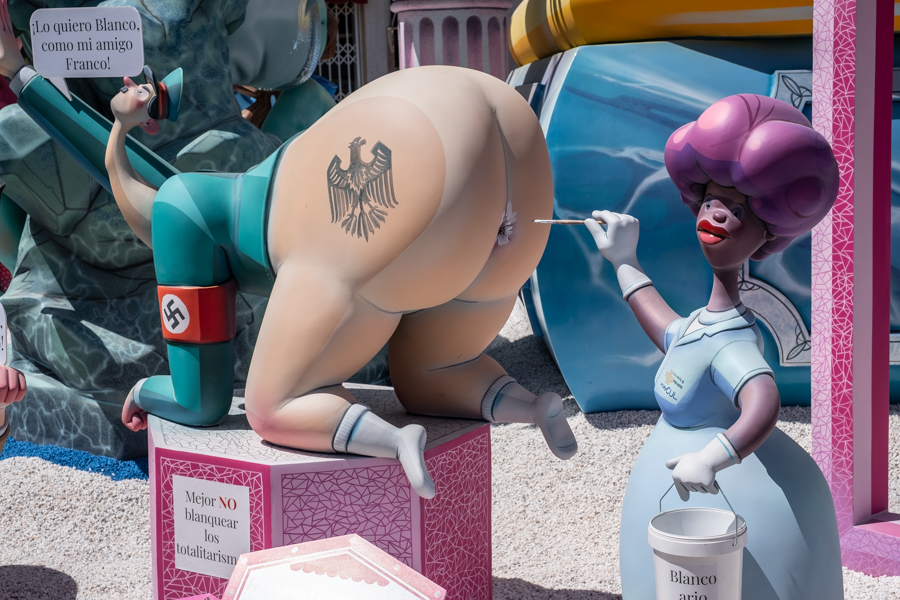
A good example of the edginess of the neighbourhood Hogueras:
26_34
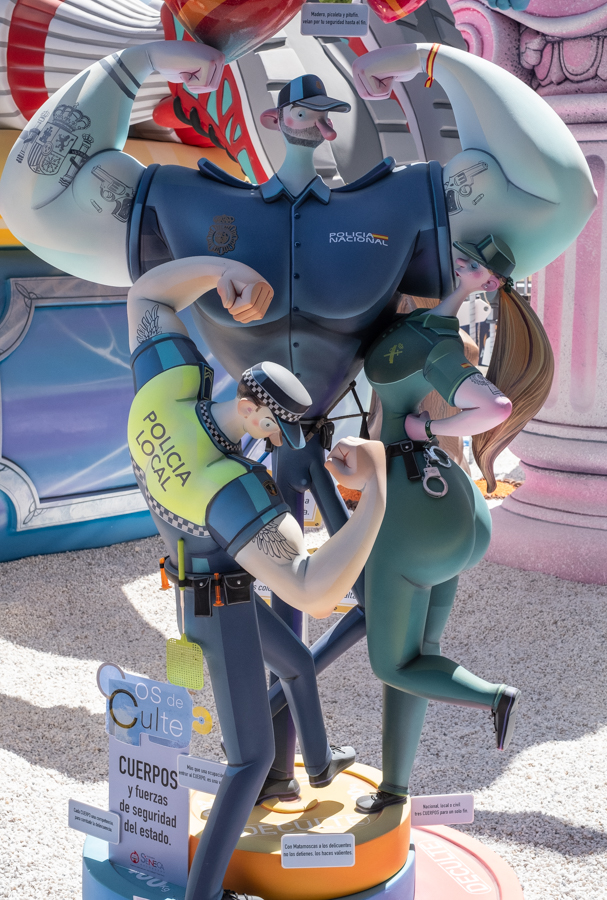
Muscular cops:
26_35
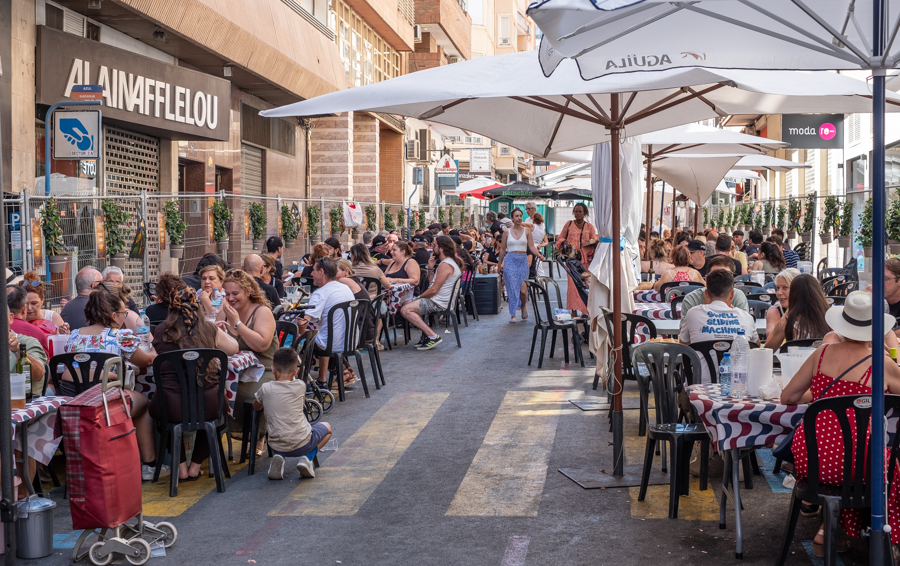
Besides the Hogueras, the week is very much about eating and drinking. Many streets are closed, to make room for temporary establishments called barracas:
26_36
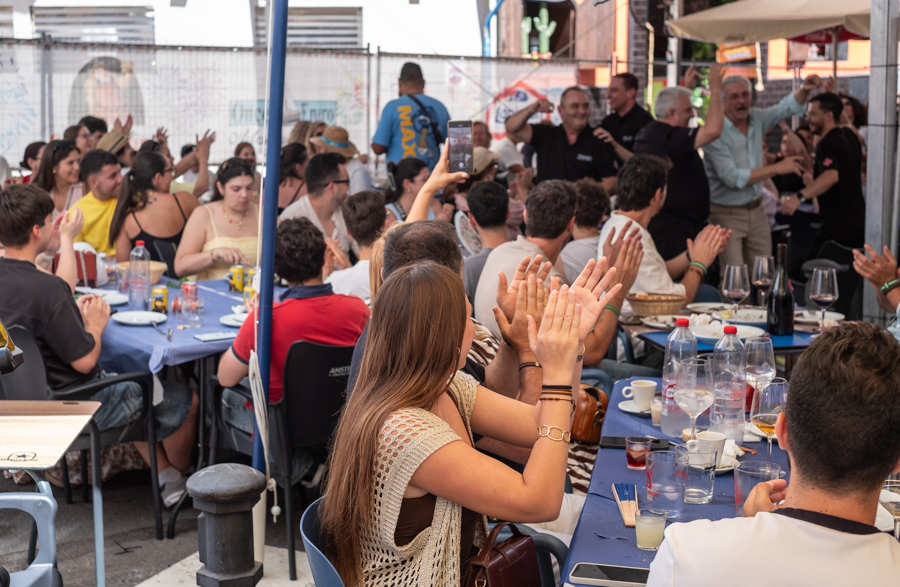
Some barracas are open to everyone against a payment, others are reserved for a neighbourhood association or some such. In any event, people were having a good time that afternoon:
26_37
The bars on Plaza Luceros, a frequent watering spot for me, were doing brisk business:
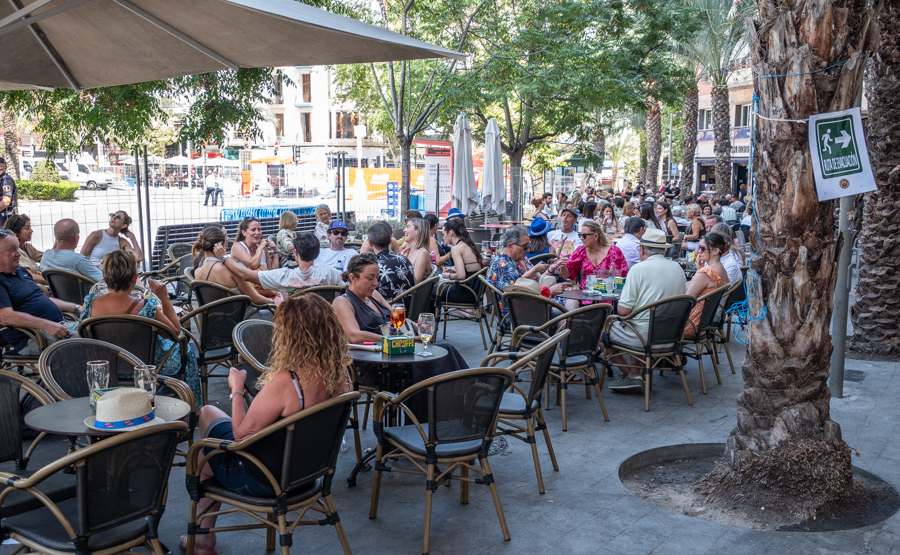
26_38
There are nightly fireworks displays on Plaza Luceros, and there are signs marking the evacuation route in case things go wrong. I found it amusing that one of these signs seems to point people to the O’Hara’s bar:
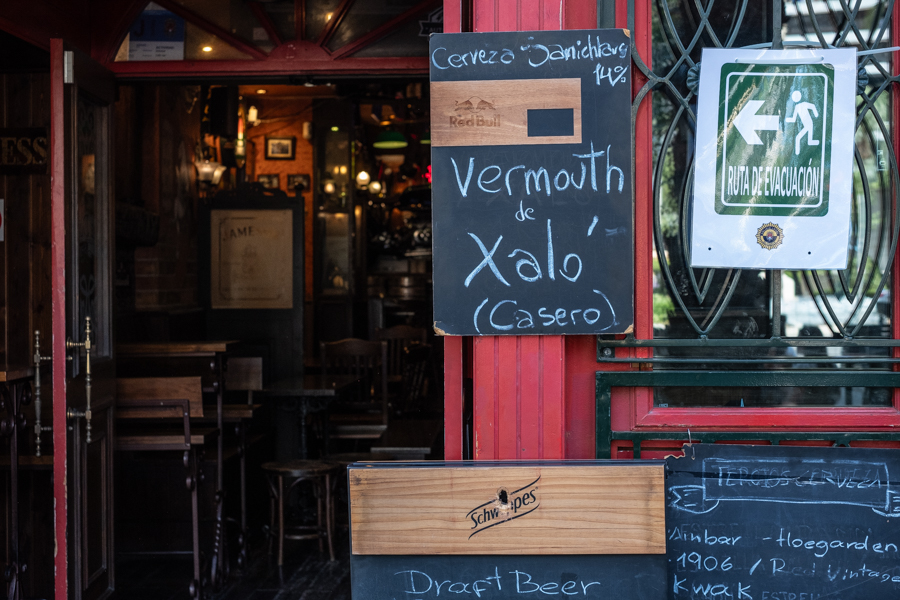
26_39
I walked back towards the car park, passing another barraca on the way:
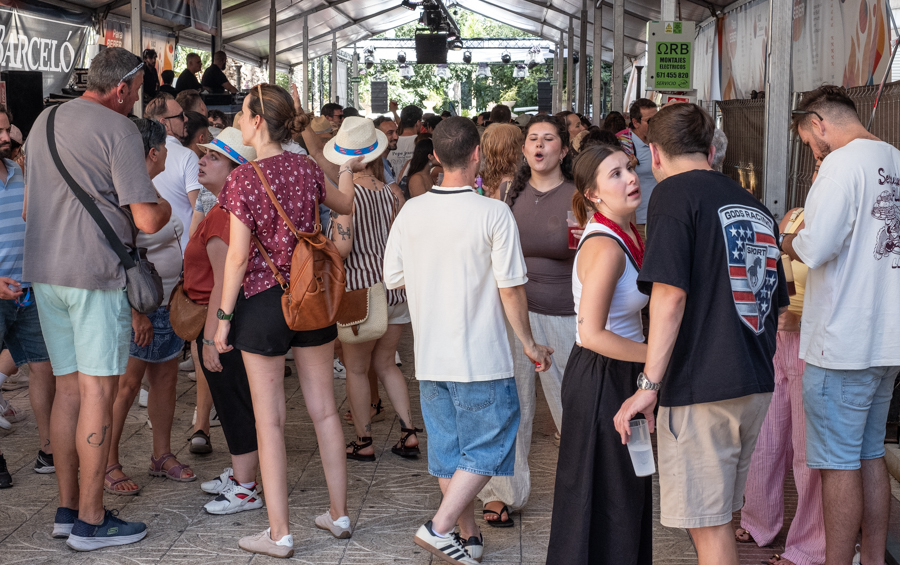
26_40
These people did not mind the photographer’s intrusion:

26_41
Another Hoguera, on Plaza Montañeta. A father tries to get his little girl to pose:
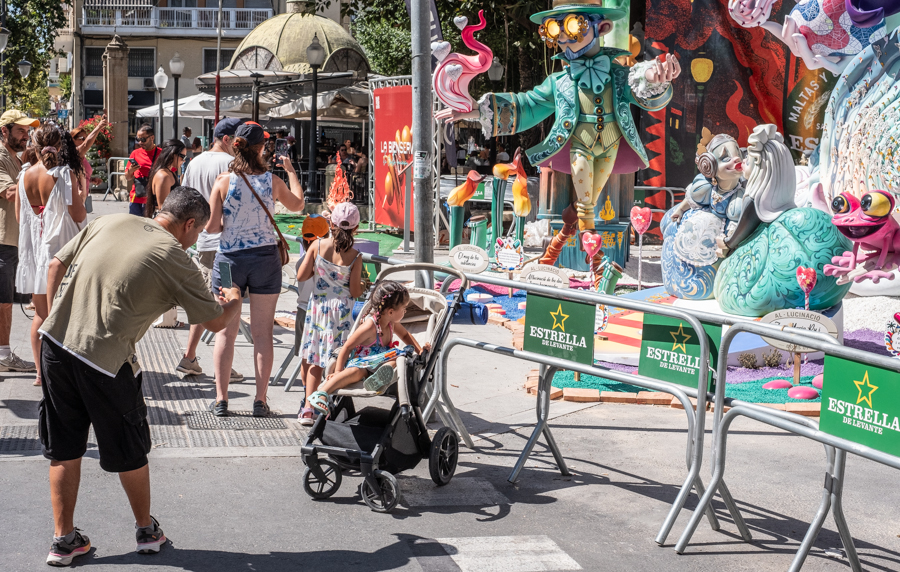
26_42
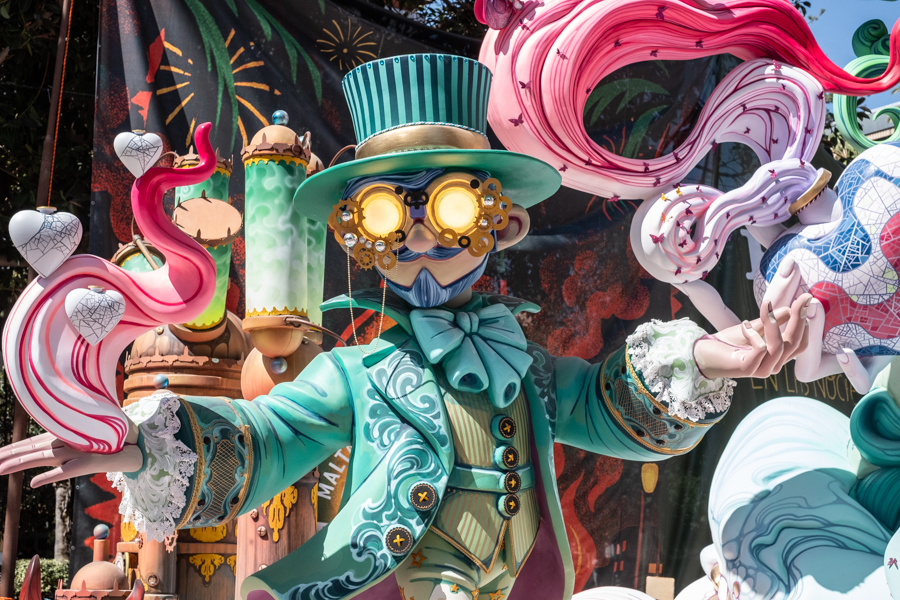
Detail:
26_43
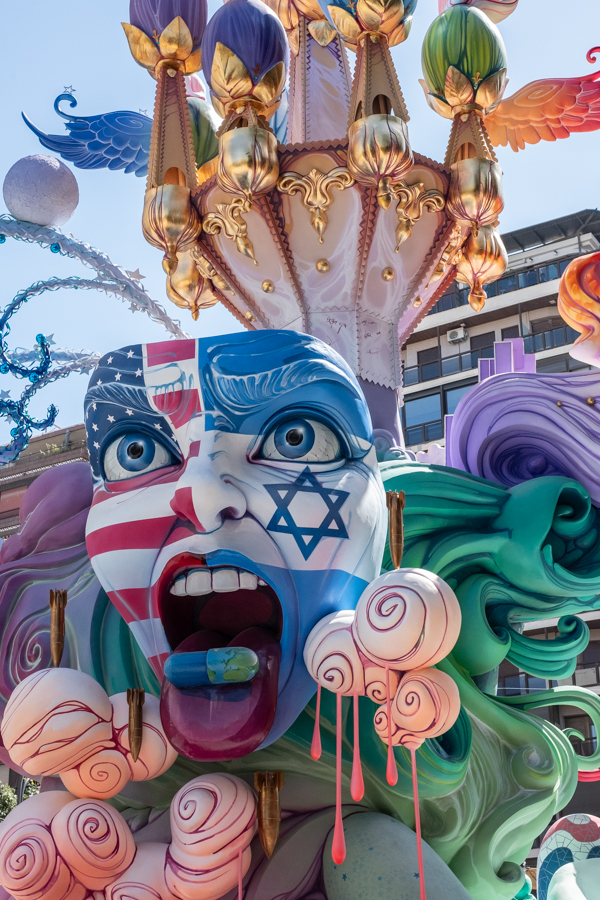
Political statement, reflecting current events:
26_44
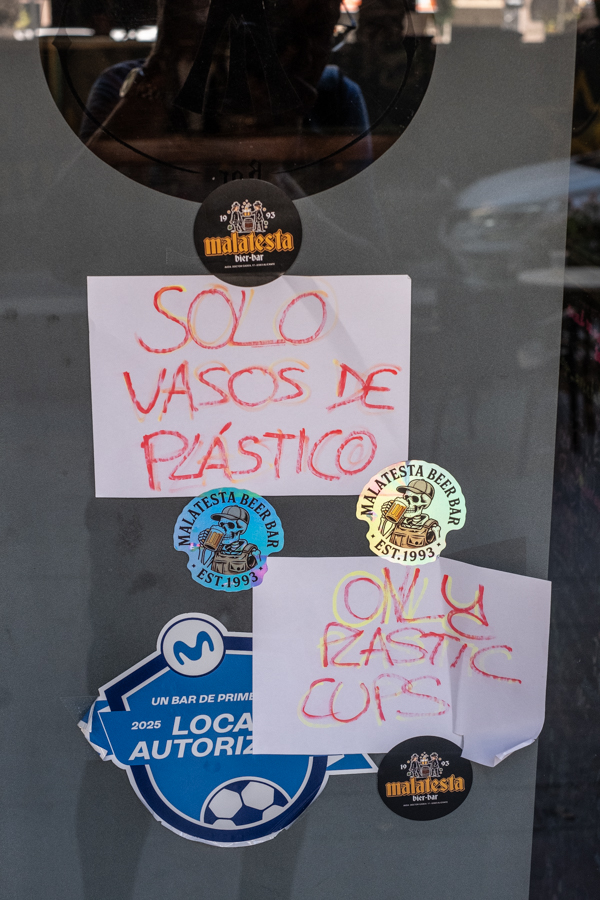
At Malatesta, there was a sign in the door about only using plastic cups for the beer. I ordered a good Belgian beer and told the bartender that it pained me to drink it from such a vessel. He answered that it pained him to serve it to me this way, but it was the only option with all the drunk people around:
26_45
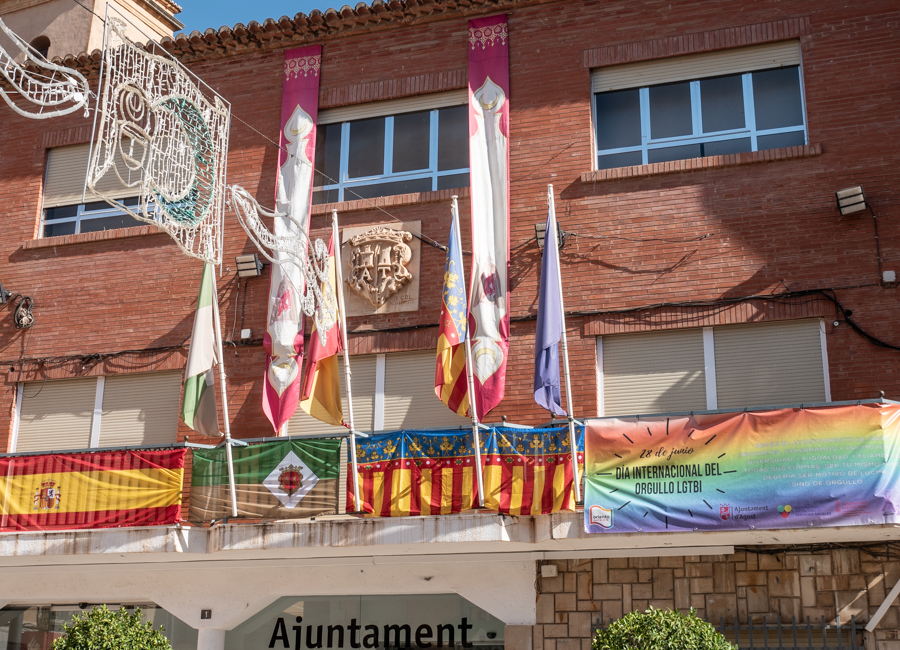
Back to normal life, I was cycling as usual. Since this was also Pride Week, even small towns in the interior were decorated with rainbow flags. Here is the town hall of Agost:
26_46
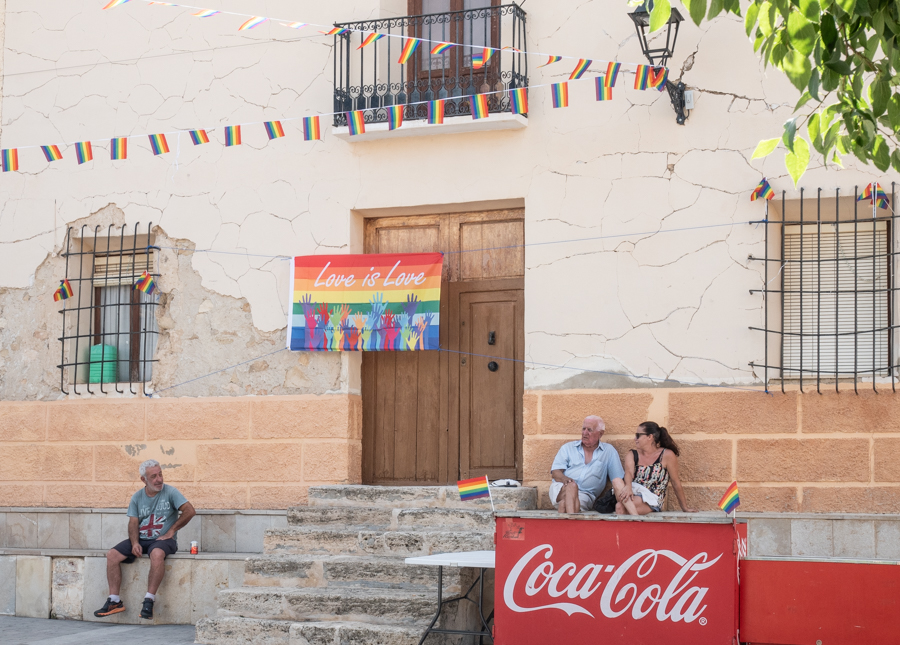
In Aigues, even the church wall was decorated, and the square in front of the church was ready for some event:
26_47
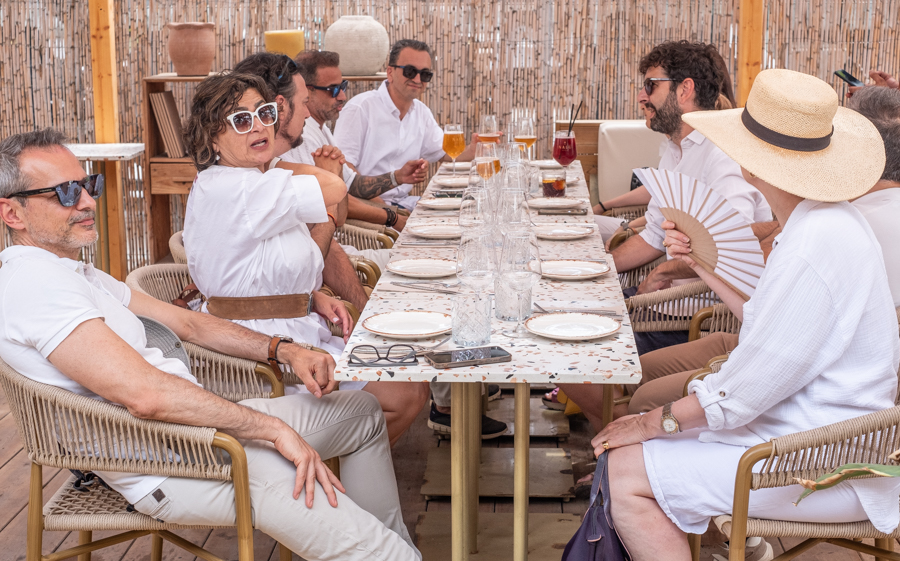
On the last Friday of June, our department held its usual summer lunch at a waterfront beach bar. We are only about 25 people, and many were already on holiday or had other commitments, so only half of us were there. But it was still a nice event. As is apparent here, the dress code was white:
26_48
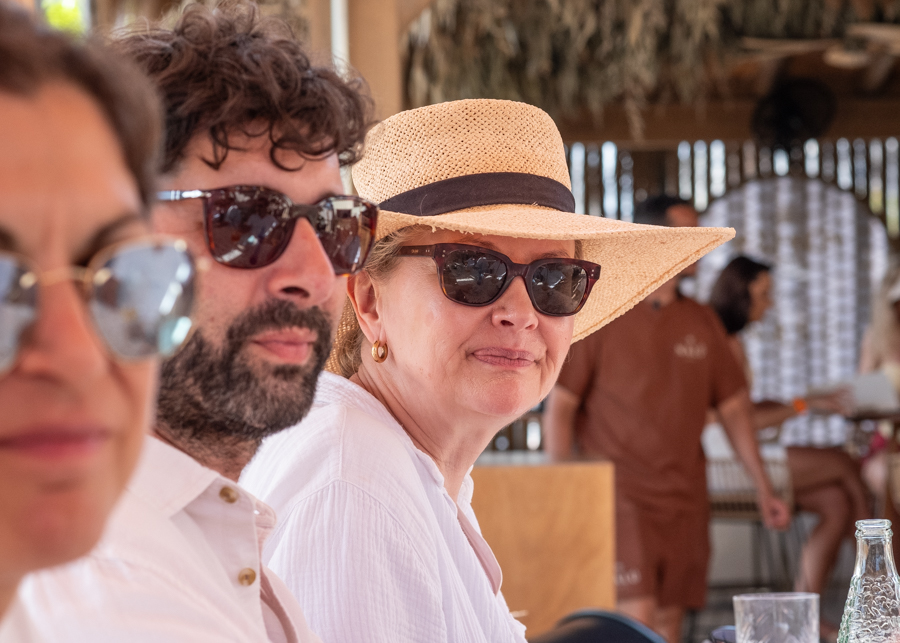
As usual, I photographed my colleagues, here Ursula:
26_49
Juan is our designated chair of the fiesta committee, and it was he who had chosen the venue and negotiated the price:

26_50
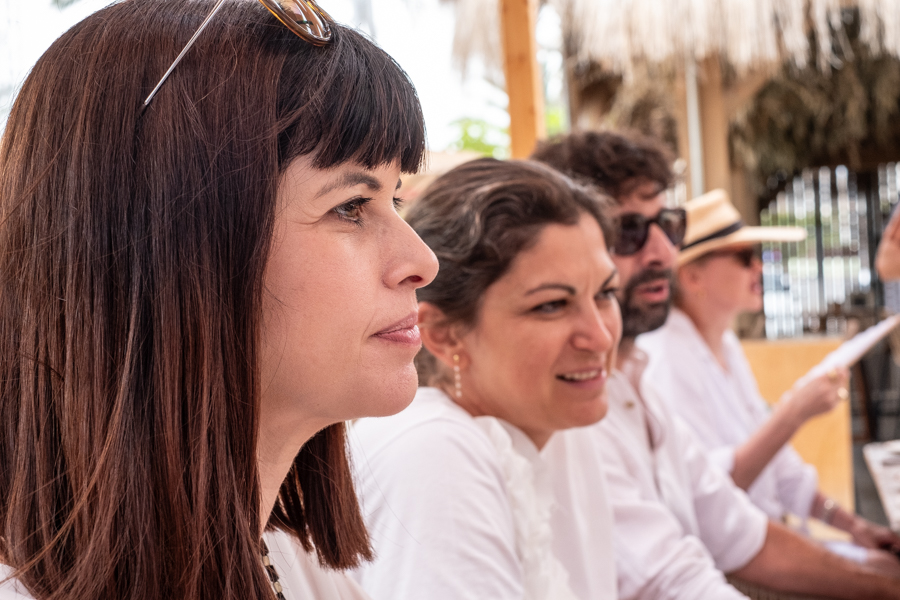
Belén:
26_51
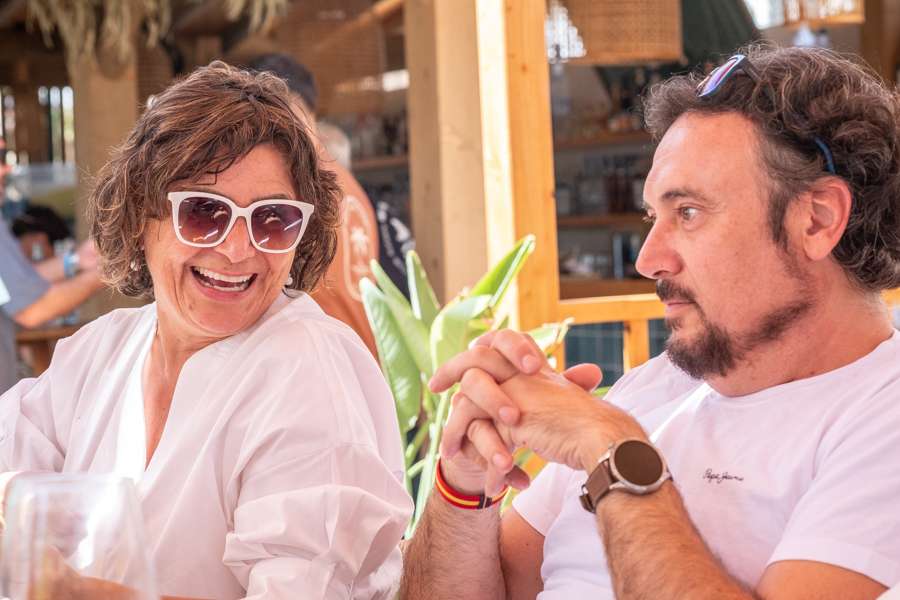
Carolina and Juan Miguel:
26_52
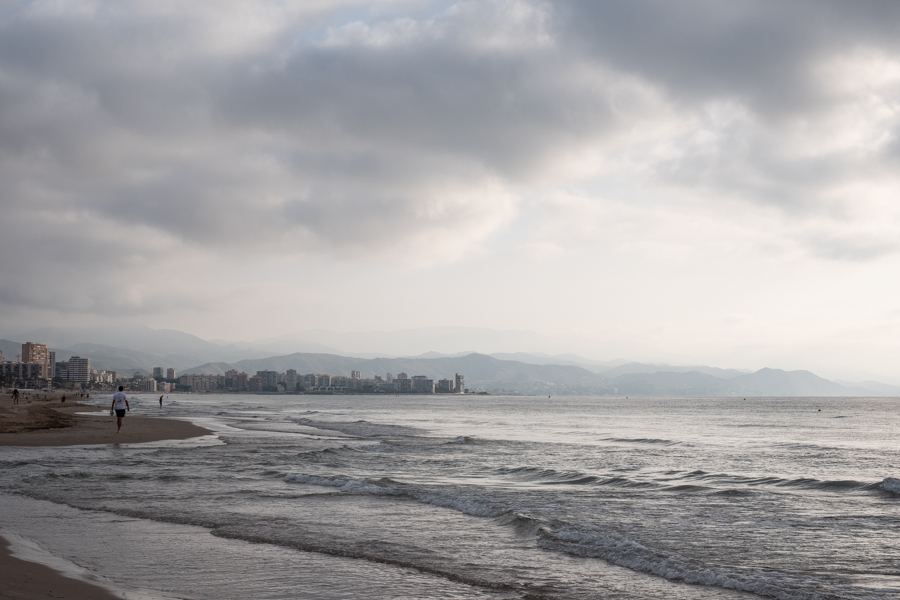
A rare morning with clouds and haze over our beach:
26_53
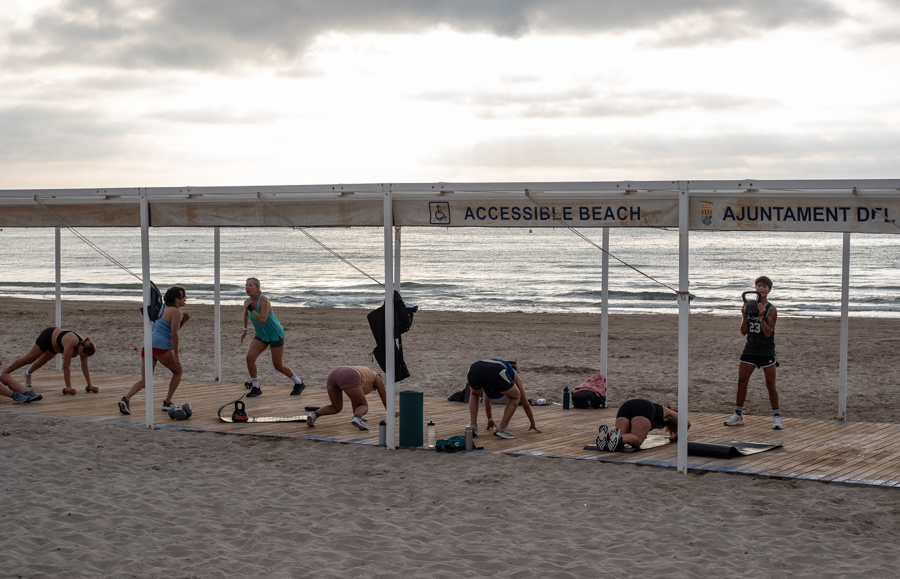
The daily exercise group:
26_54
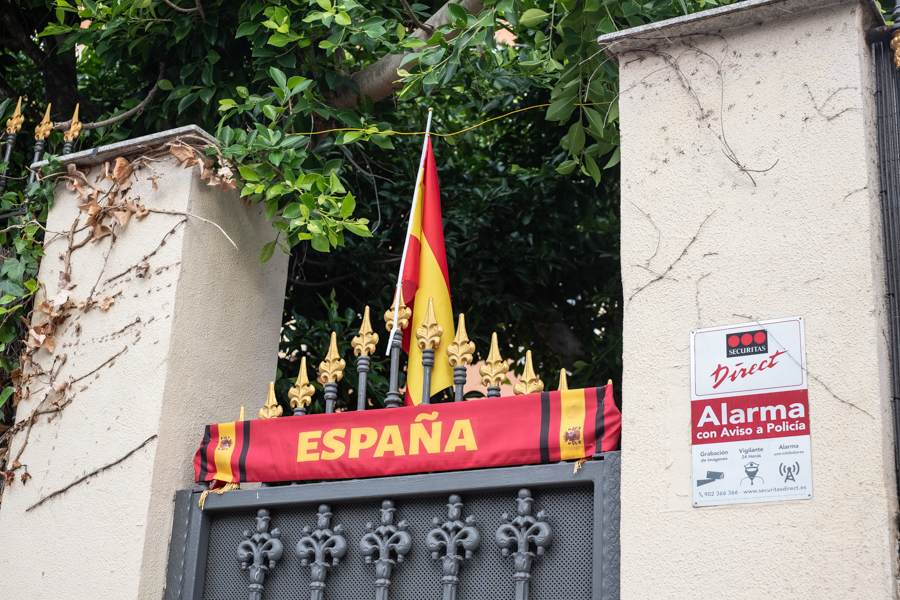
I am boycotting the World Cup but it is impossible to avoid signs of it when walking in the neighbourhood:
26_55
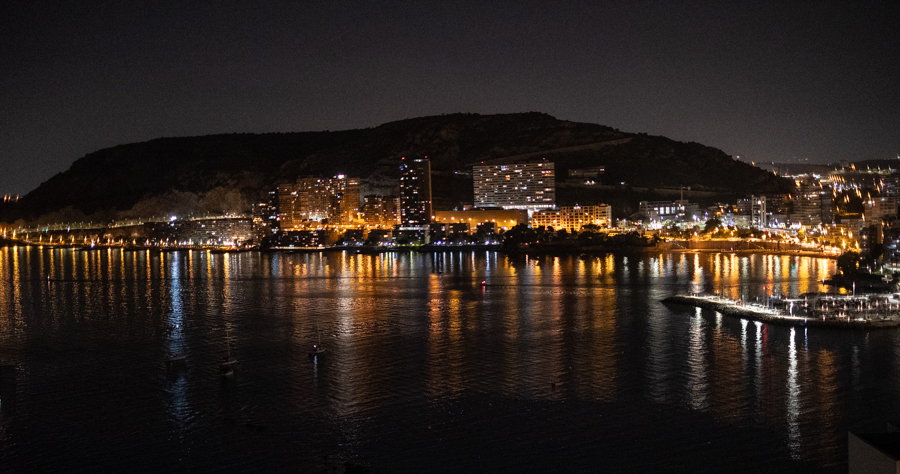
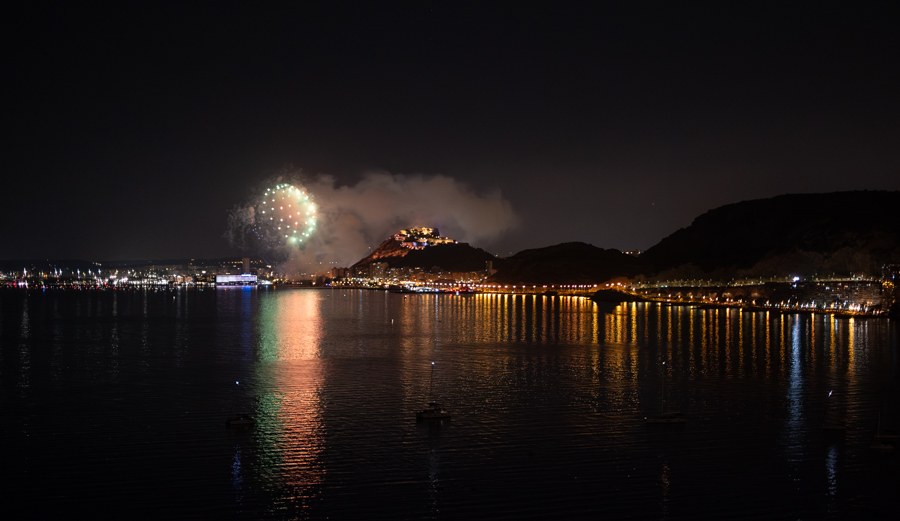
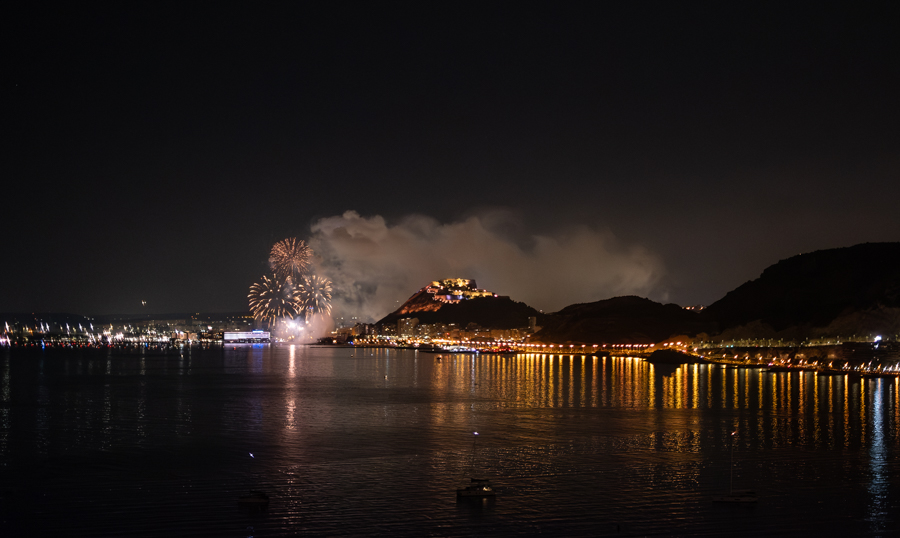
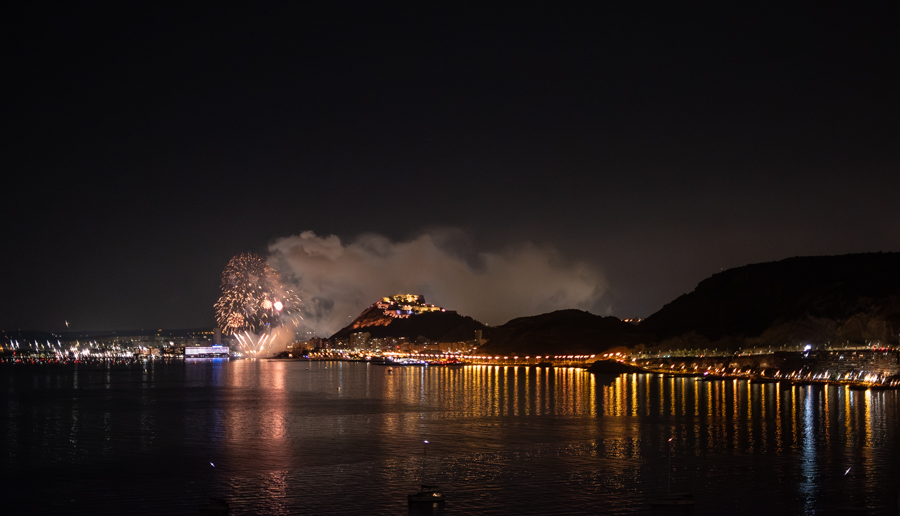
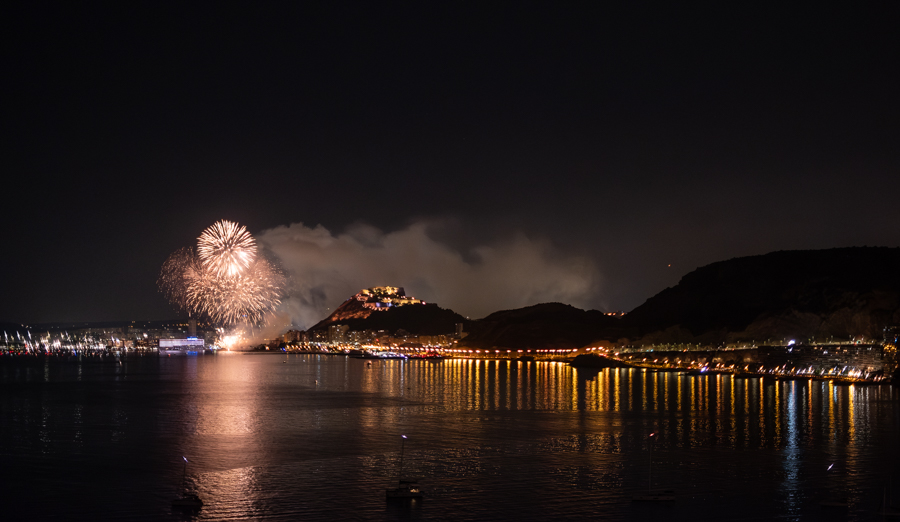
On Saturday night we got together with friends in their 17th floor apartment overlooking the bay and the city. There was going to be a large fireworks display at midnight to mark the end of the festive week, and we were going to watch it from this prime location. This is the view of Alicante’s waterfront before the fireworks began:
26_56
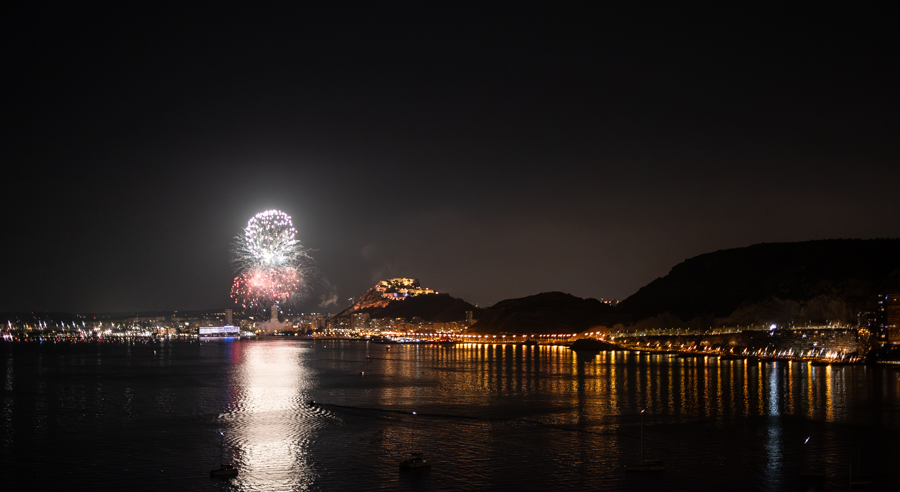
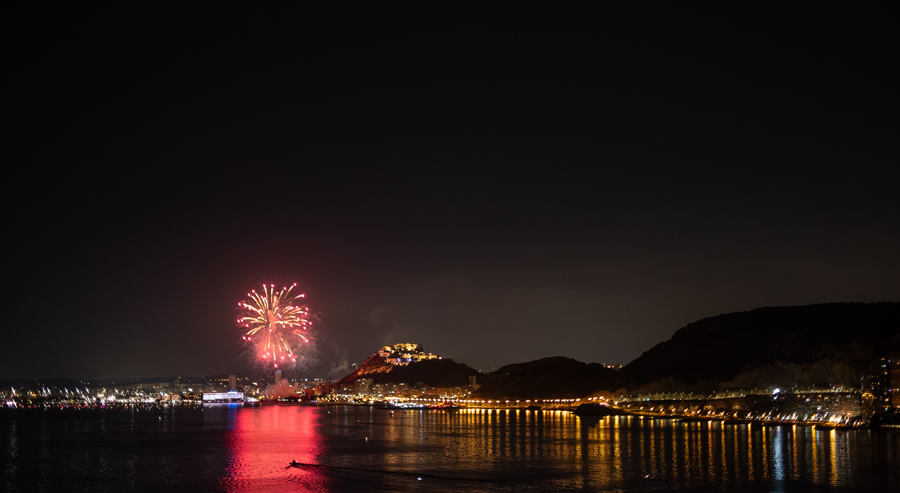
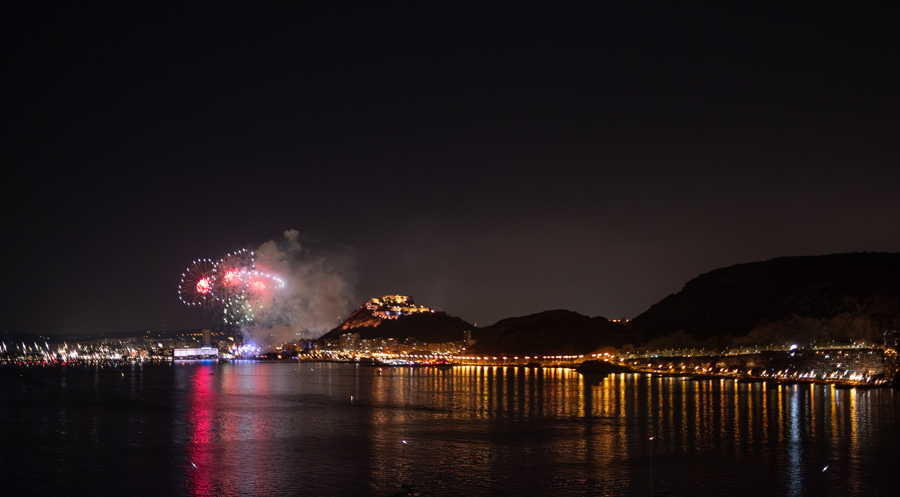
A bit after midnight the fireworks began:
26_57
26_58
26_59
26_60
26_61
26_62
26_63
After the fireworks ended, the many people who had driven to the beach to watch had some fun getting out: