After a quiet week at the office, I was on the road again. The technical university in Kielce in Poland invited me to speak at an event, and I took advantage of the opportunity and spent the weekend with my sister in Wrocław.
39_1
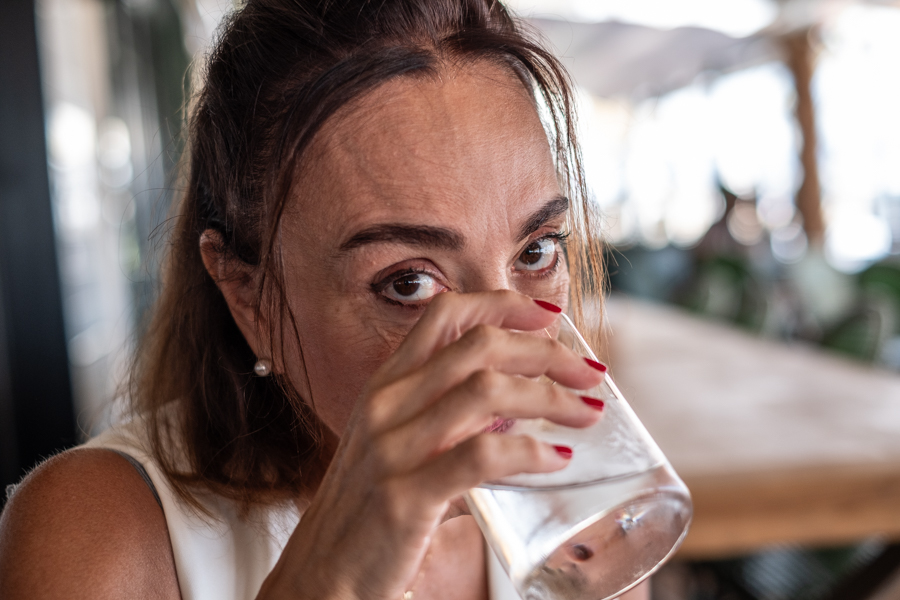
However, before flying off to Poland, I had lunch with my lovely friend Eri at the beachfront restaurant Moments:
39_2
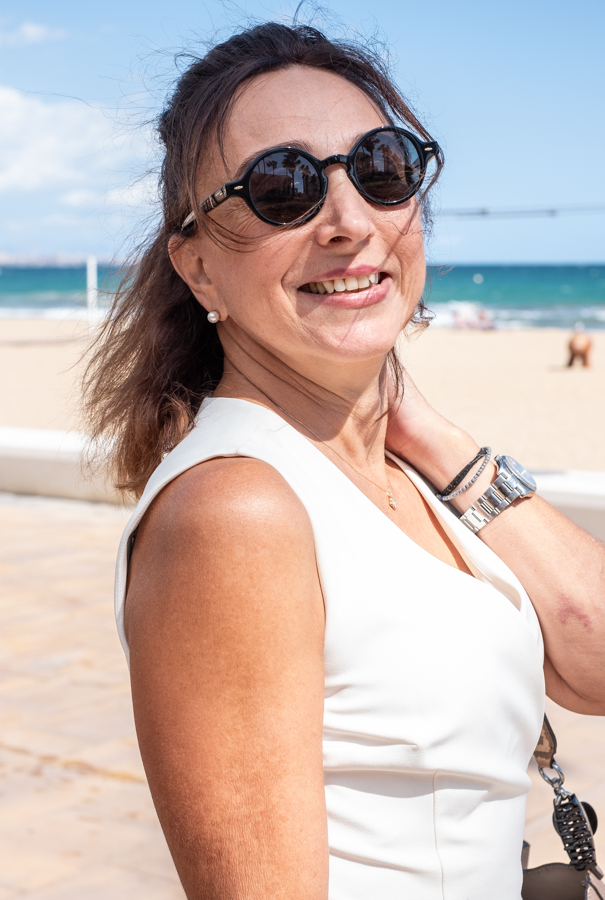
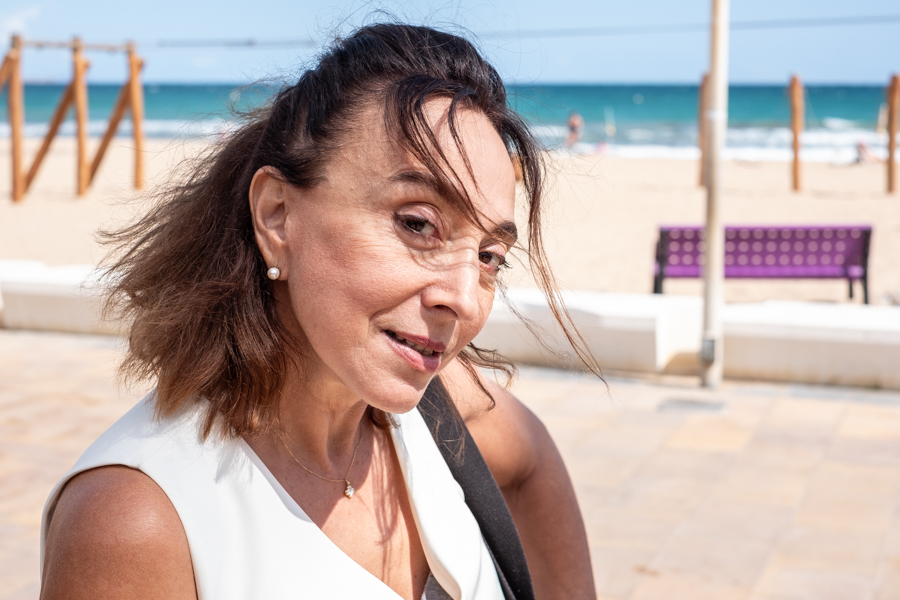
Afterwards, we took some shots with the beach as background:
39_3
39_4
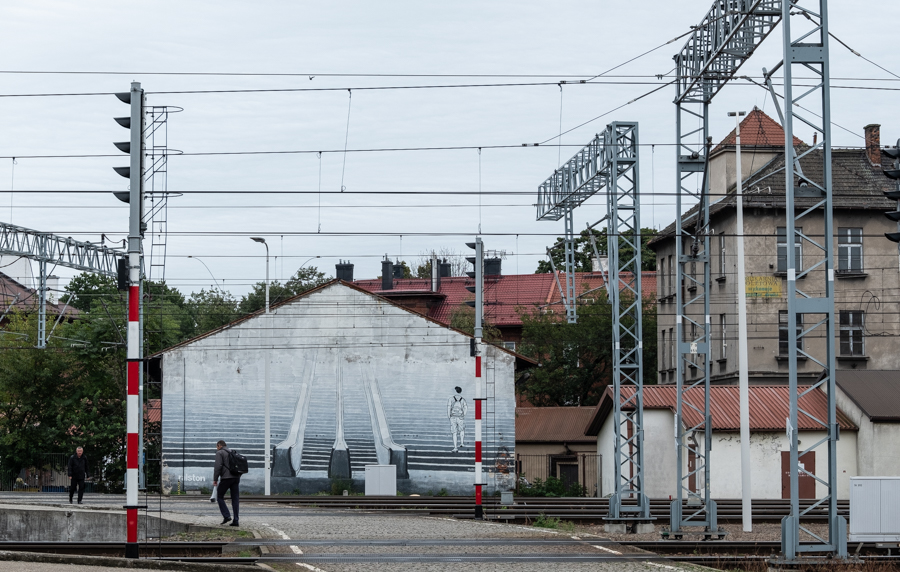
On Wednesday morning it was time to start my trip to Poland. I flew to Kraków and made my way to the main train station from where I would take a train to Kielce later in the afternoon. I left my suitcase at the station and went for a walk in the centre, stopping to photograph this mural across the tracks:
39_5
The adjacent shopping mall is also nicely decorated:

39_6
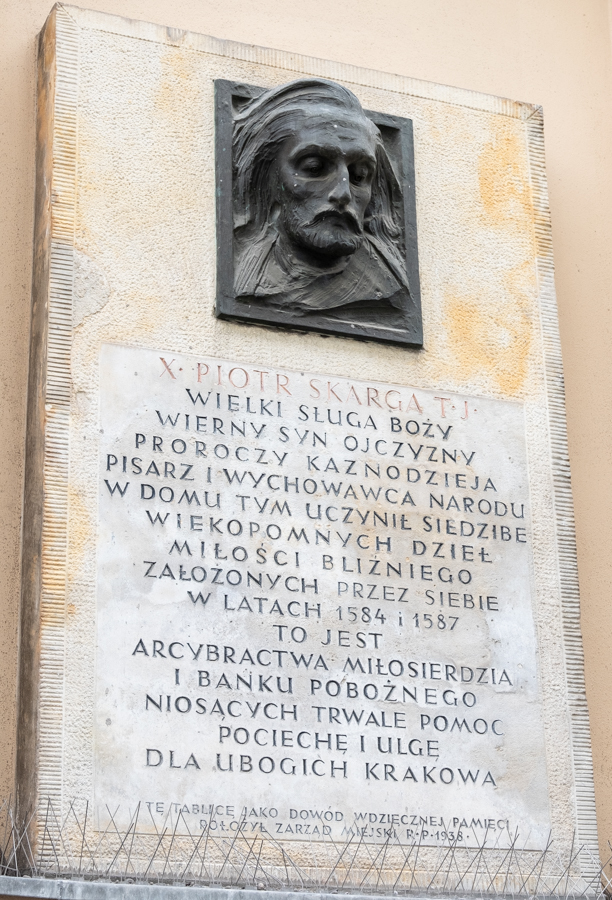
When one walks around any Polish city, there are memorial plaques on many buildings, mostly to commemorate a notable person who once lived there. This one commemorates Piotr Skarga, a 16th century writer and teacher who also helped the poor of Kraków:
39_7
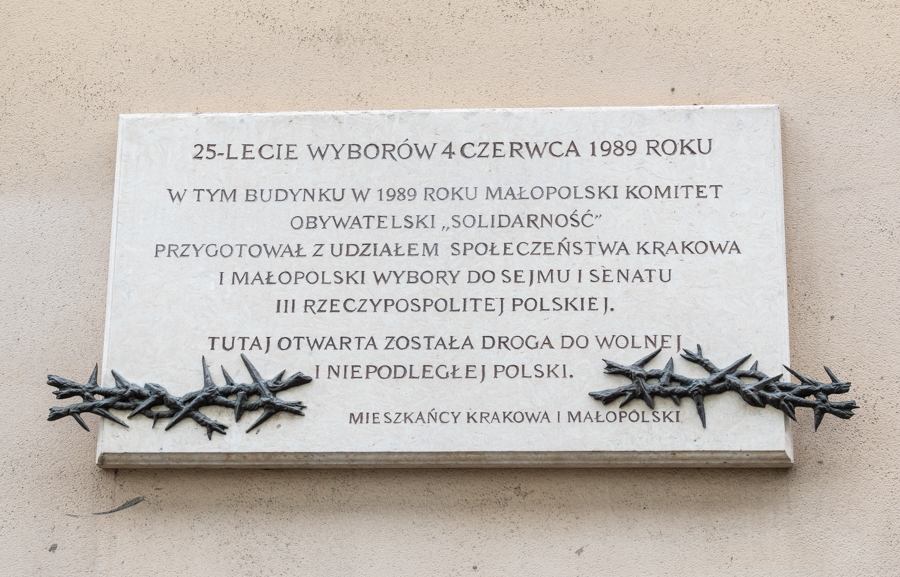
A plaque commemorating a more contemporary event. This building housed the local Solidarity office where the first democratic election in June 1989 was planned:
39_8
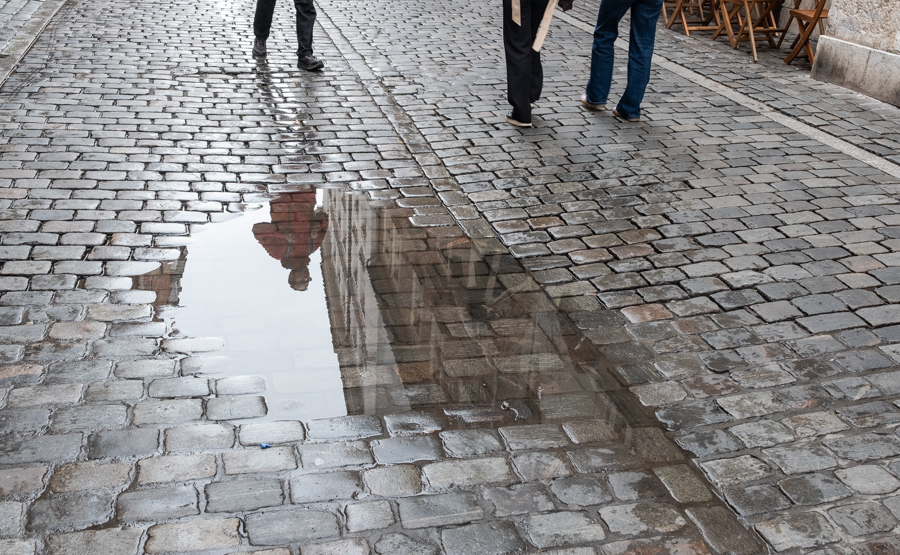
I walked towards Rynek, the central square. The weather was not great:
39_9
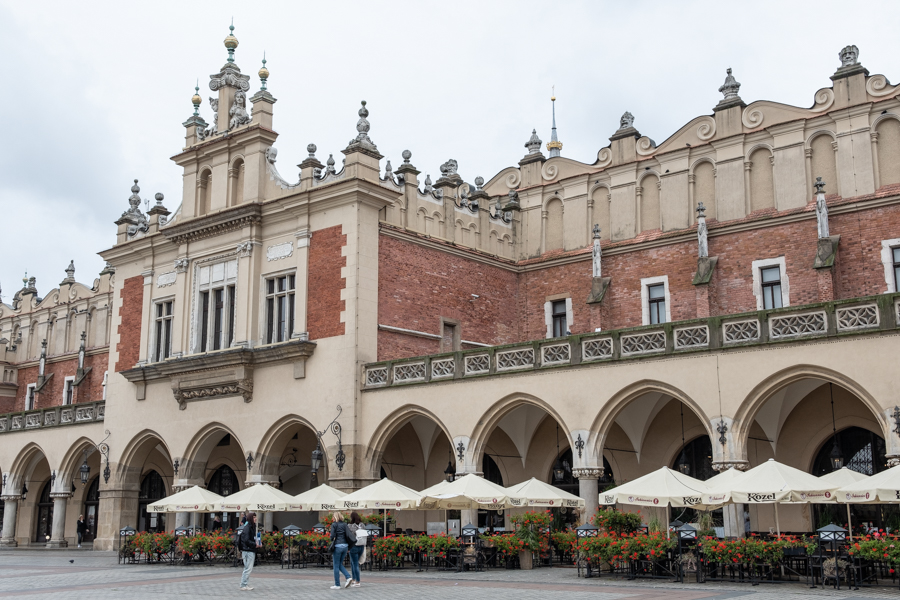
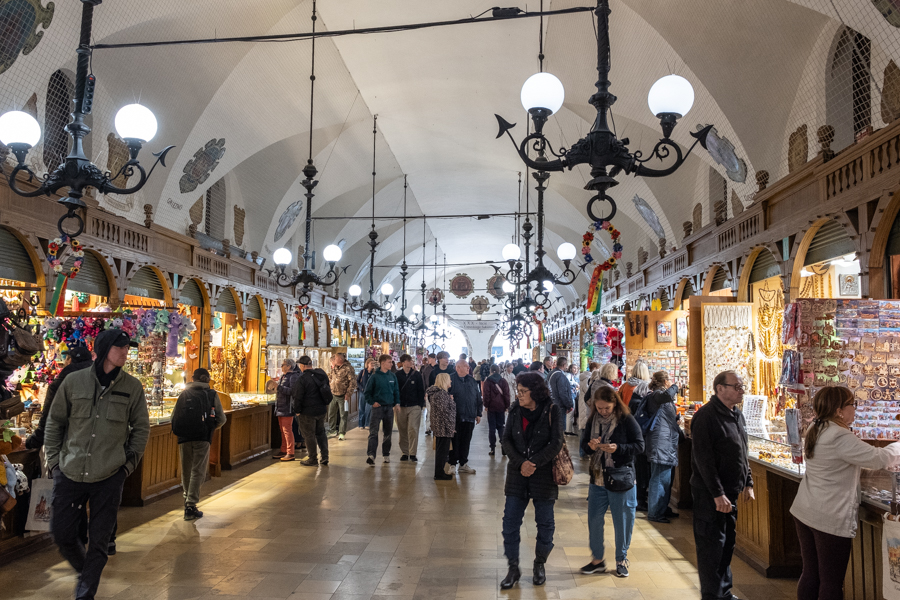
This is Sukiennice (“cloth hall”), one of Kraków’s best known structures, an indoor market dating back to the 13th century:
39_10
The original medieval function of Sukiennice was to serve international trade in cloth. Today it is mainly a souvenir tourist trap:
39_11
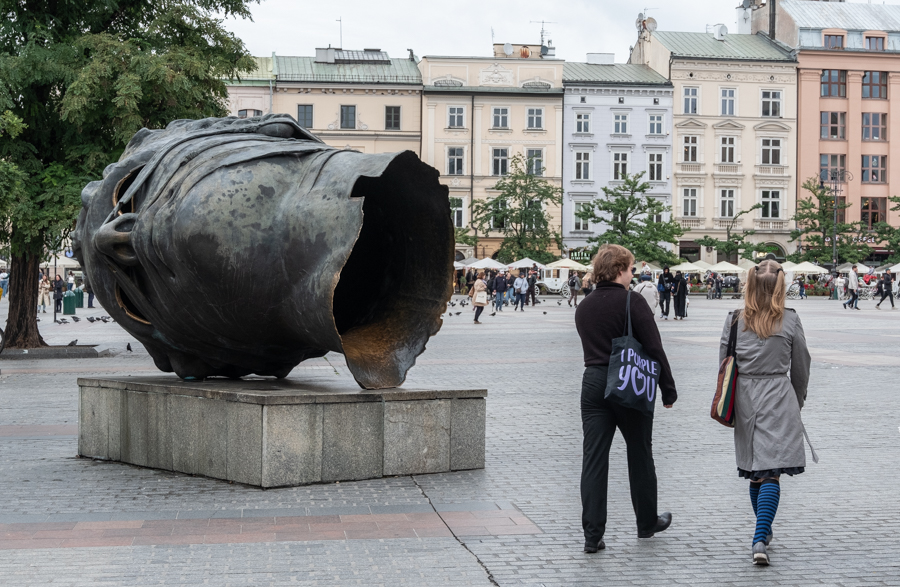
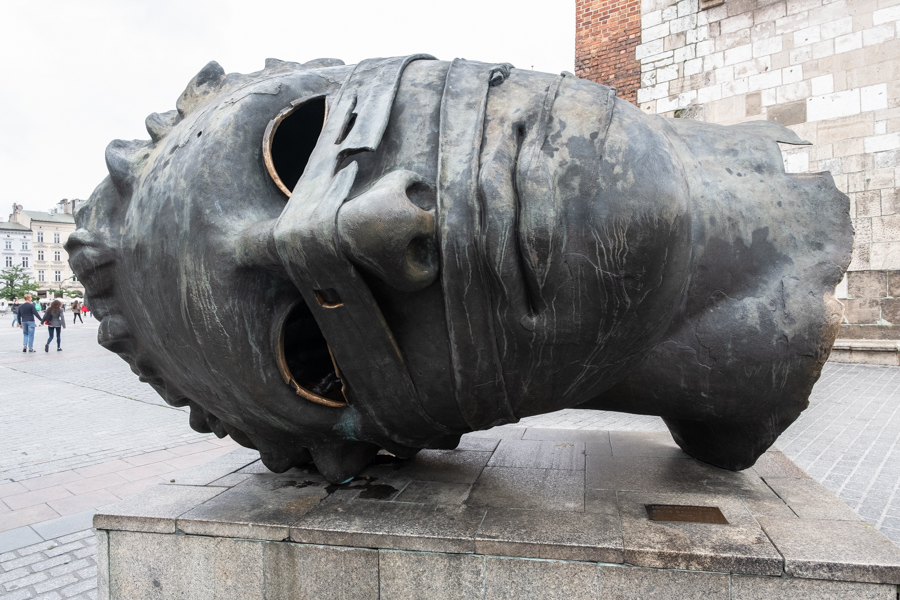
There is a striking sculpture on Rynek called “Eros Bendato”, by Polish sculptor Igor Mitoraj, placed here in 1999:
39_12
39_13
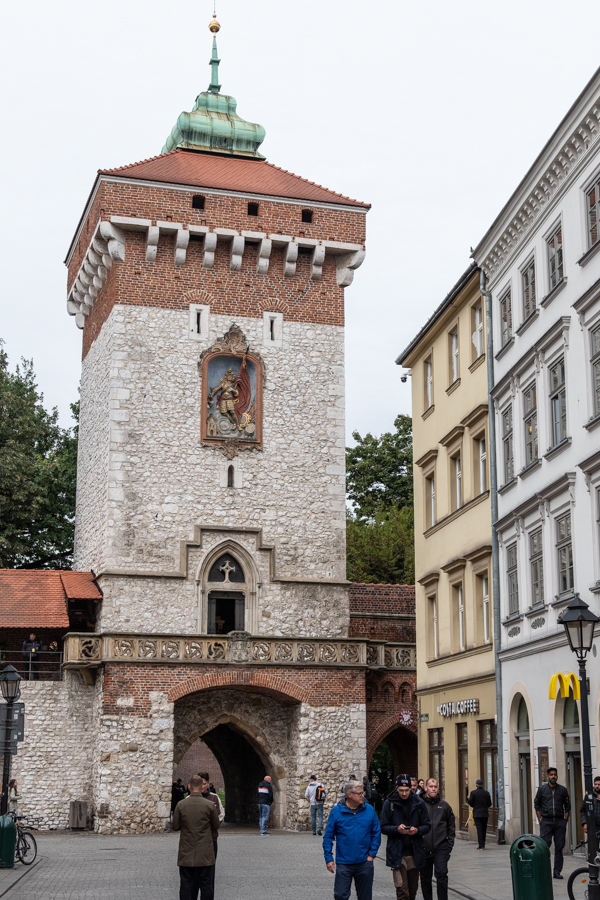
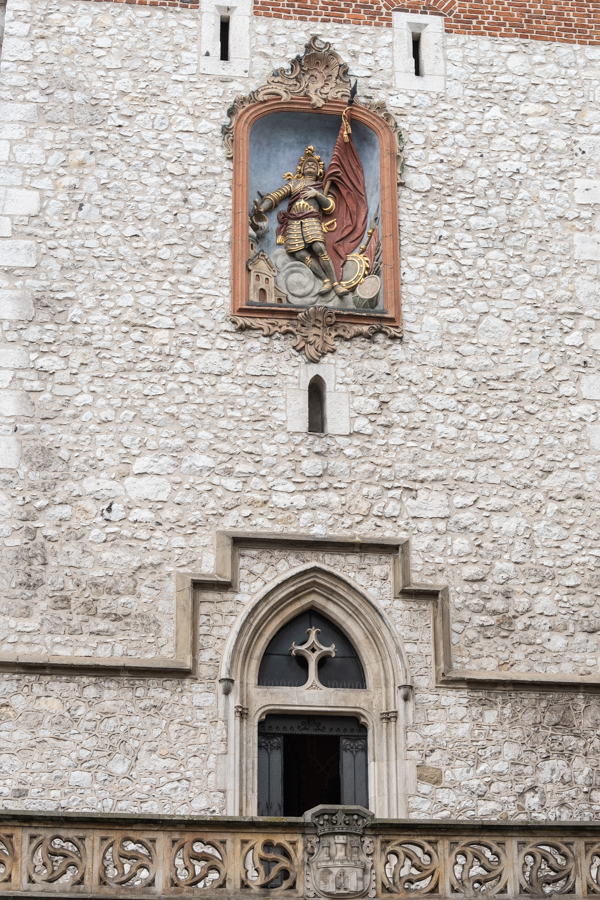
St. Florian’s Gate, dating to the 14th century:
39_14
St. Florian’s Gate, detail:
39_15
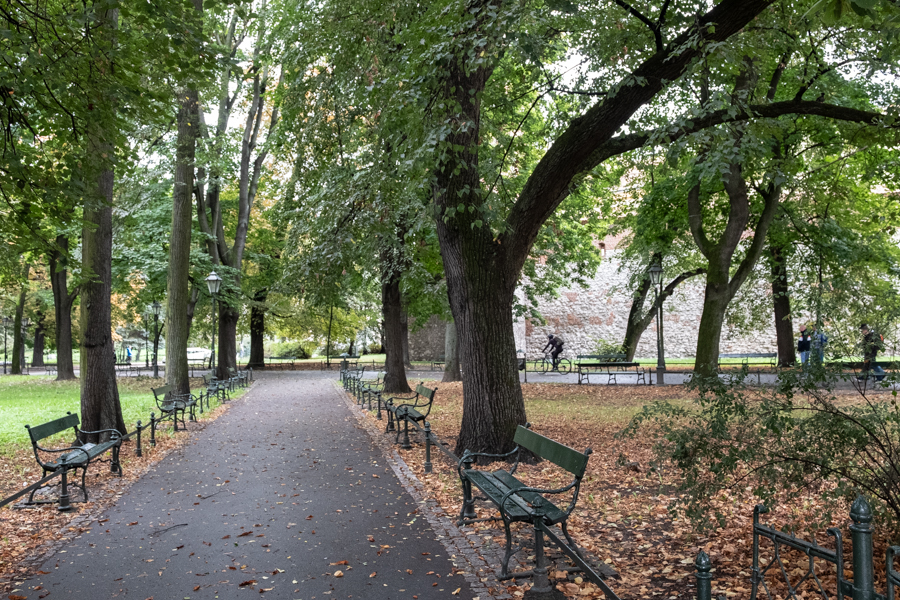
I had lunch at a restaurant near Rynek and walked back towards the train station, passing through a nice park called Planty:
39_16
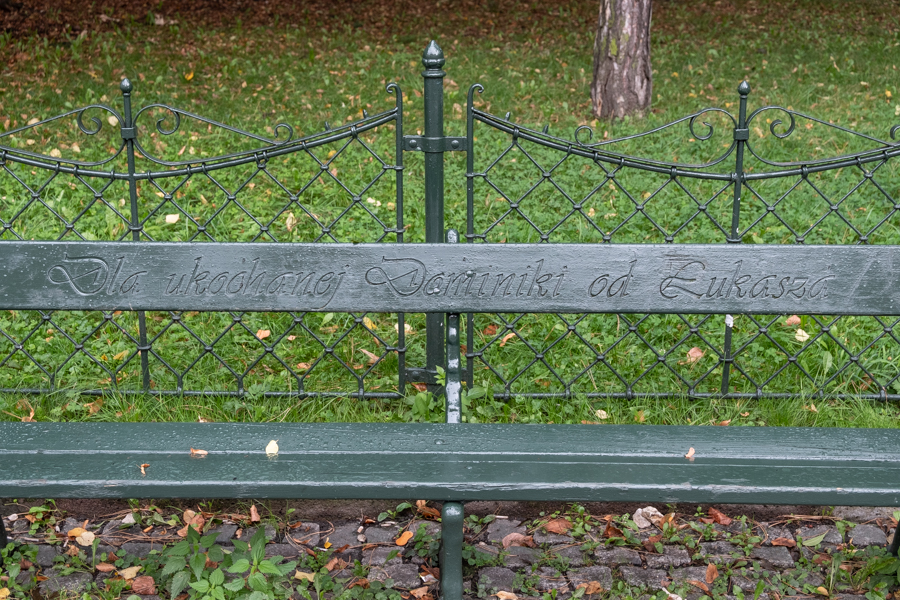
A dedication of love:
39_17
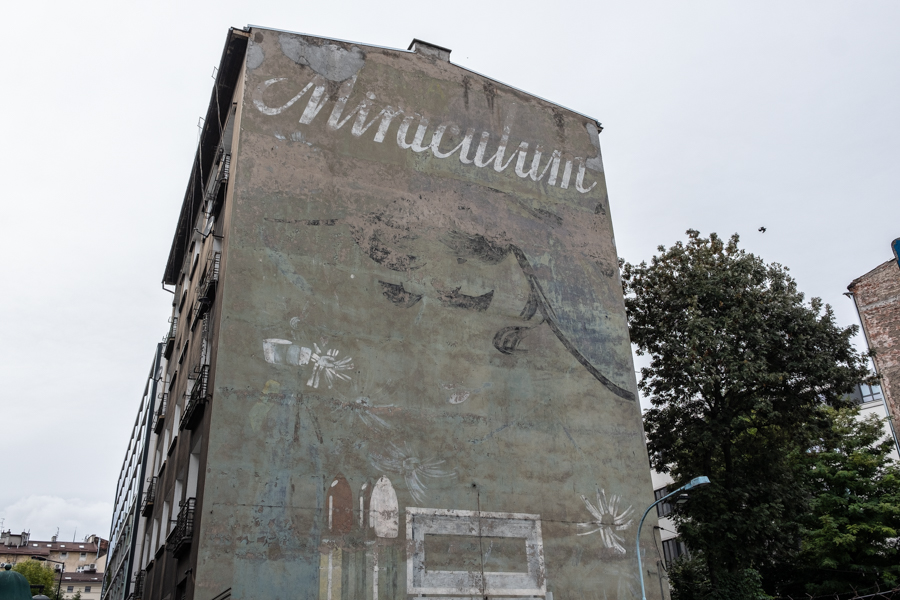
A badly faded advertisement for some defunct cosmetics brand from Communist times:
39_18
On the large square in front of the train station there is a large memorial to the struggle against Communism and Poland’s NATO membership:
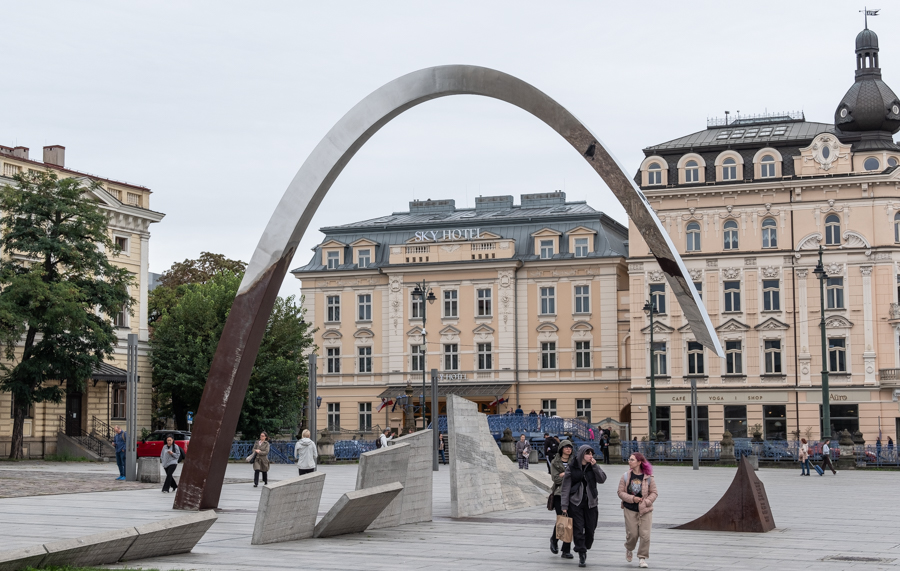
39_19
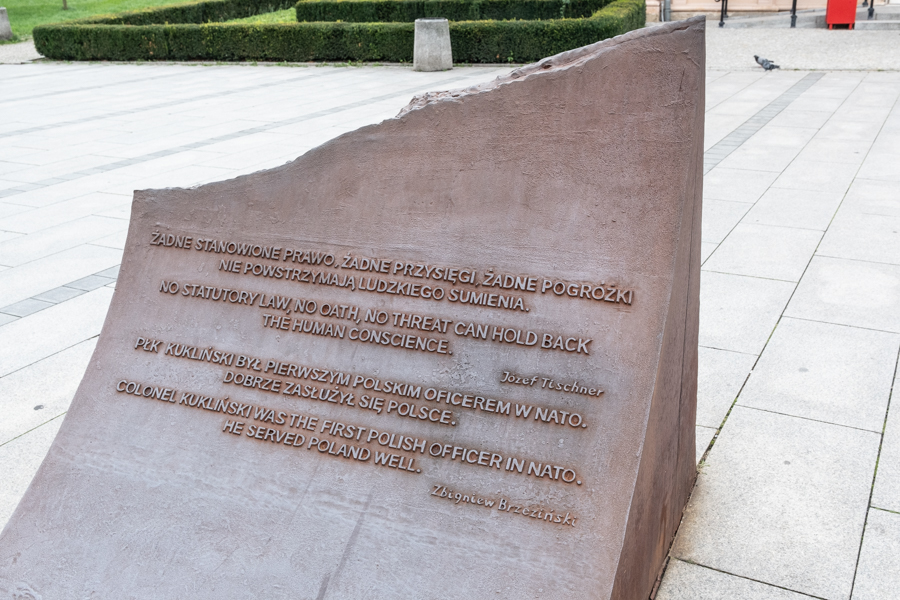
39_20
Explanations in Polish:
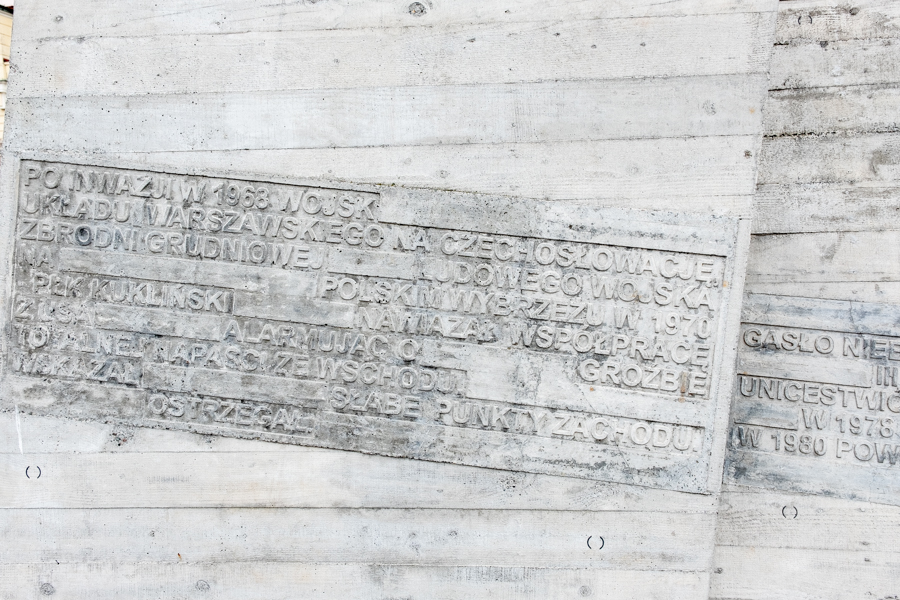
39_21
and in English:
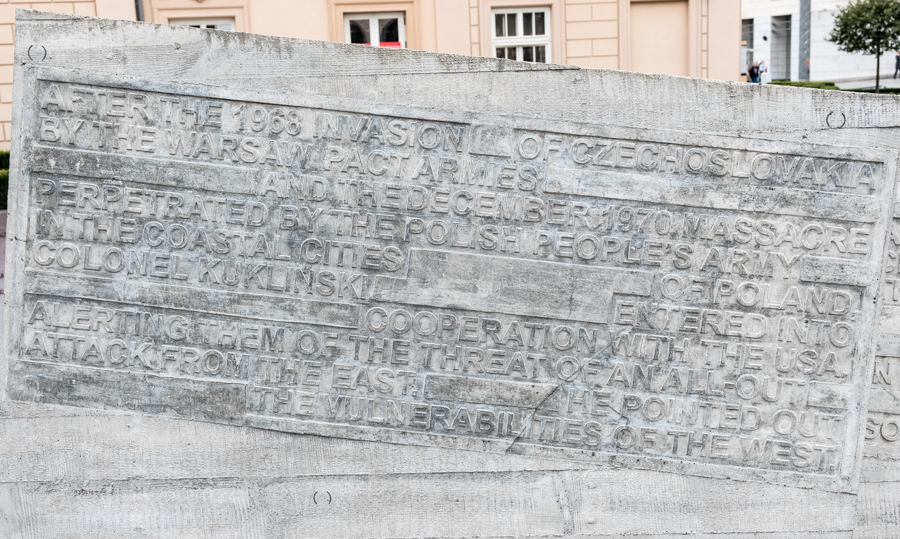
39_22
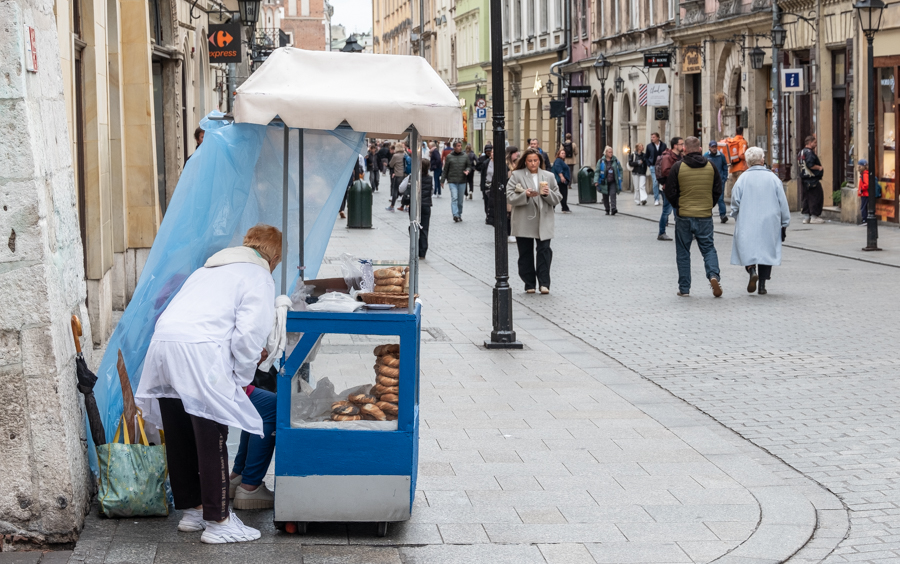
A final image from Kraków, the traditional Polish snack, a pretzel from a cart:
39_23
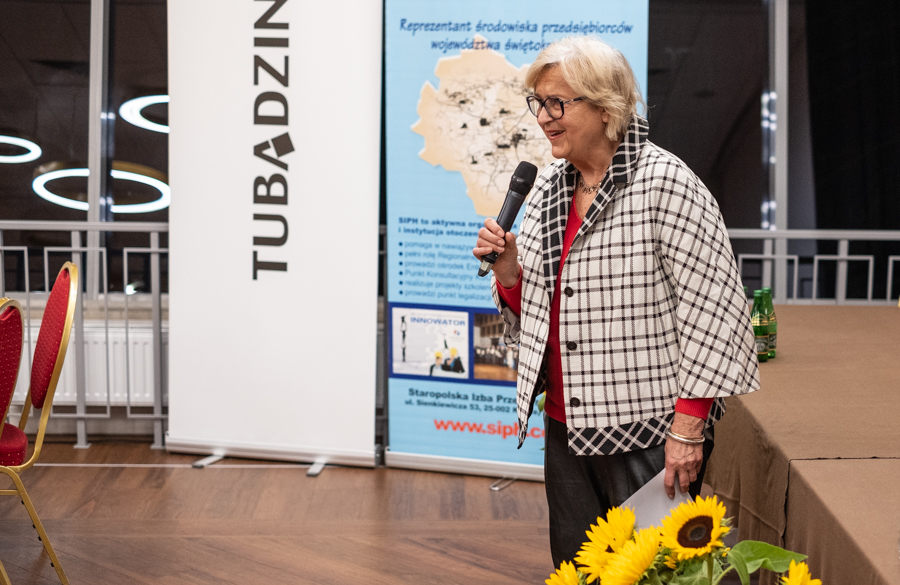
The train ride from Kraków to Kielce was relatively short, 1 1/2 hour. I was met by a driver at Kielce’s train station and driven the 10 km or so to the village Cedzyna, where the conference was being held at a lakeside resort hotel. The organiser of the conference, now it its 44th edition, is Alicja Adamczak, former head of the Polish Patent Office and now a professor at Kielce University of Technology. She is 78 but her energy and engagement have not diminished:
39_24
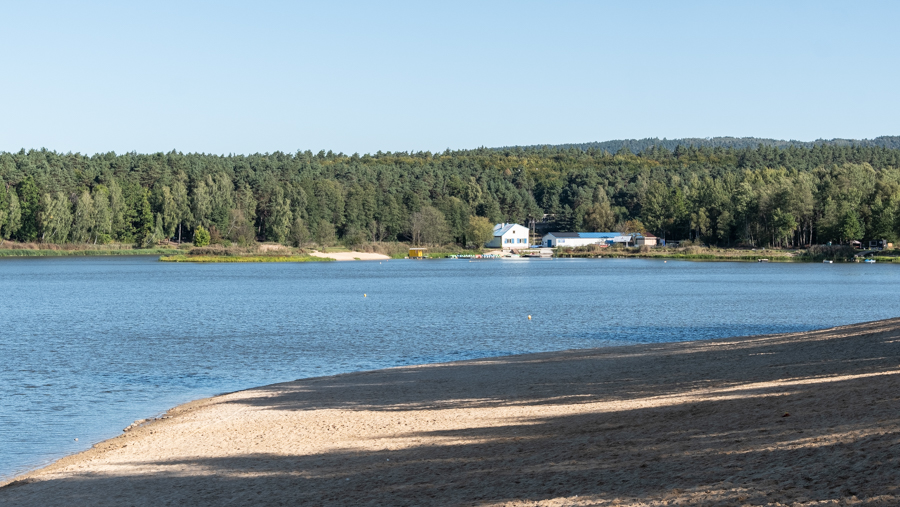
On Thursday morning, I went for a walk in the wooded area around the hotel, stopping at the lake (which is actually artificial):
39_25
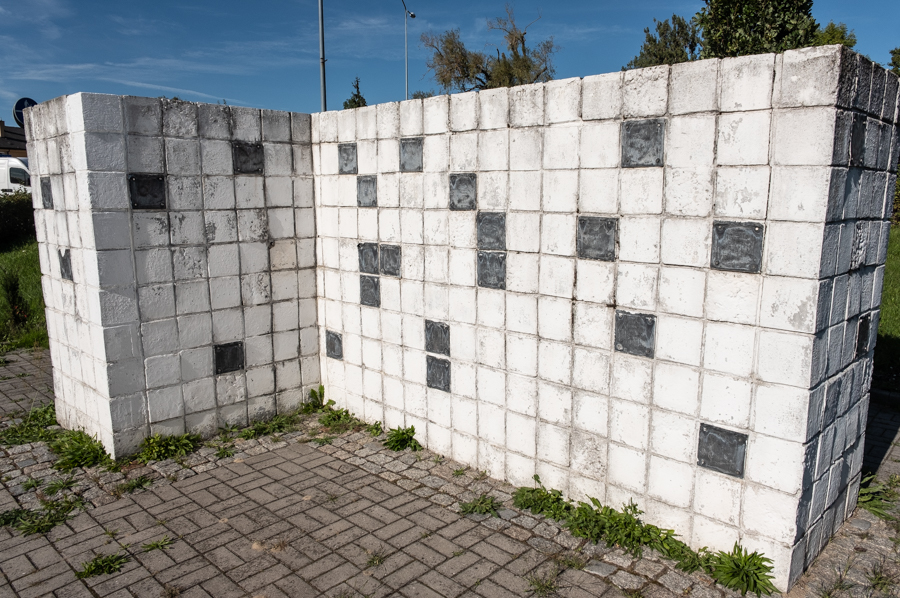
I made my presentation in late morning, and after lunch I took a taxi to the centre of Kielce to have a look around. In particular, I wanted to visit two adjacent Jewish memorials. Like other cities in Poland, Kielce had a large pre-war Jewish population, most of which perished during the Holocaust. After the war a couple of hundred people came back to try to rebuild their lives, but in 1946 an infamous episode occurred–following some rumours about a crime having been committed, a crowd attacked the local Jews. About 40 people died in the pogrom. For something like this to happen a year after the end of the war was a shock and the shame is attached to Kielce to this day. There is a small memorial near the Jewish community centre:
39_26
Across the street from the pogrom memorial there is a memorial to the people from Kielce ghetto:
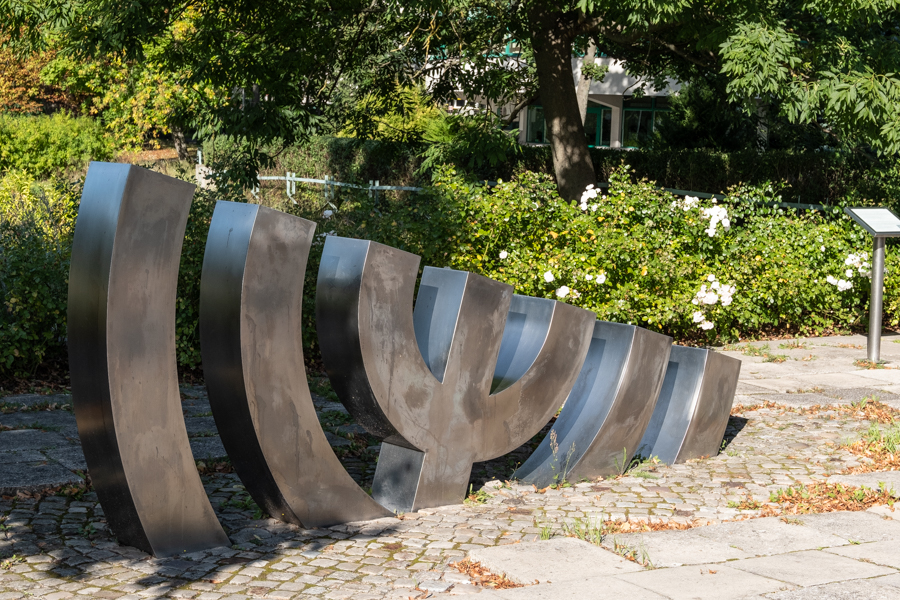
39_27
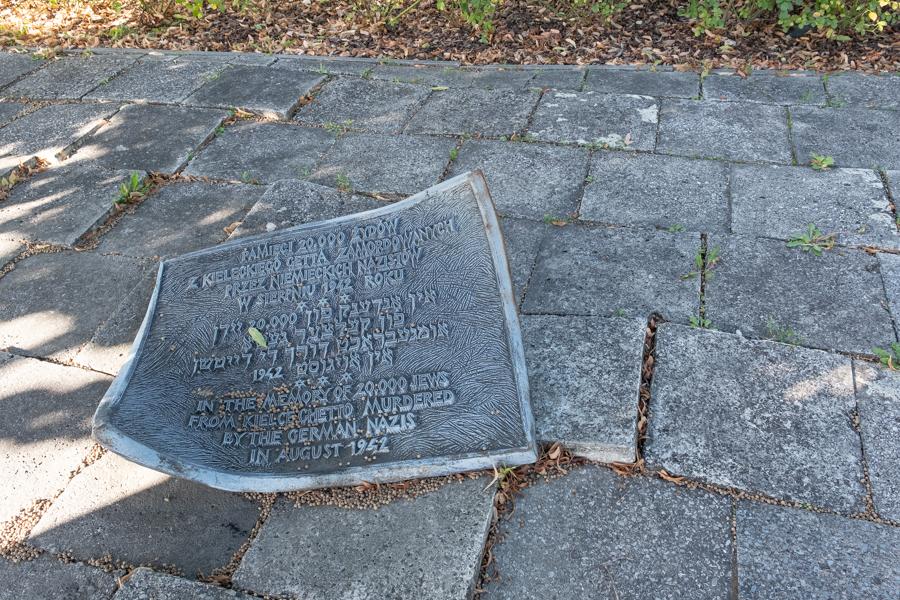
39_28
Having taken in that painful history, I walked around some more. Today’s Kielce, while no metropolis, is a pleasant town. One of my favourite spots is Artists’ Square, filled with sculptures by local sculptors, like this one, called FoltaÅ„ski’s Fiancée by SÅ‚awomir Micek:
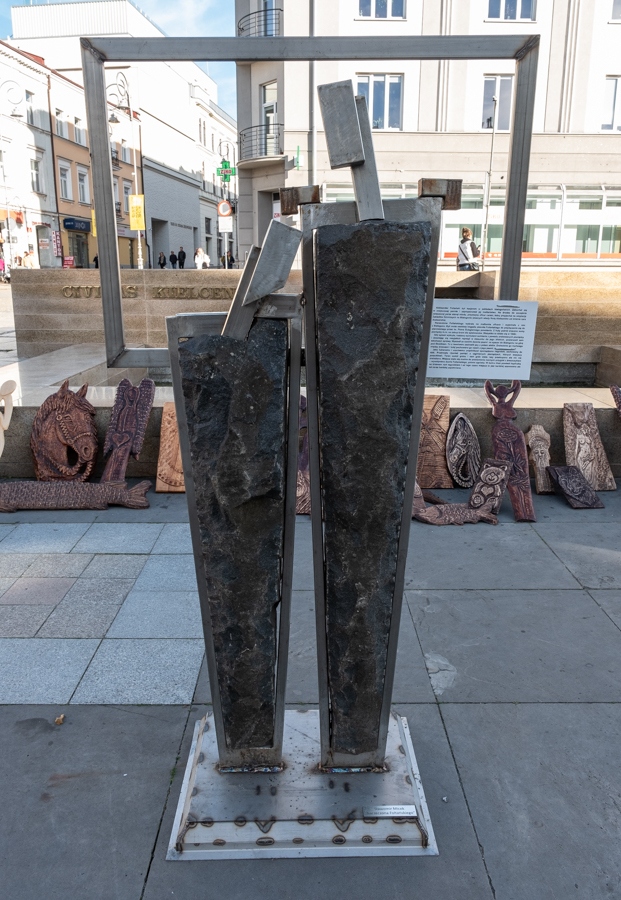
39_29
I returned to Cedzyna in time for Thursday night’s dinner, which featured a tasting of the local specialty, Nalewka ÅšwiÄ™tokrzyska, basically vodka infused with various flavours such as nuts, honey, various fruits and berries, and then aged:
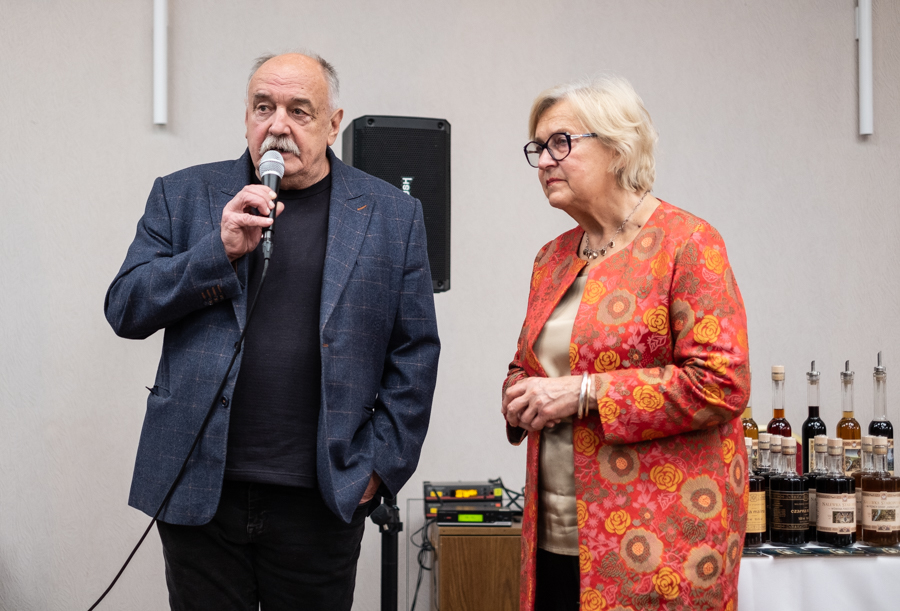
39_30
I had another presentation at the conference on Friday morning, and then I said goodbye and went back to Kielce. I had booked a late afternoon train to WrocÅ‚aw to spend the weekend with my sister and brother-in-law, so I had a couple of hours to walk around the city some more and to have a good lunch before the 4-hour train ride. I walked back to Artist’s Square to have a look at some nearby murals:
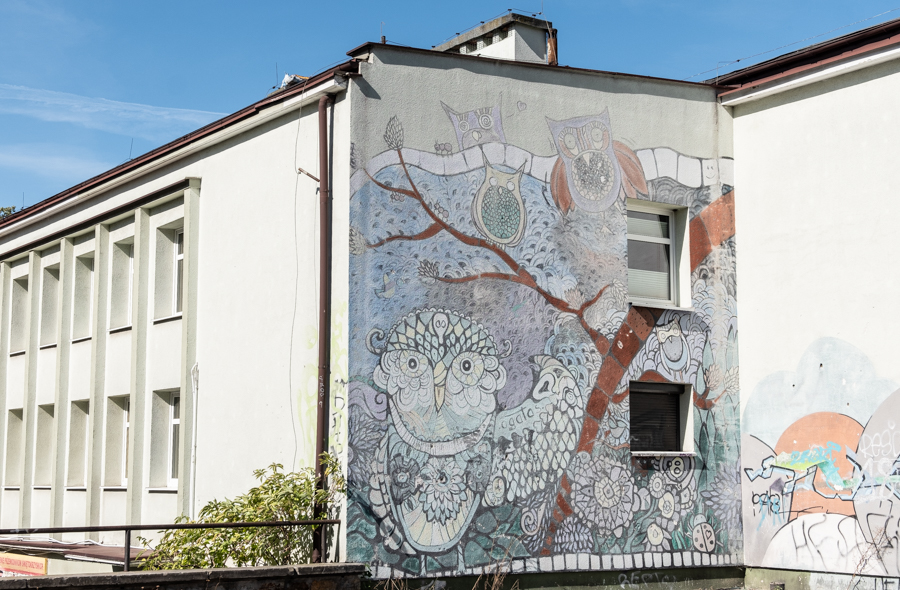
39_31
The main pedestrian street of Kielce is called Sienkiewicz Street, named after Poland’s great 19th century writer of historical epics at a time when Poland did not exist as a state and people needed a reminder of glorious events from the past. These two women seemed to be producing a video for Instagram:
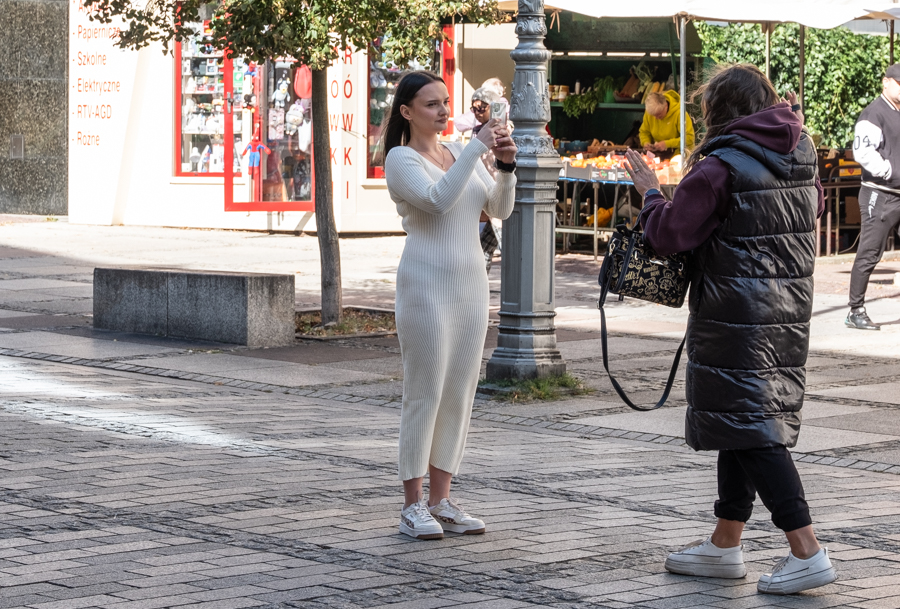
39_32
I found a nice quirky place called Ferment Neobistro near the train station where I had an excellent lunch washed down with some craft beer. A proper Polish meal consists of a soup and a main course. My soup was Żurek, my absolute favourite soup:
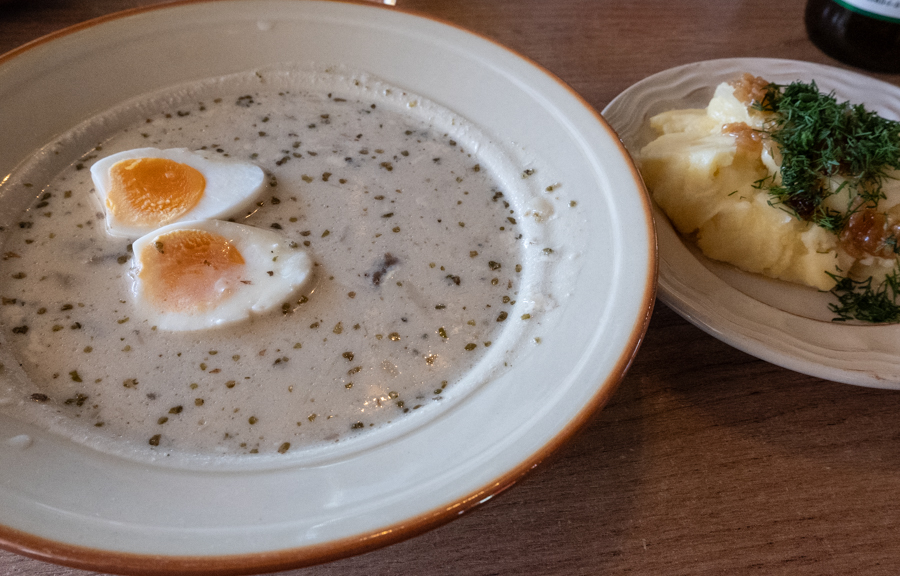
39_33
My main course was equally excellent, a Seitan Stroganoff:
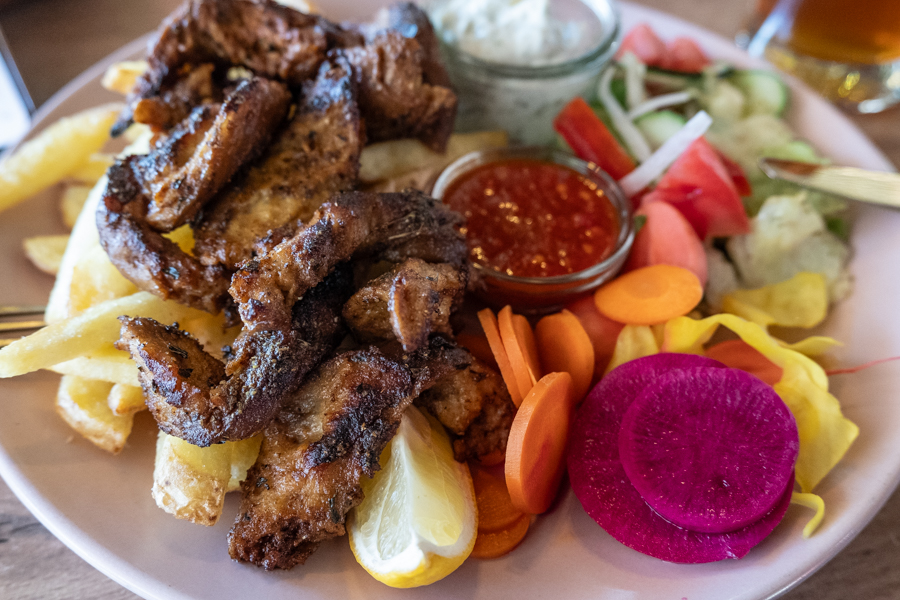
39_34
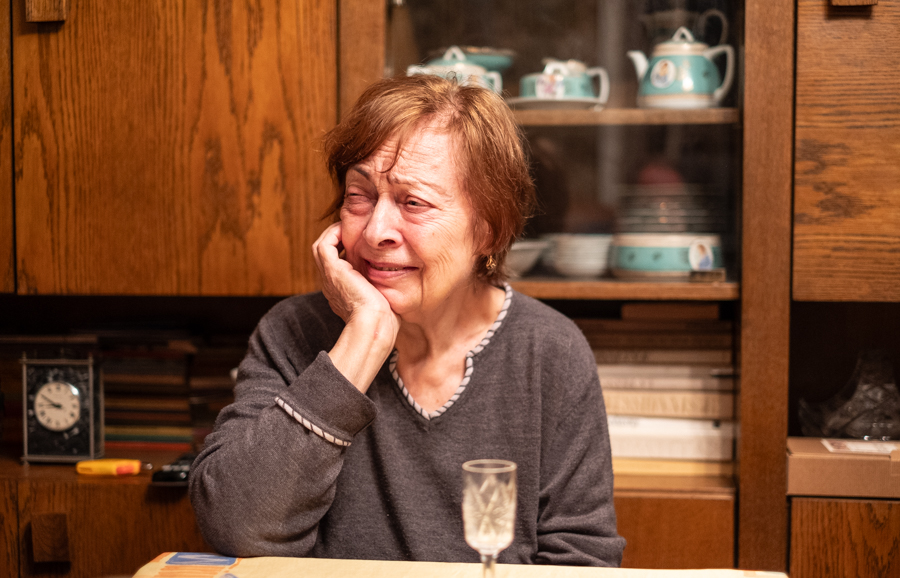
I made my way back to the train station, retrieved my bags from the locker and spent the next 4 hours travelling to Wrocław. My sister and brother-in-law were waiting for me with an evening meal and of course some vodka:
39_35
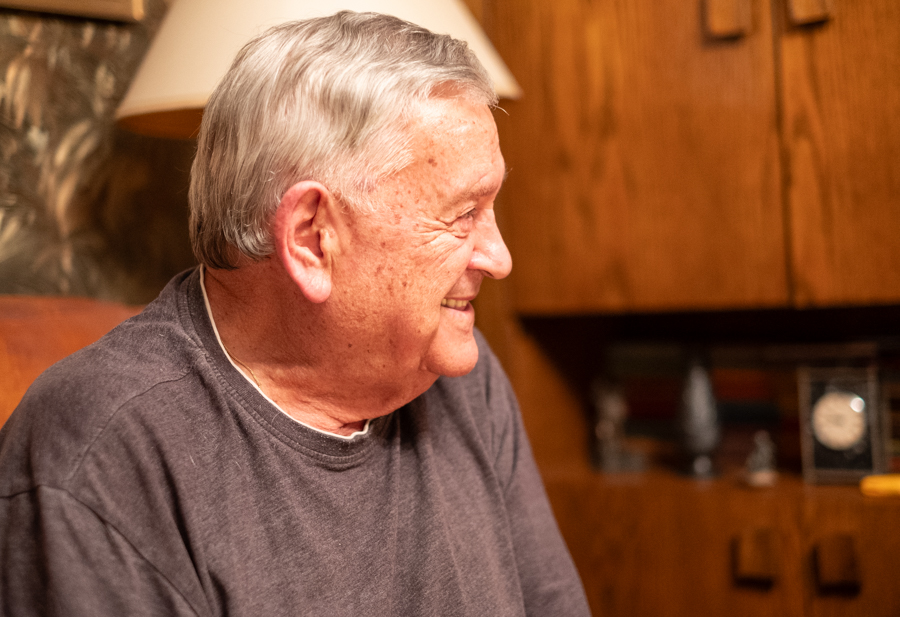
My sister turns 80 on October 13th, and my brother-in-law is 87. They are keeping well, I think:
39_36
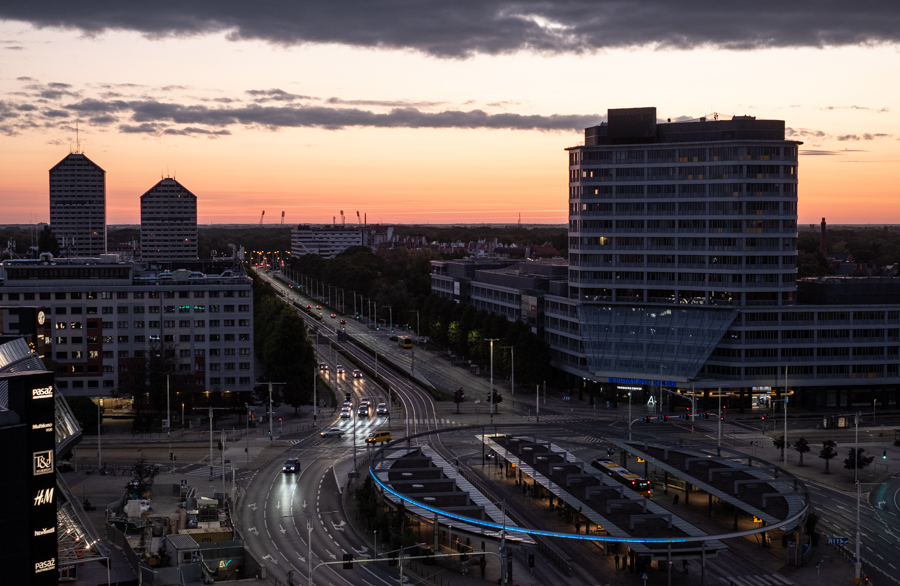
As usual, I woke up early Saturday morning and as is my habit, I took a pre-dawn photo of the Ronald Reagan Circle from my sister’s 11th floor balcony:
39_37
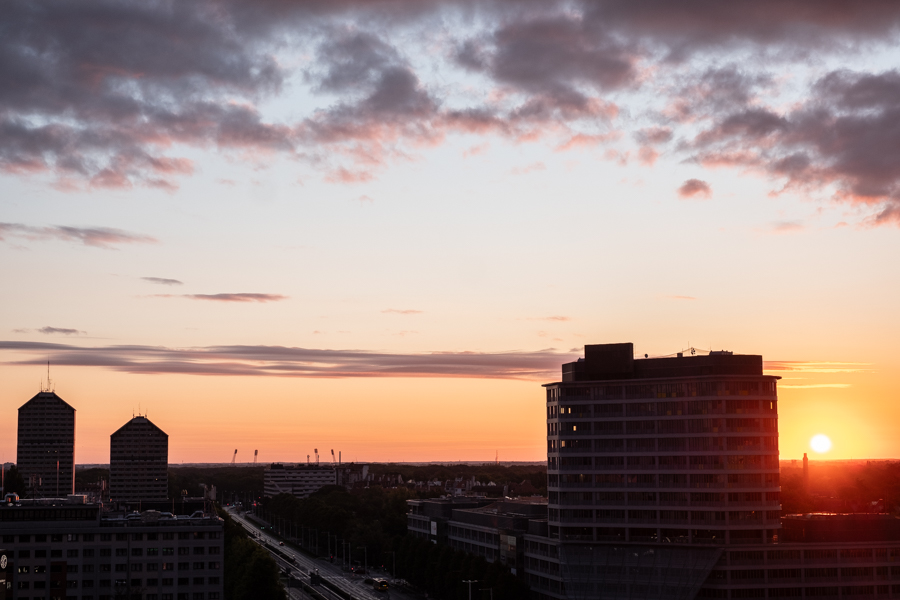
A bit later, sunrise over Plac Grunwaldzki. The two tall buildings on the left are called “Chalk and Pencil” and are student residences for the nearby university:
39_38
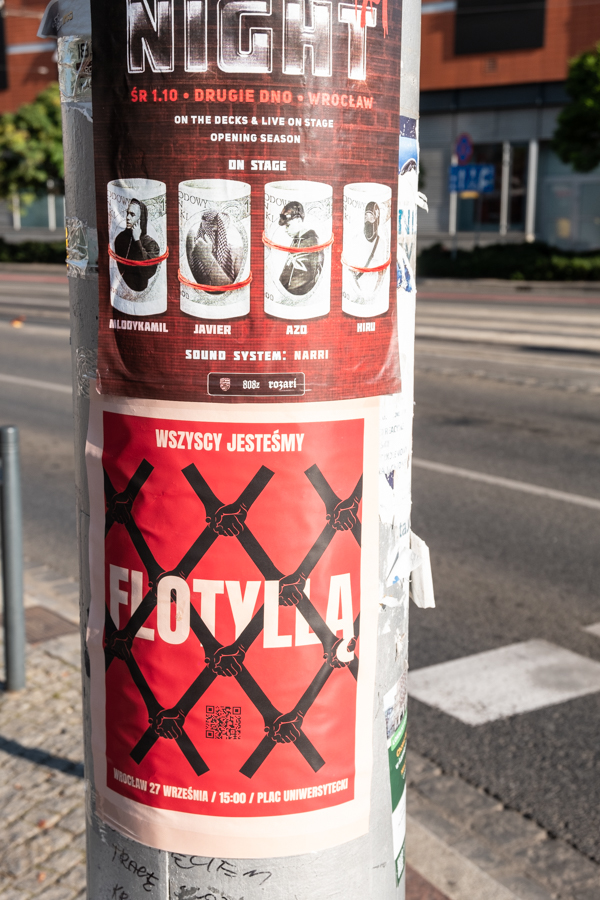
The war in Gaza is also reflected here. The poster says “we are all the flotilla”:
39_39
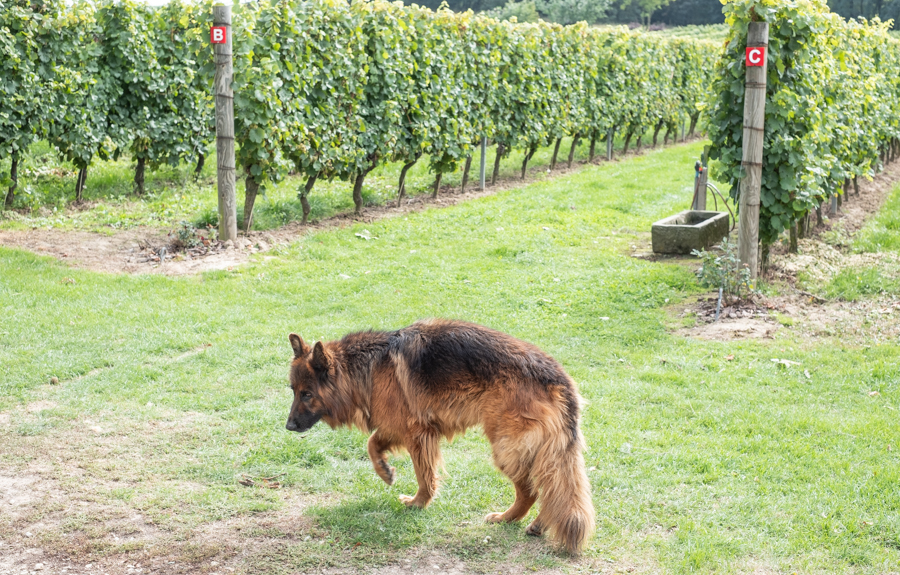
Later in the morning, we drove to a village called Zachowice, about 30 km from Wrocław, to visit Adoria Winery, a place I have visited before and whose wines I enjoy (mostly whites but also a good Pinot Noir and some local grapes). The winery is owned by a Polish-American couple; Mike Whitney, born in California and later working in the wine business in Washington State, fell in love with a Polish woman, moved to Poland and started Adoria in the late 1990s. These are their vines (they grow their own but also buy some grapes from farmers in the vicinity):
39_40
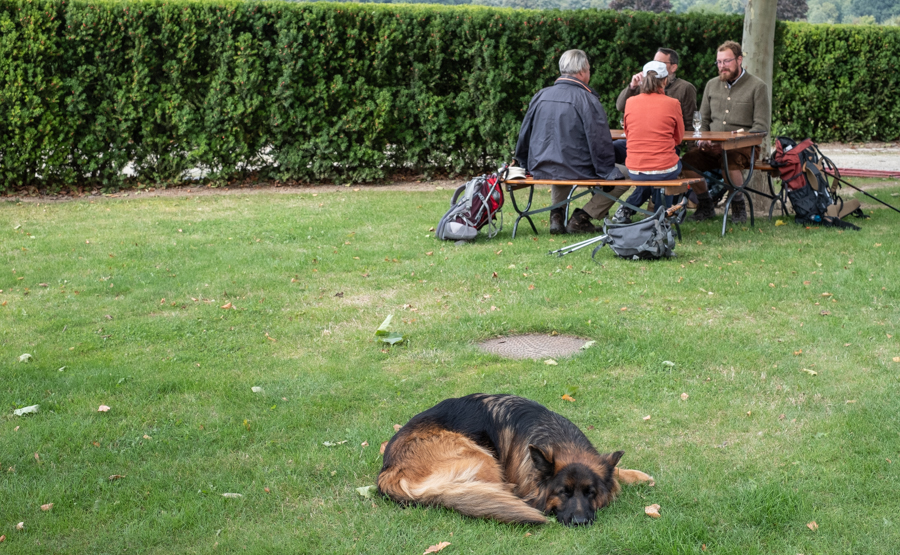
Their two dogs may look like proper guard dogs, but in reality they are just big friendly pups:
39_41
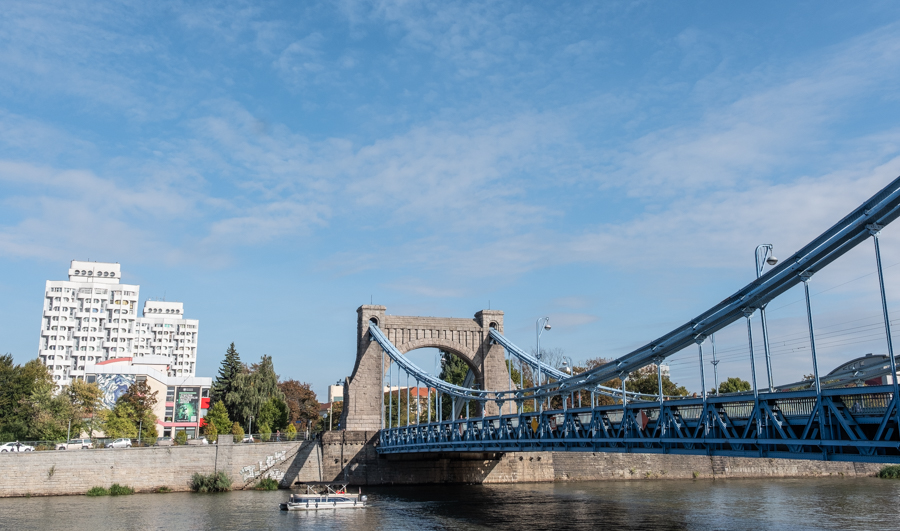
We drove back to my sister’s apartment and had lunch. Afterwards, they did a siesta while I went for a walk. I crossed the Odra river on the Grunwaldzki Bridge (opened in 1913 as Kaiserbrücke, when WrocÅ‚aw was Breslau and part of Kaiser Wilhelm’s empire). In the background are the tall apartment buildings joking called “our Manhattan”. My sister lives in one of them:
39_42
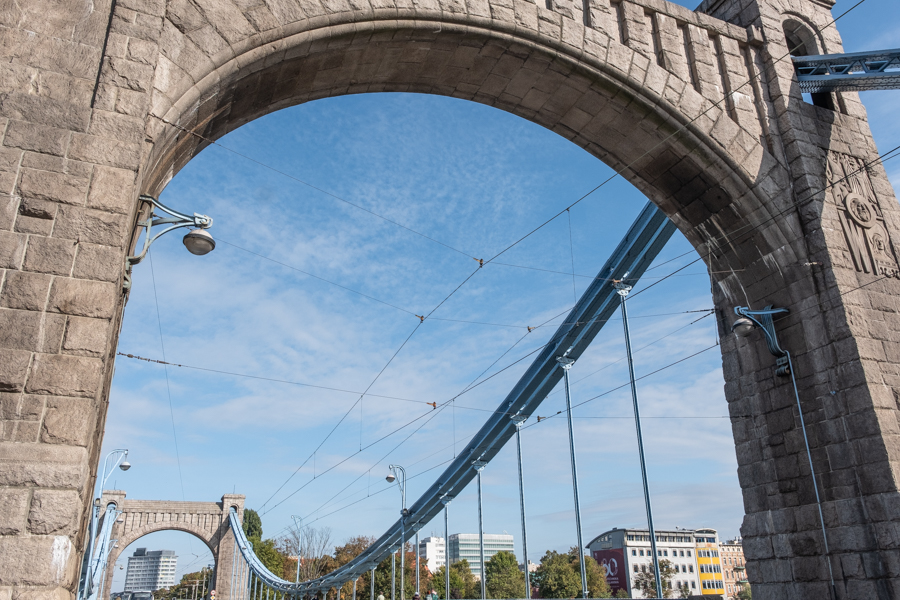
39_43
I walked along the river until I was just across from WrocÅ‚aw’s cathedral:
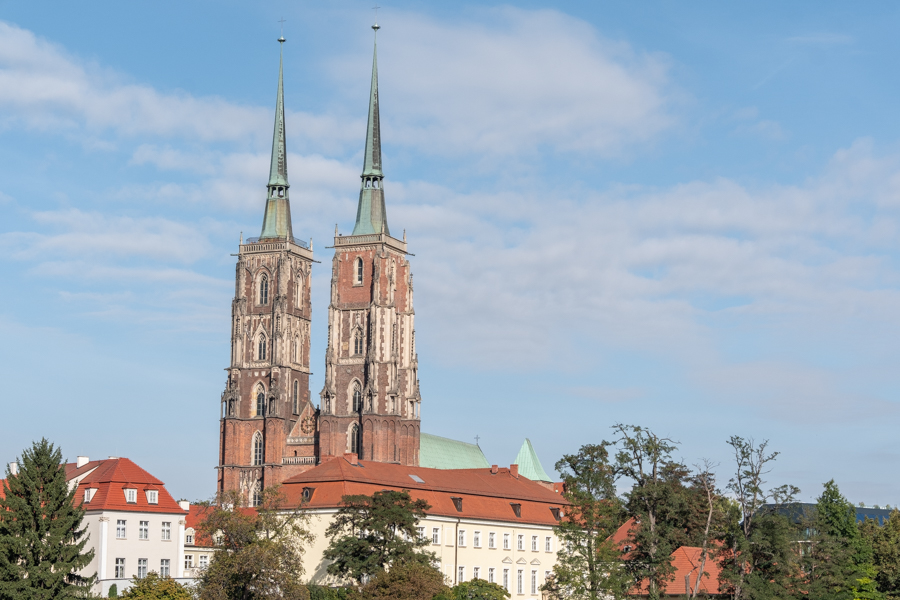
39_44
It was a nice day, and the bars along the promenade were doing good business:
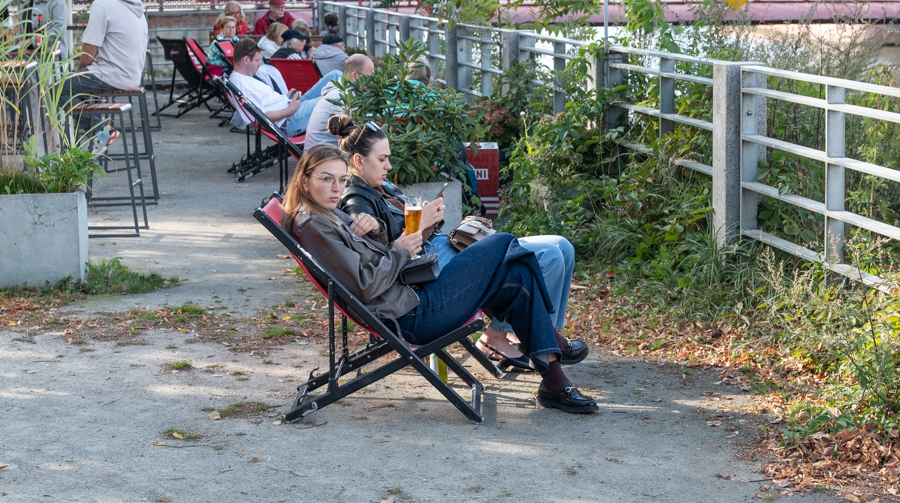
39_45
And of course I contributed to their revenue stream:
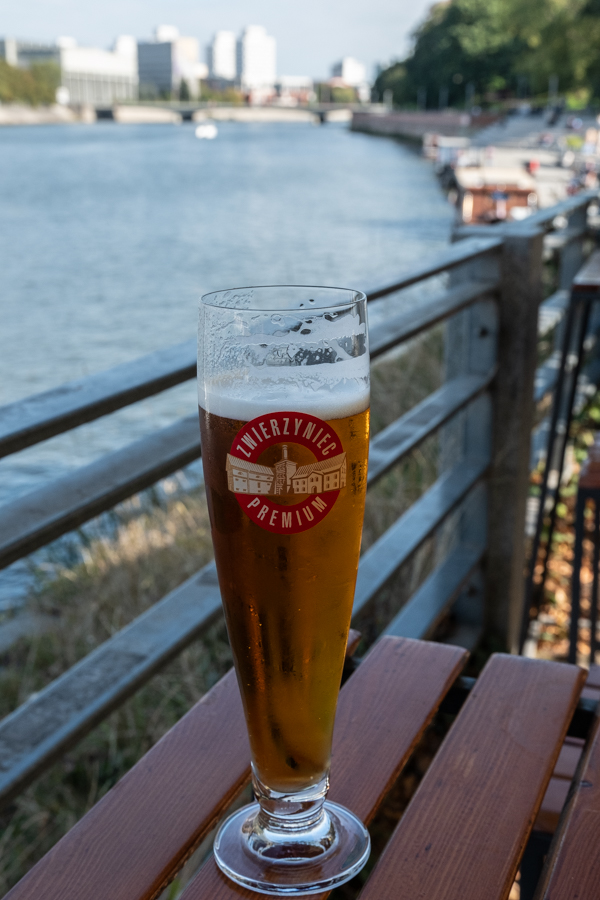
39_46
I crossed a small bridge to Ostrów Tumski, the island where the cathedral is located, and walked back to my sister’s place. On the way, I saw this charming couple:
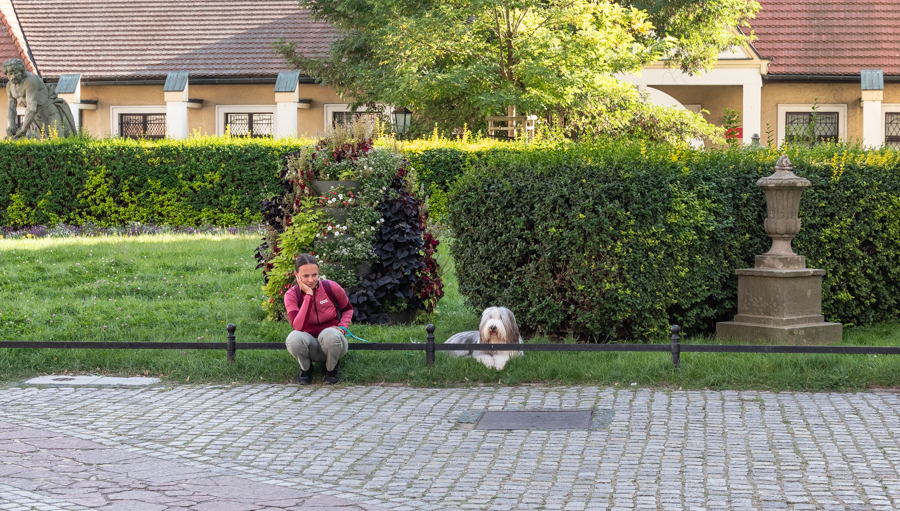
39_47
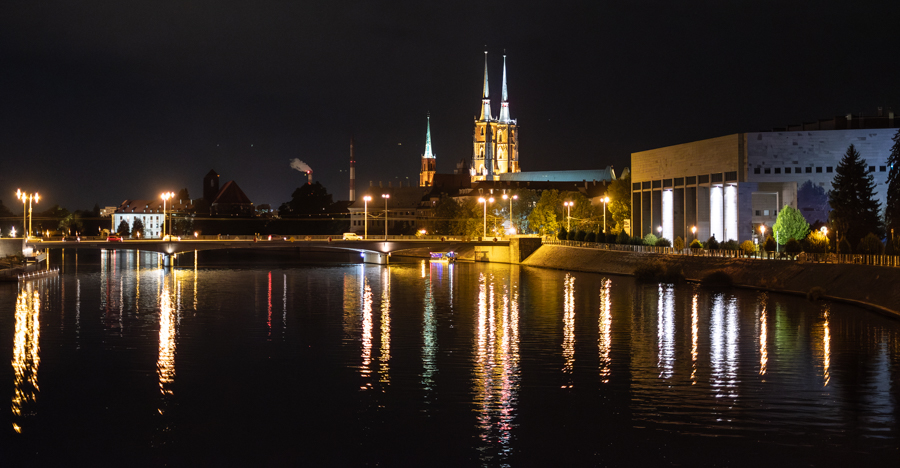
After dinner, I walked to the Grunwaldzki Bridge again, because I wanted to photograph the view at night. I was not disappointed:
More photos from Kielce can be seen here, and I have also a fuller Wrocław gallery here.