This was the week before the big fiesta in Alicante, Hogueras de San Juan, culminating on June 24th at midnight. I generally stay away from the burning of the installations–it happens late and it is too crowded. But I like to walk around the city and look at the preparations during the days leading up to the big event.
25_1
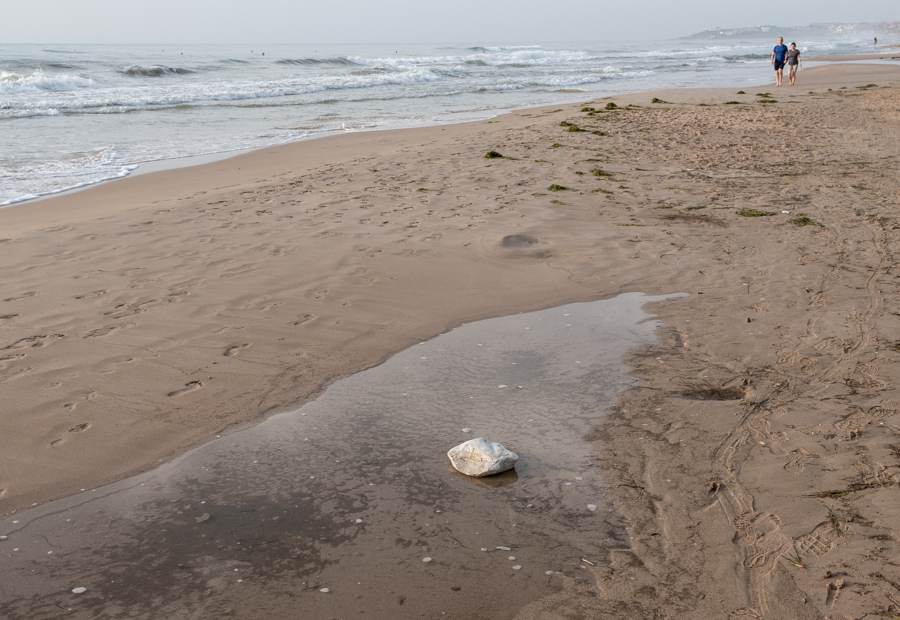
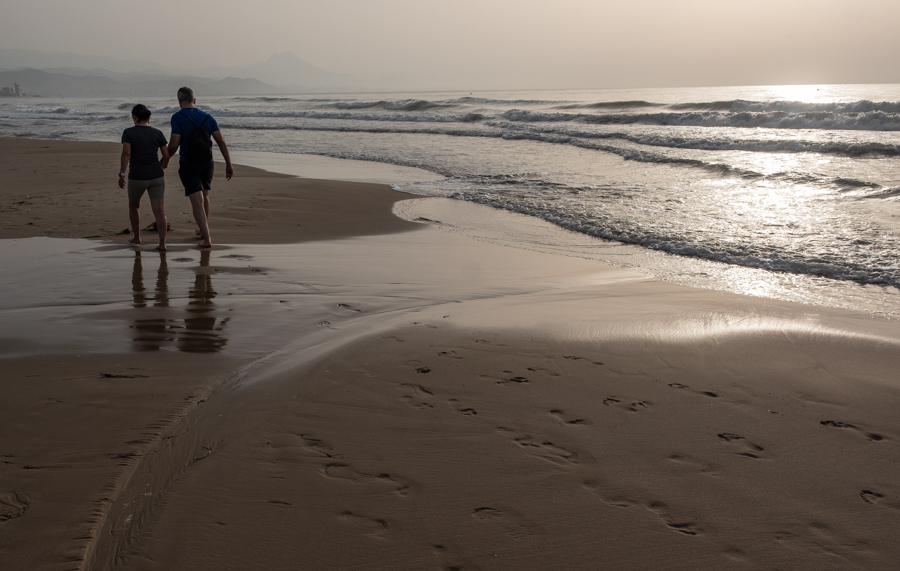
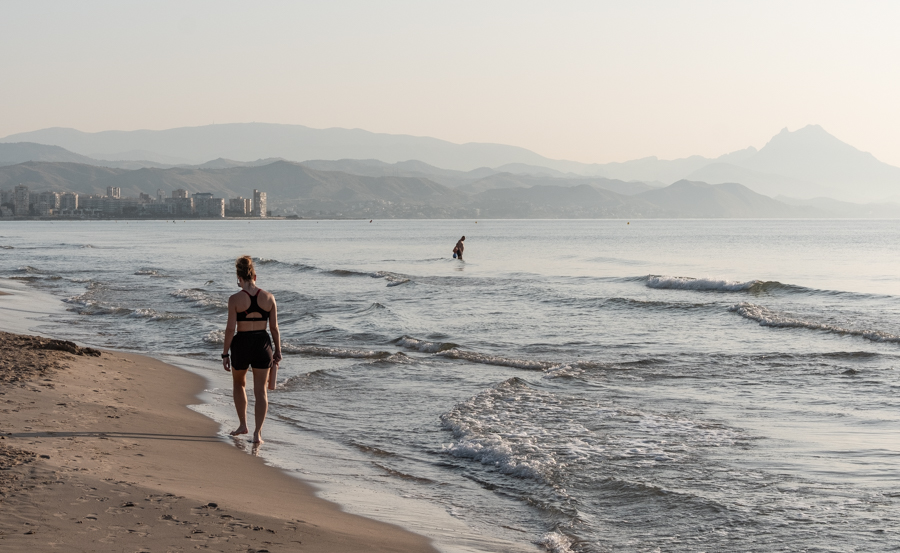
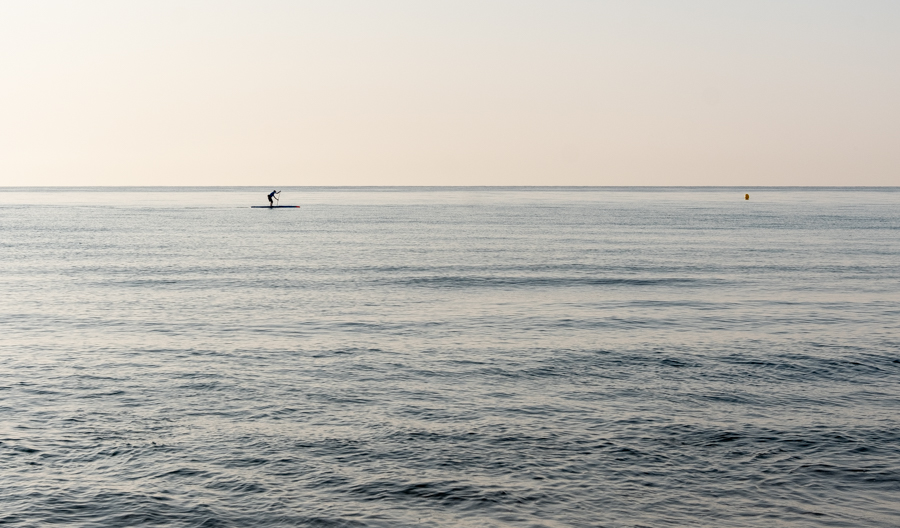
But I start with some of my usual morning photos from the beach. It is wonderful how the light is different every day:
25_2
25_3
25_4
25_5
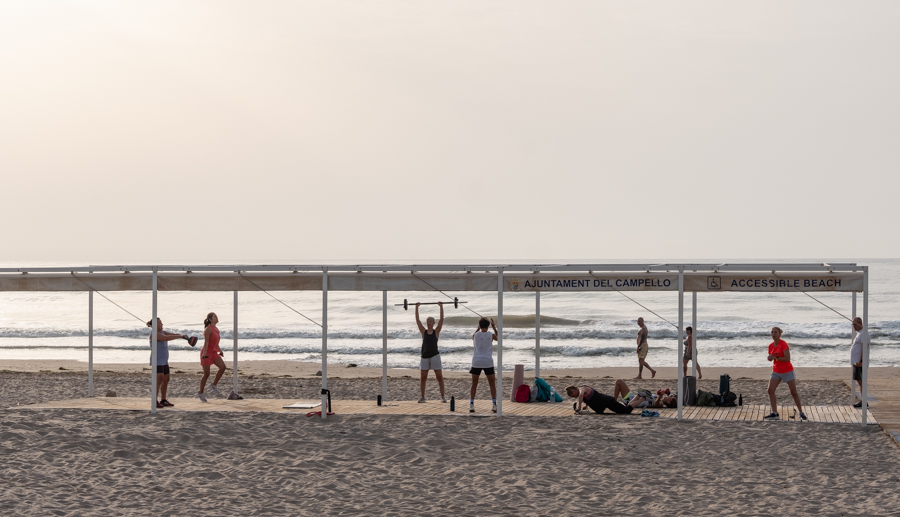
This wooden platform is designed for people in wheelchairs to be able to enjoy the beach. But in the early morning people use it to exercise. It is very much a thing here in Alicante, to exercise on the beach:
25_6
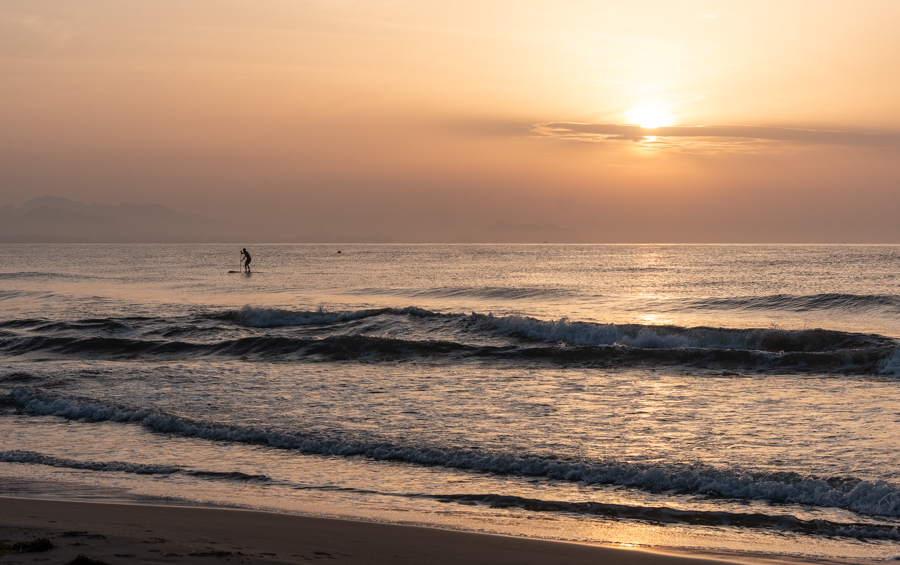
A golden sunrise:
25_7
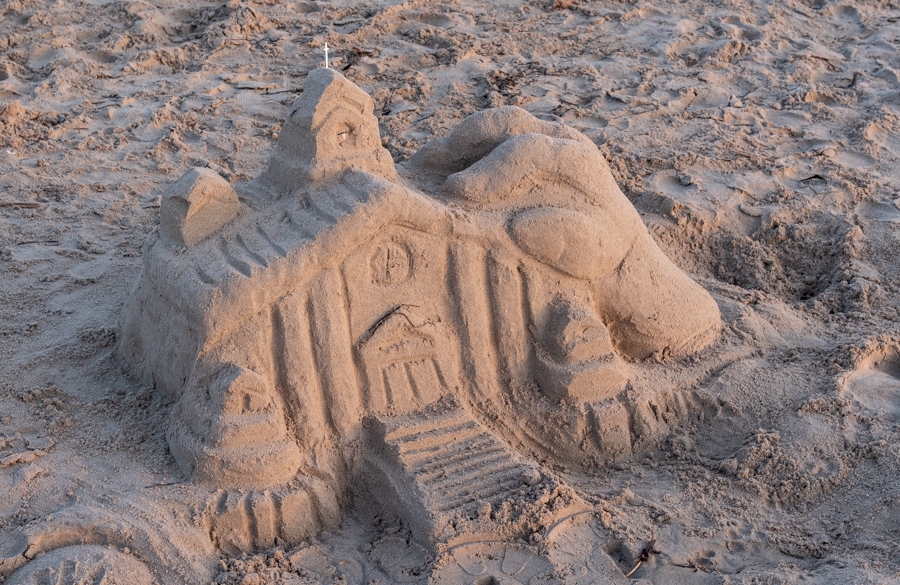
Sand church:
25_8
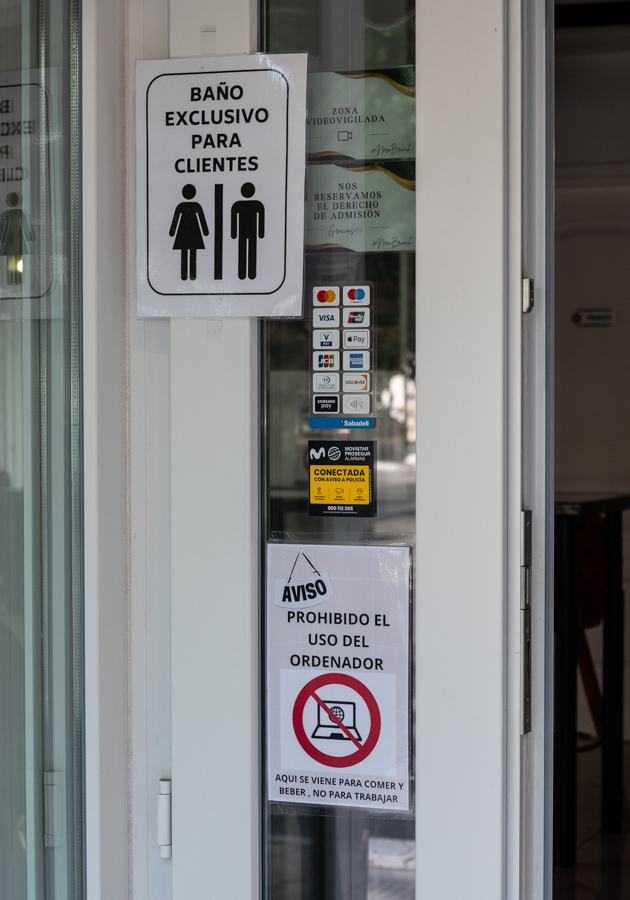
Now to the centre of Alicante. I went to look at the hogueras, large installations made of paper maché and put up at various points in the city. They often have a theme related to current events. Each is created by a local association, and there is a competition among the different associations for the best installations. Their shelf life is only a few days. They are officially finished on June 20th, and are burned at midnight on June 24th. While walking to the first hoguera, I happened on this amusing sign outside a bar:
25_9
The first place I went to was Plaza Séneca, a square in a neighbourhood where tourists never set foot, as it some distance from the heart of the city and from the main beach. So the hoguera there was very much for the locals:
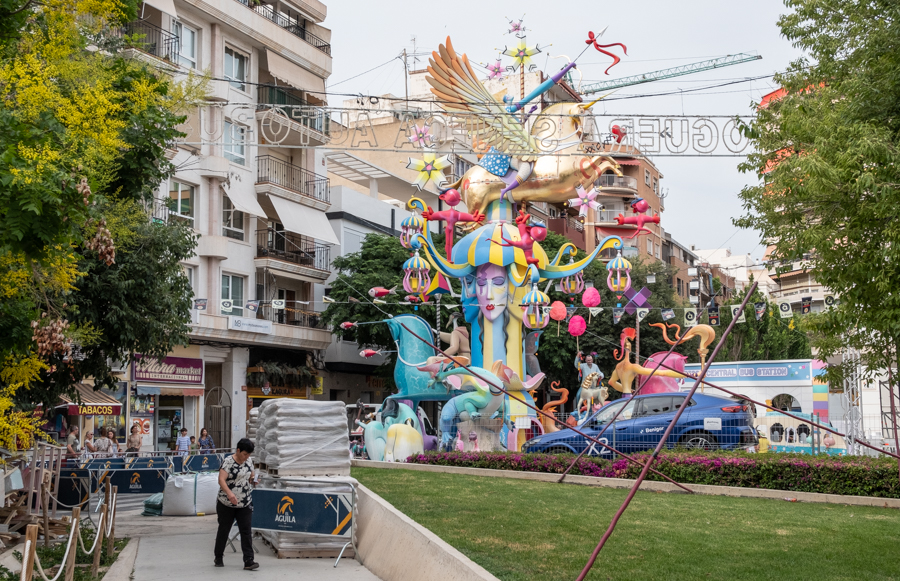
25_10
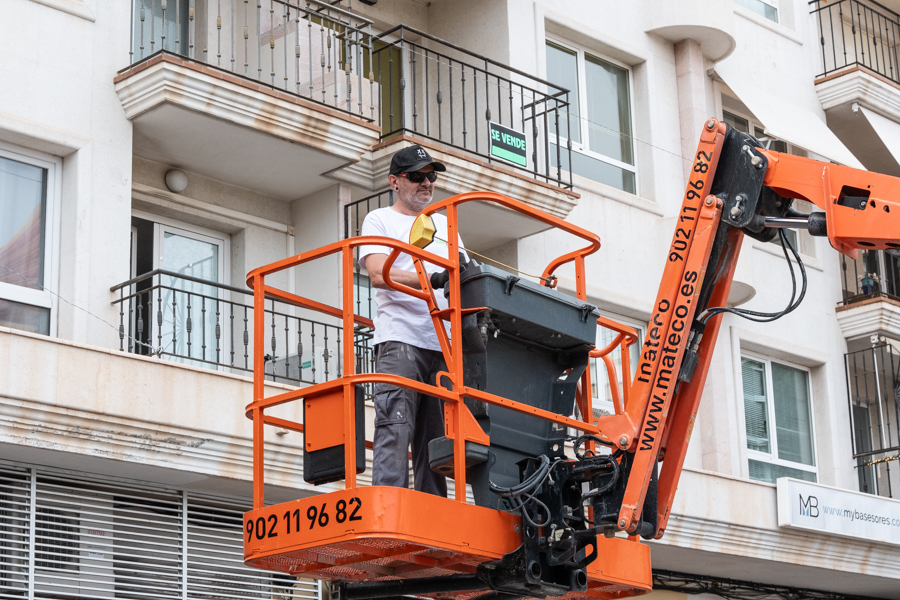
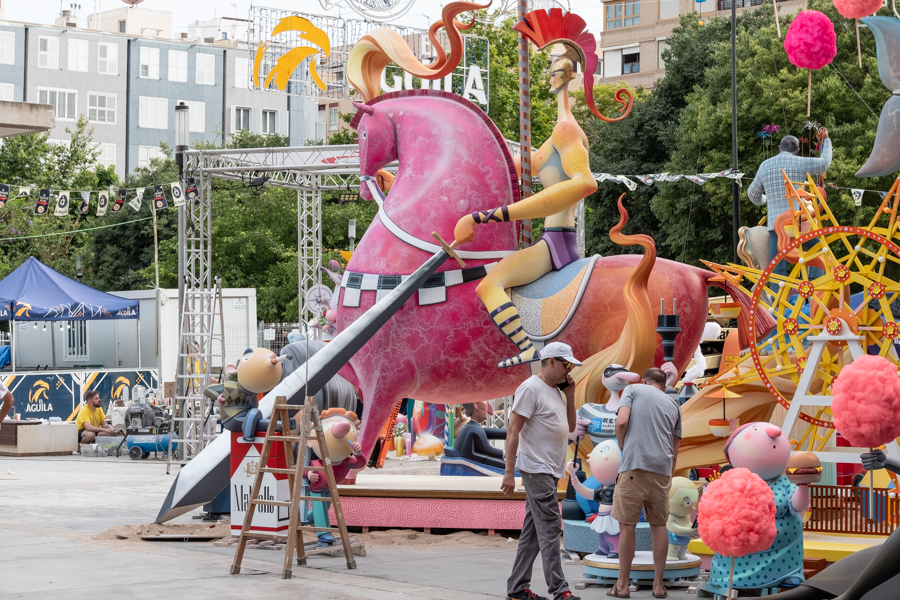
The hoguera was still a work in progress. When I watch these scenes, I am struck by a couple of things. First, the organisation and effectiveness, not things that Spain is most famous for. But these things get completed on time, get burned on time four days later, and everything is cleaned up within 12-18 hours afterwards. The second feature of the celebration that continues to amaze me after all the years of living here is that so much effort is expended on something that will last only a few days:
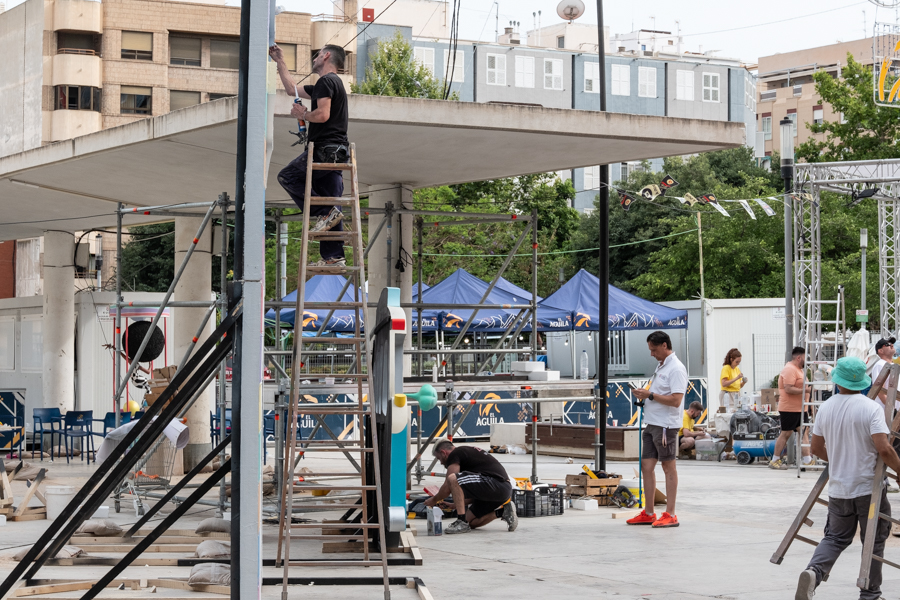
25_11
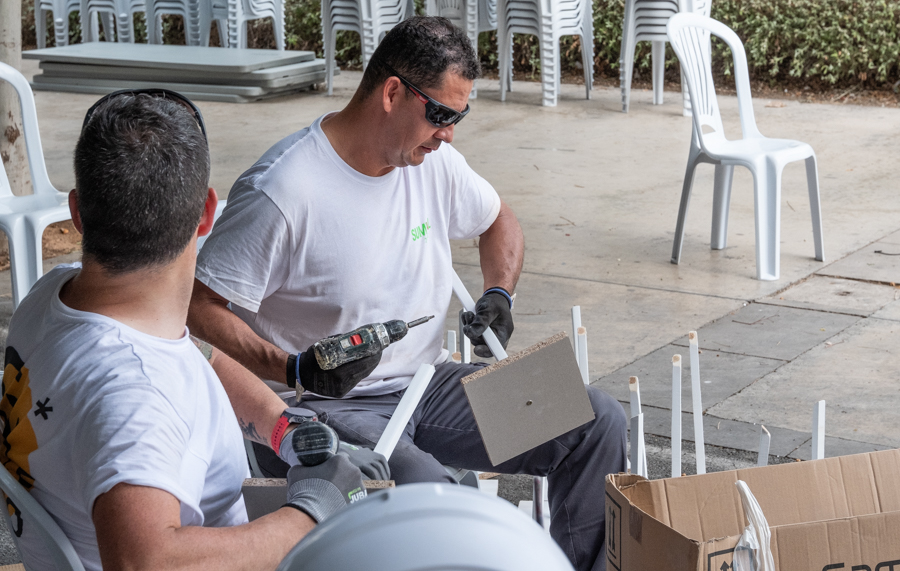
25_12
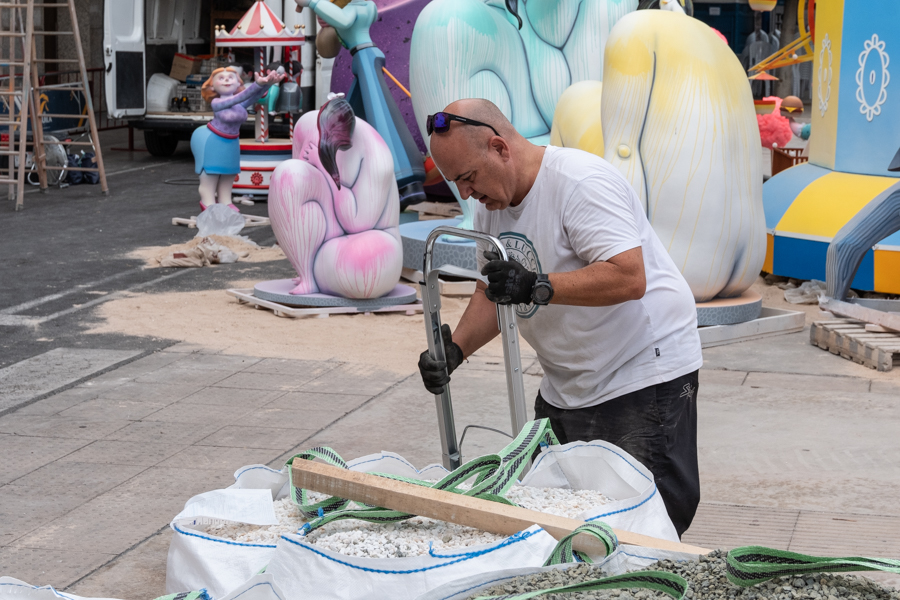
25_13
25_14
25_15
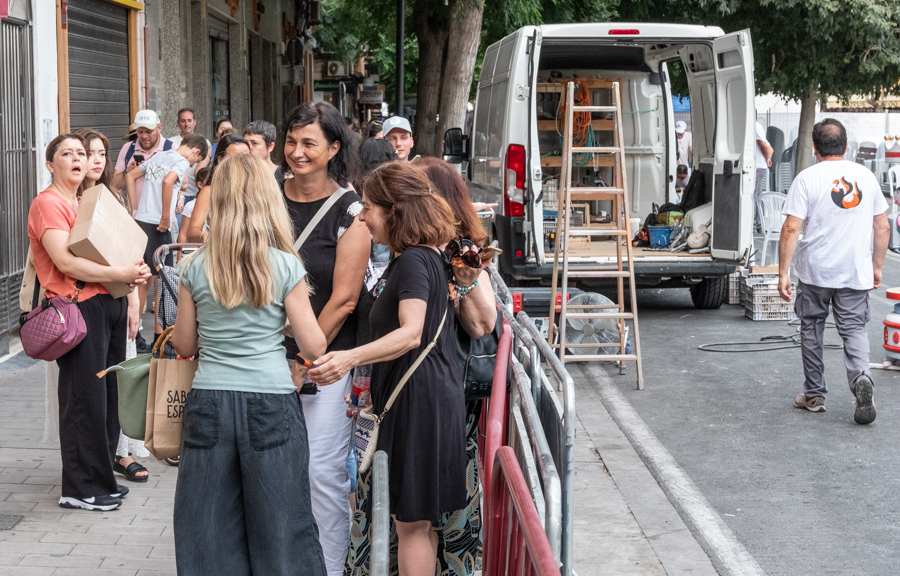
Plaza Séneca is a place where much social life takes place in the street, and even more so when there is something to look at:
25_16
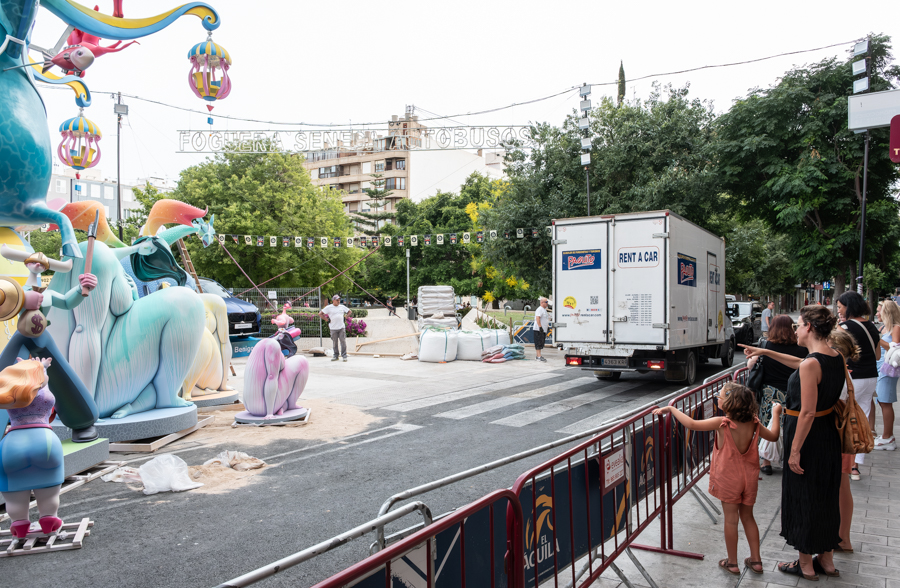
Mother explaining the hoguera to her child:
25_17
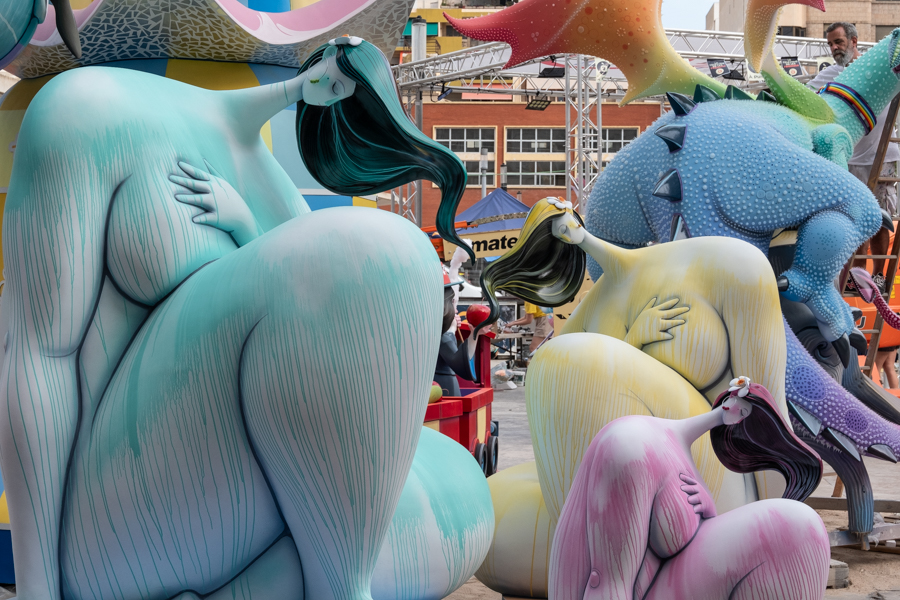
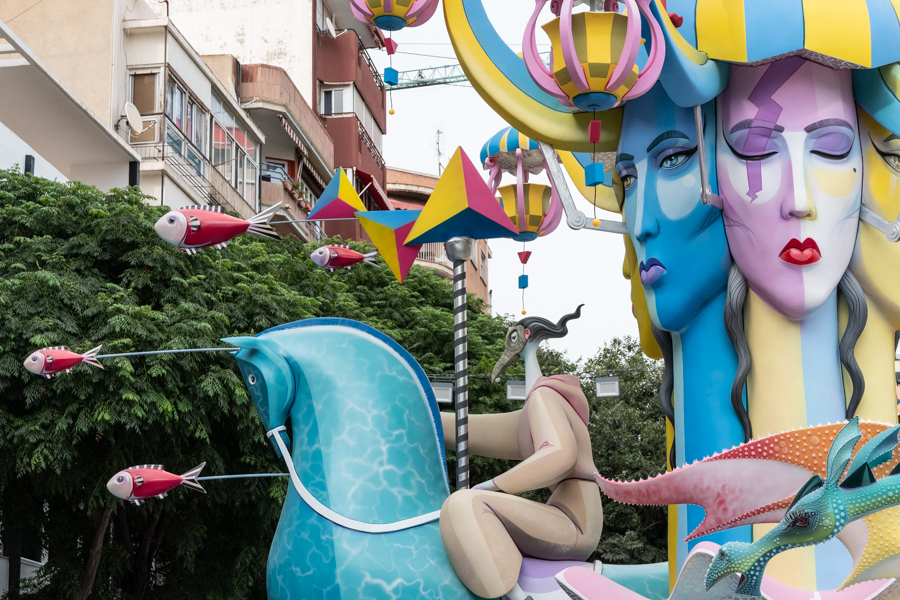
I stuck around a bit, looking at various details of the hoguera:
25_18
25_19
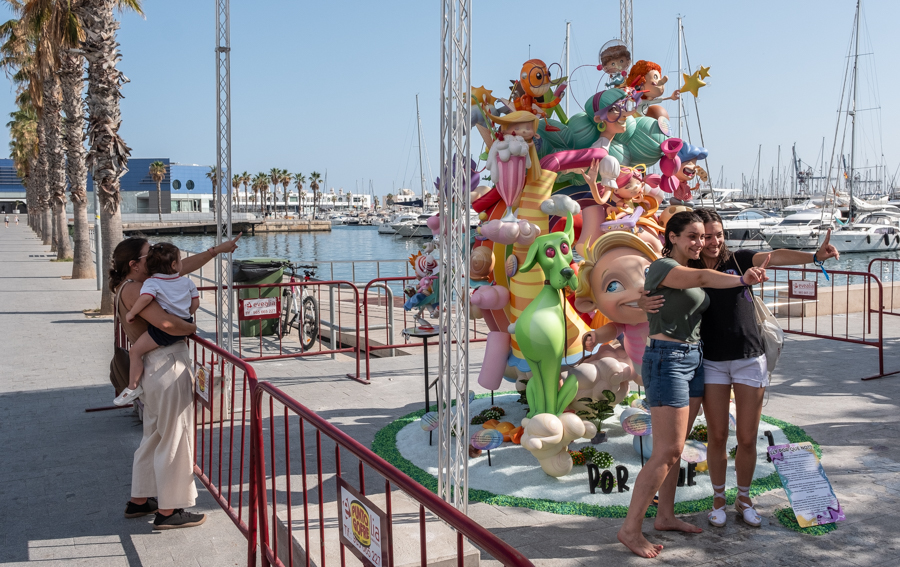
I then walked around 1 km to a much more central spot, Plaza Puerta del Mar, home of two major hotels and the main city centre beach. There were several hogueras in this general area, starting with this one. Here, there were lots of passers-by, both locals and tourists, and many selfies were being taken:
25_20
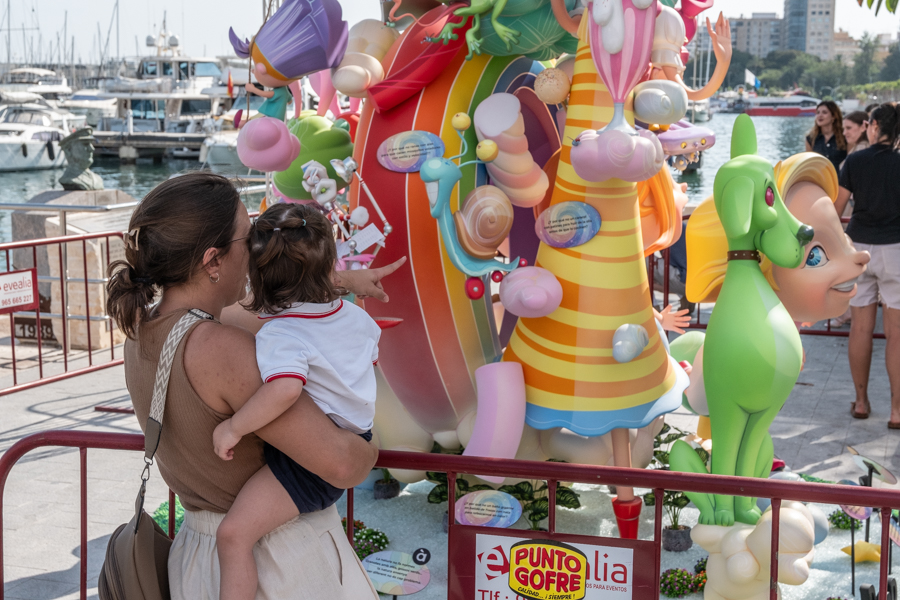
A similar scene to the one I witnessed earlier on Plaza Séneca:
25_21
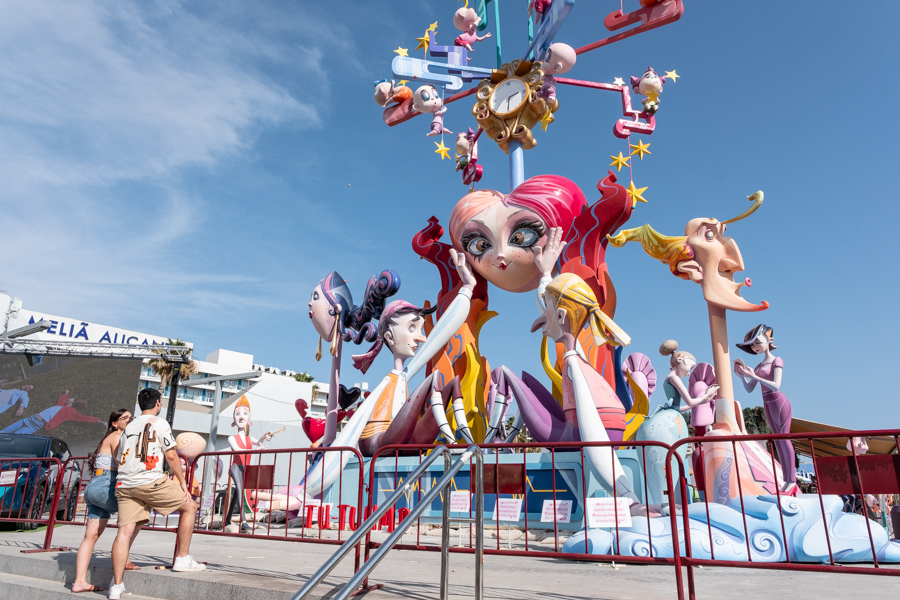
A young couple looks on:
25_22
The hoguera was quite elaborate:
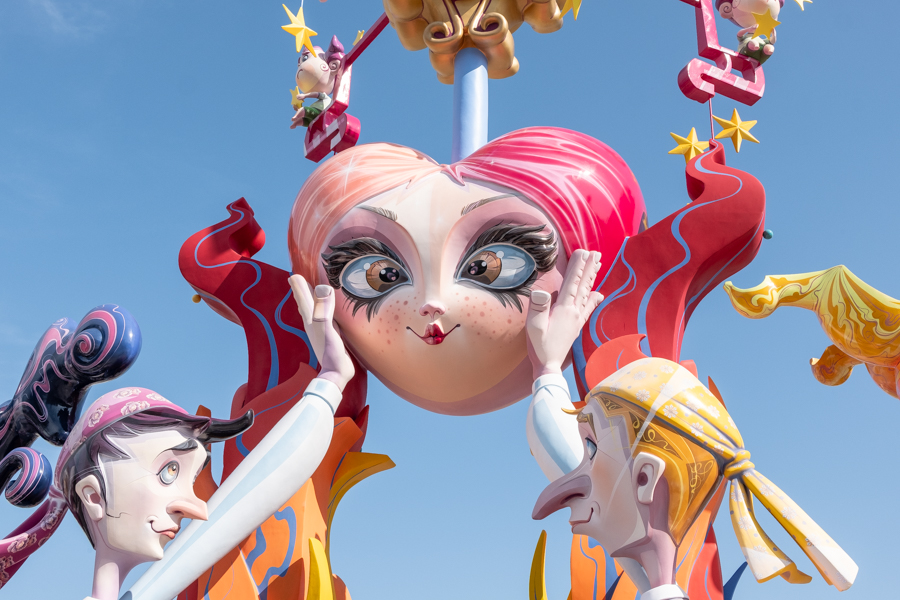
25_23
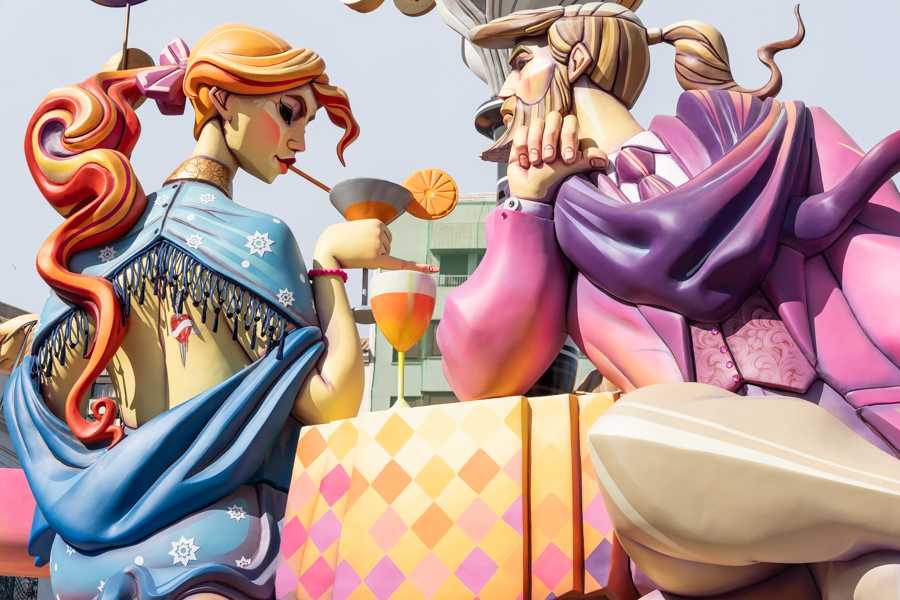
25_24
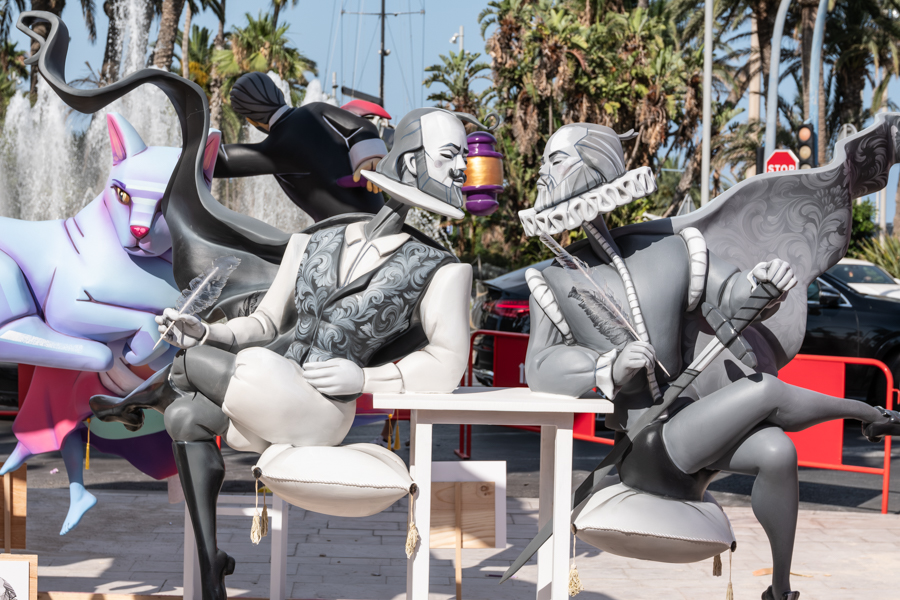
25_25
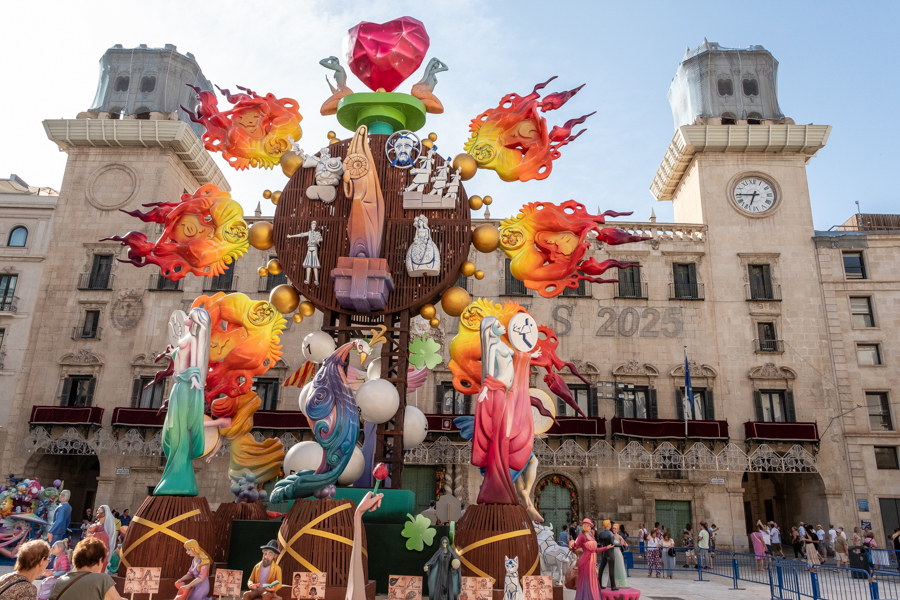
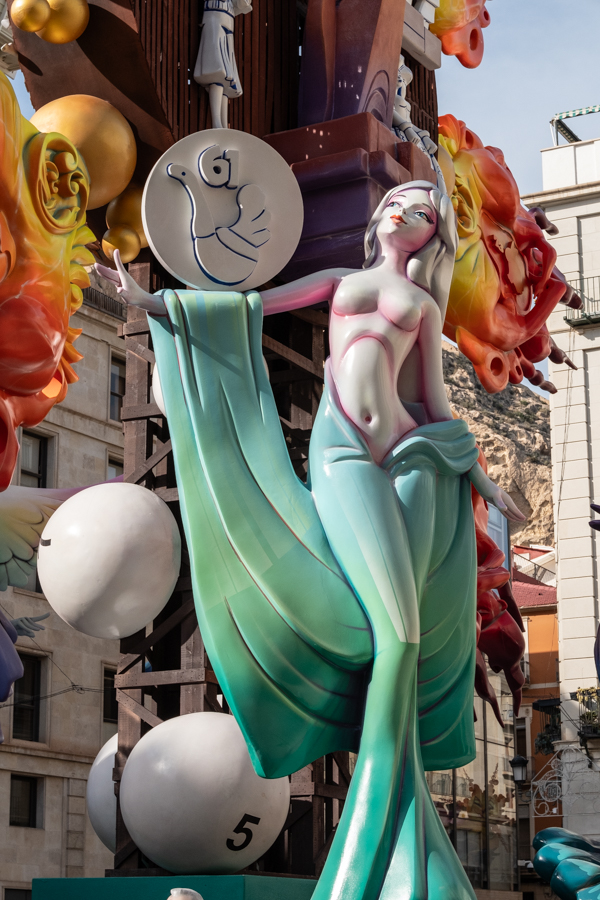
Just about 100-150 meters from Plaza Puerta del Mar is Alicante’s city hall, on Plaza del Ayuntamiento. And of course there was a huge hoguera there:
25_26
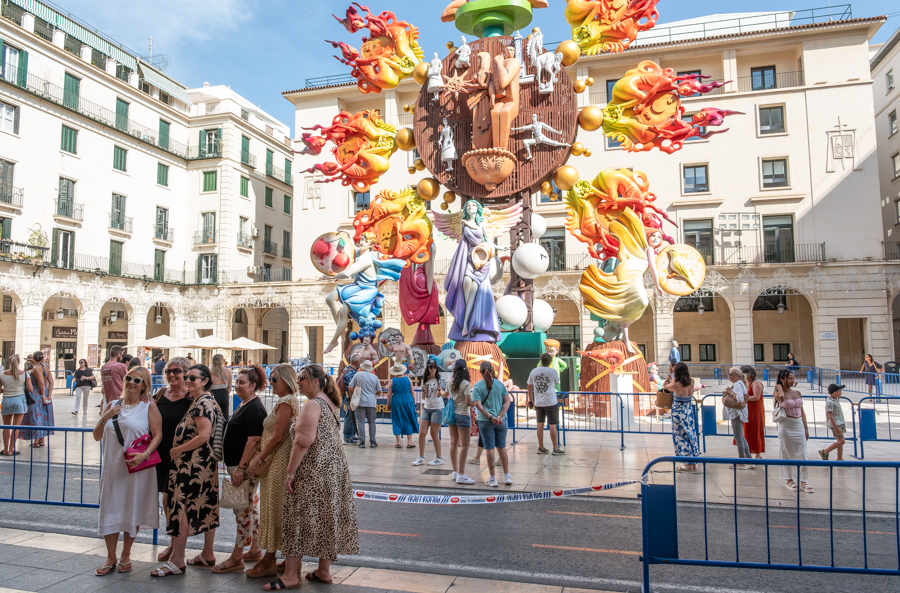
Here, lots of people come to look, and to have a drink in the many nearby bars:
25_27
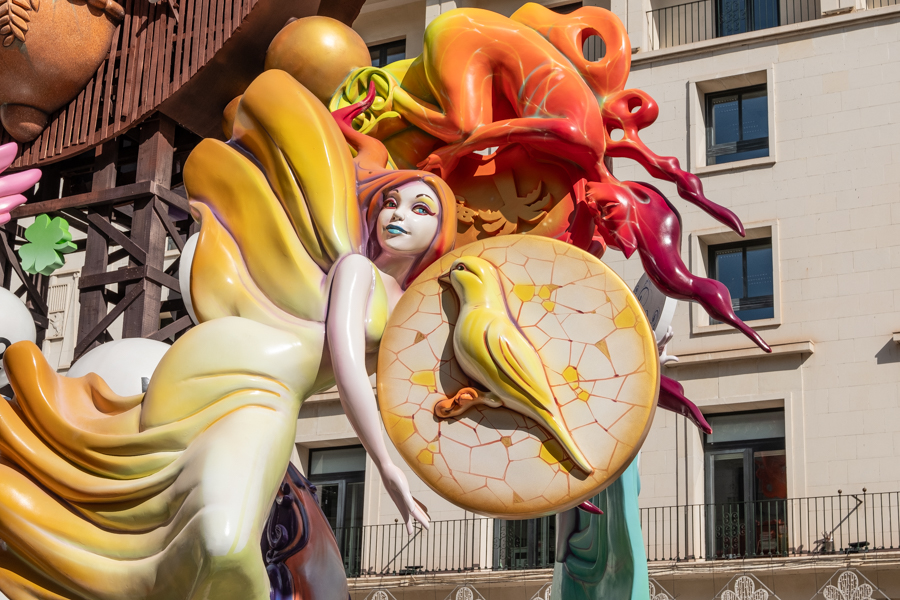
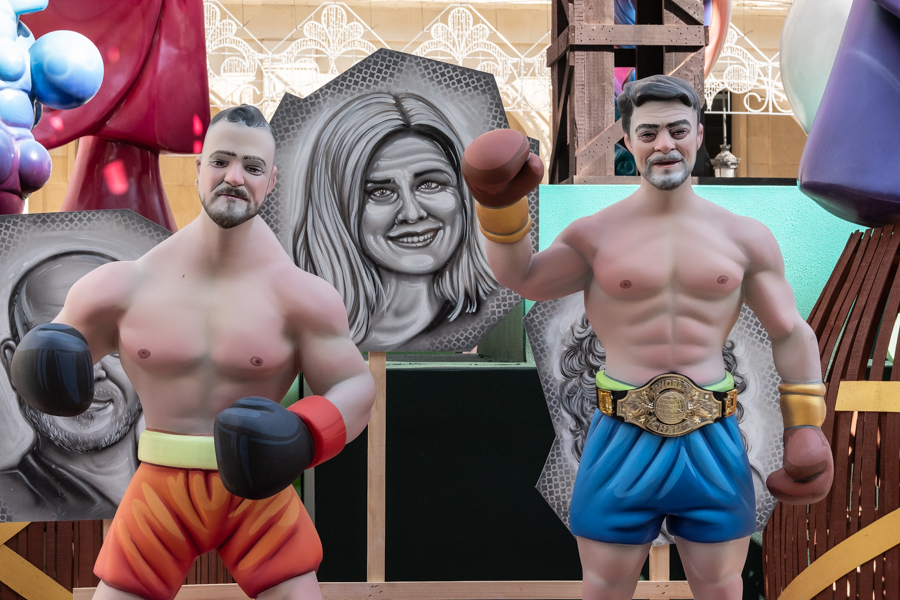
And indeed, the hoguera was impressive:
25_28
25_29
25_30
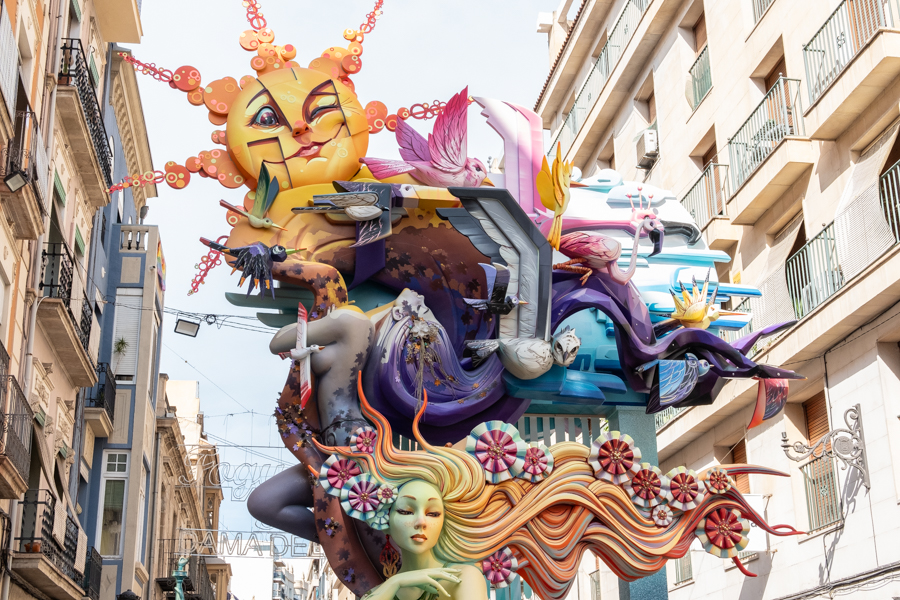
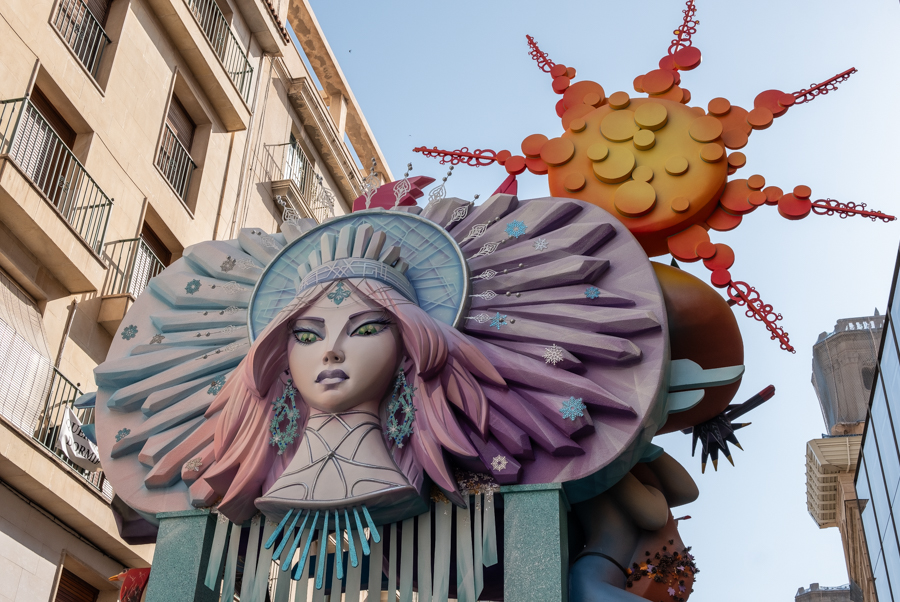
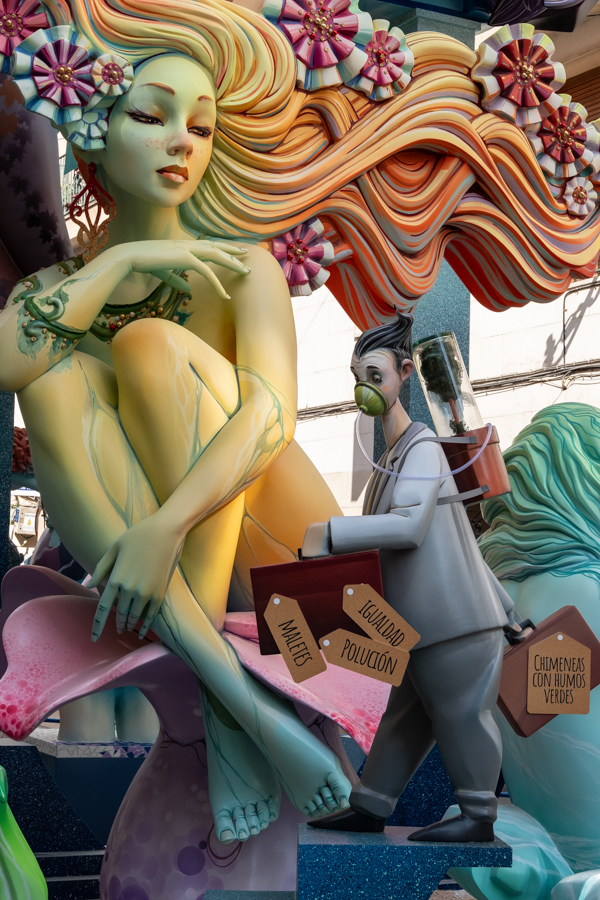
Literally one minute down the street, on one of the narrow streets in the centre, Calle Jorge Juan, there was yet another hoguera:
25_31
25_32
25_33
This hoguera had a distinctly political theme, addressing major issues such as the environment:
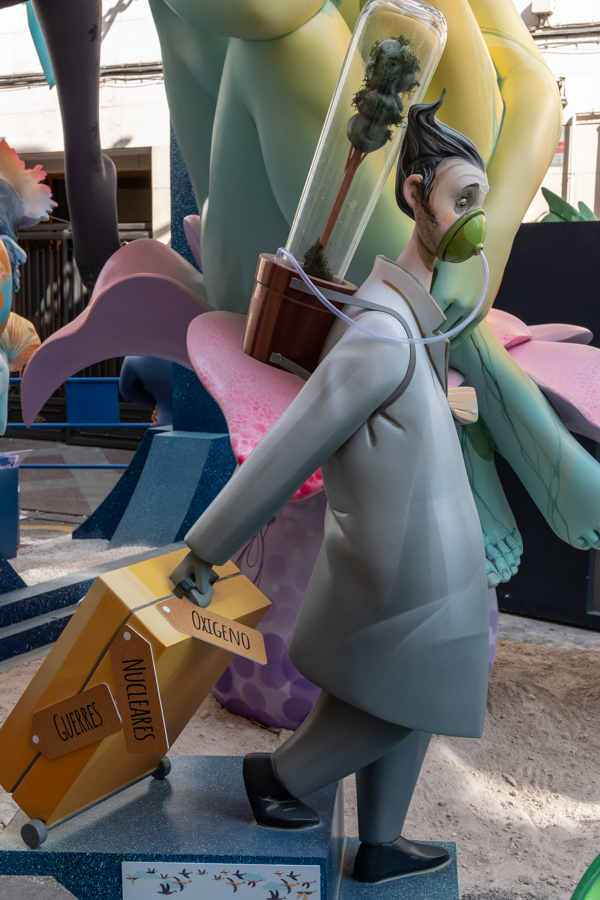
25_34
Conversation:
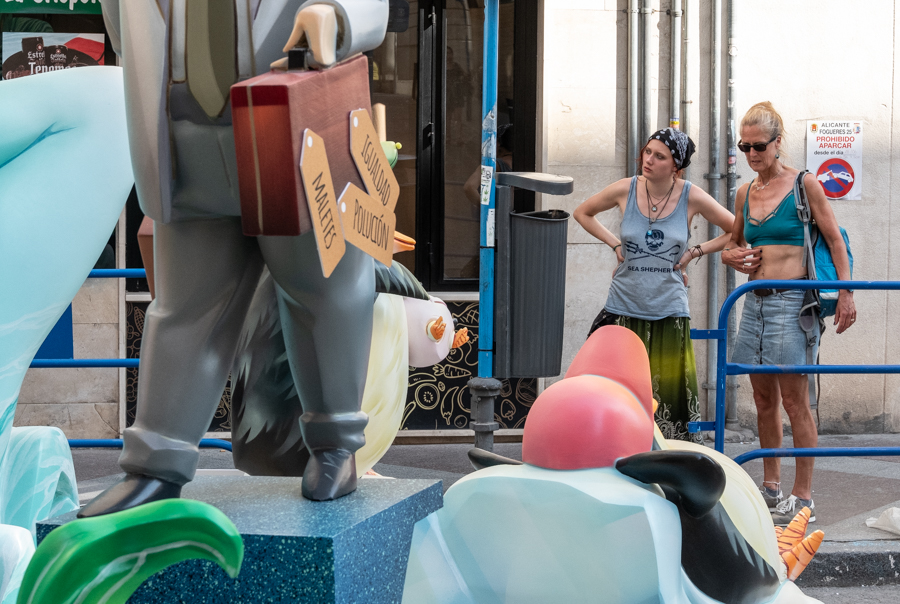
25_35
The actions of the current regime in the US was a major theme:
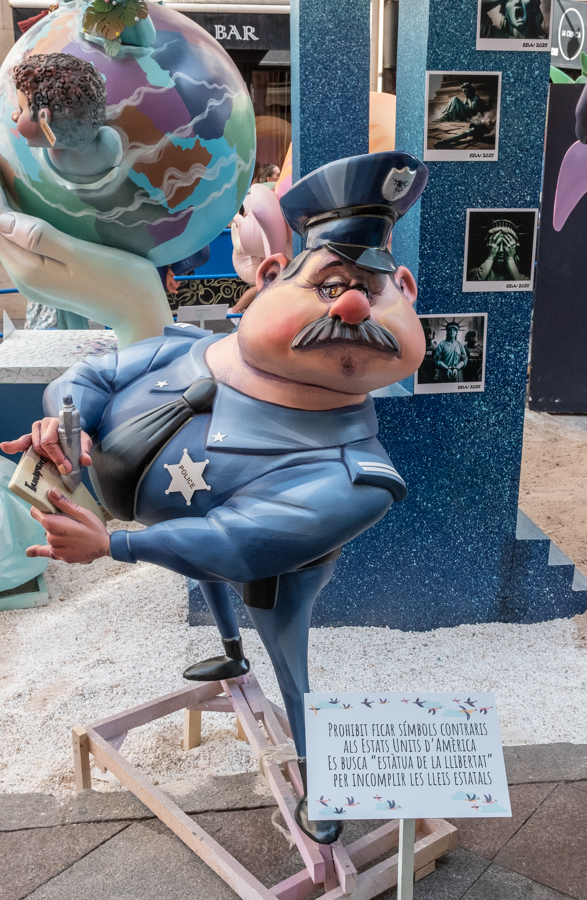
25_36
A shopkeeper on Calle Jorge Juan, not too happy about the fiesta, there is no business during this week:
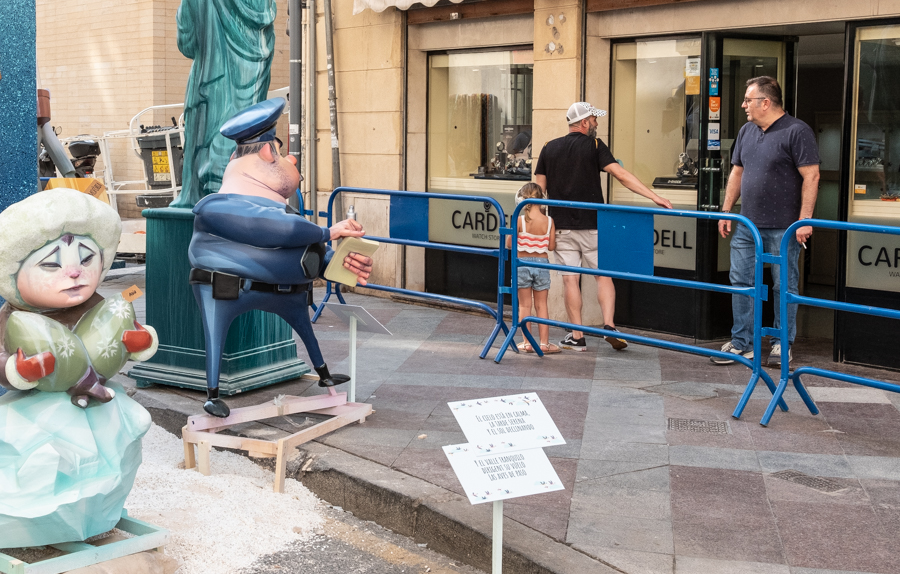
25_37
Passer-by:
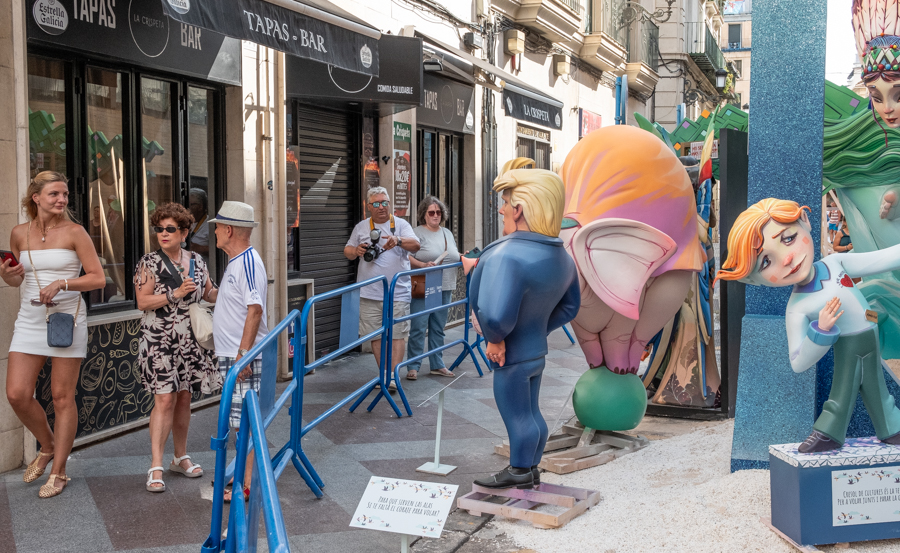
25_38
A face I can’t stand:

25_39
Yes, he’s a clown but a dangerous clown:

25_40
Do not seperate families:
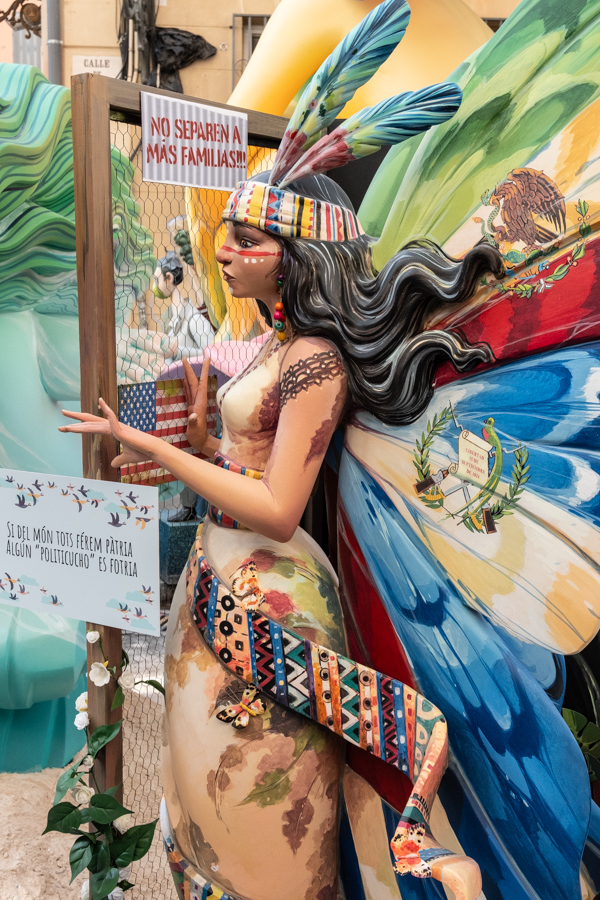
25_41
History will judge Trump’s treatment of immigrants (in Valenciano):
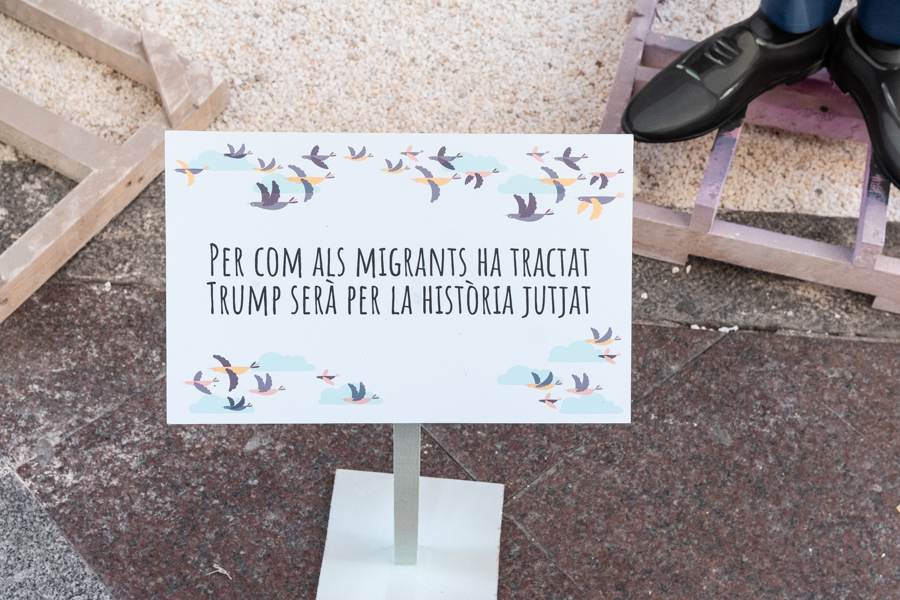
25_42
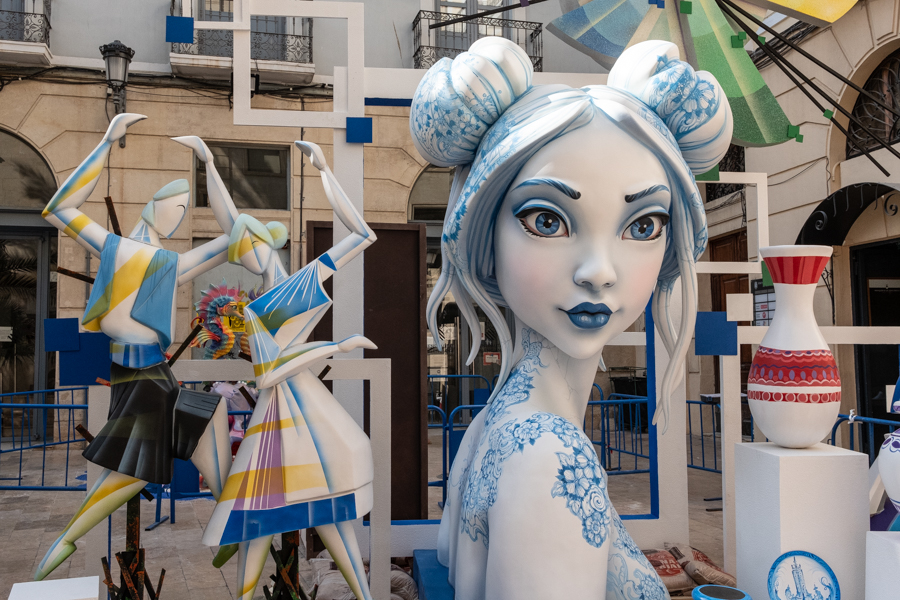
I walked back towards the city hall, passing another square, Plaza SantÃsima Faz, which also had a small hoguera:
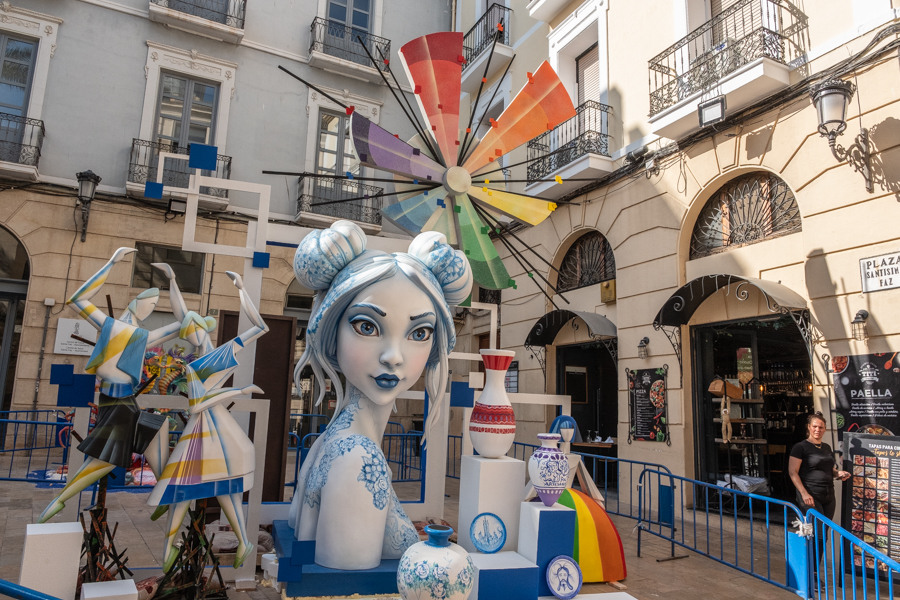
25_43
25_44
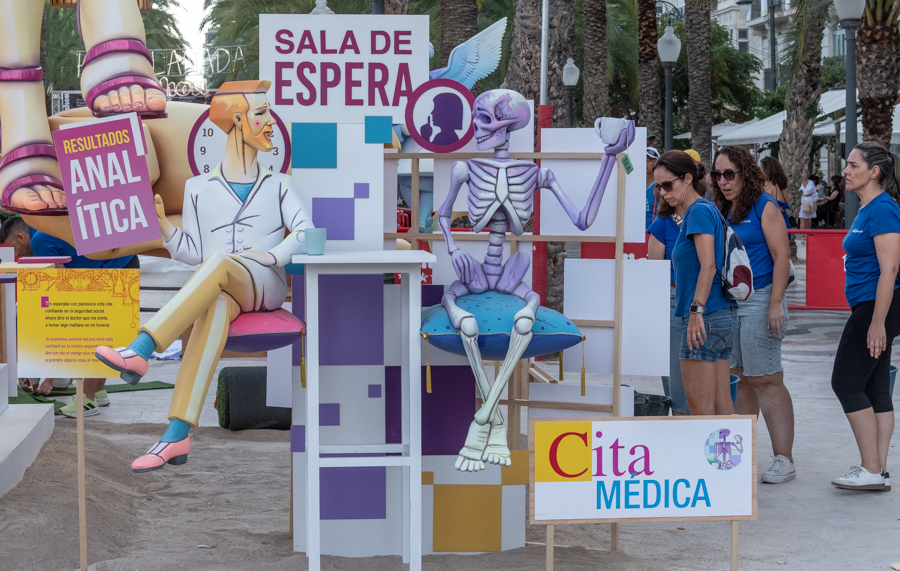
The last hoguera I passed was on the main pedestrian street along the waterfront, Esplanada de España. Its theme was the public health service, especially the long waiting times:
25_45
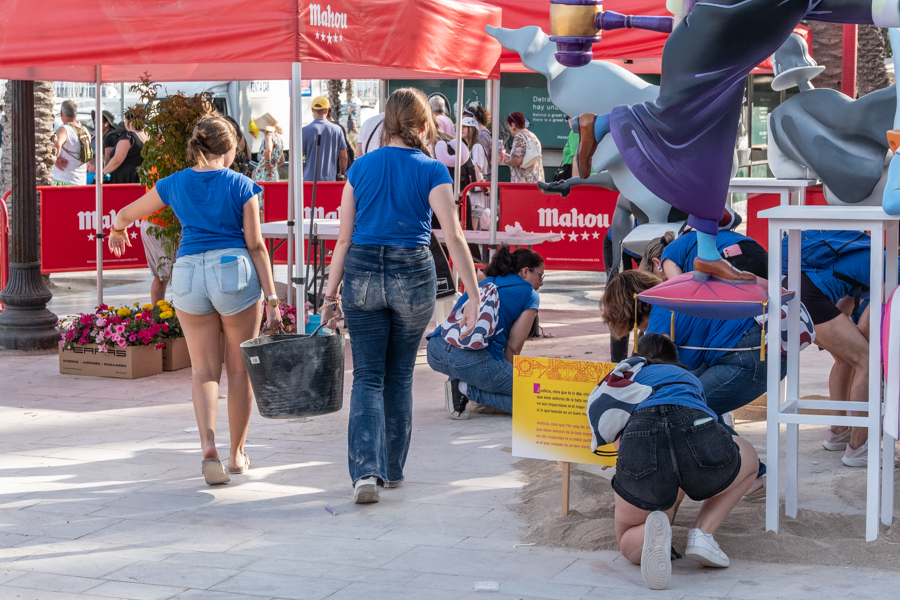
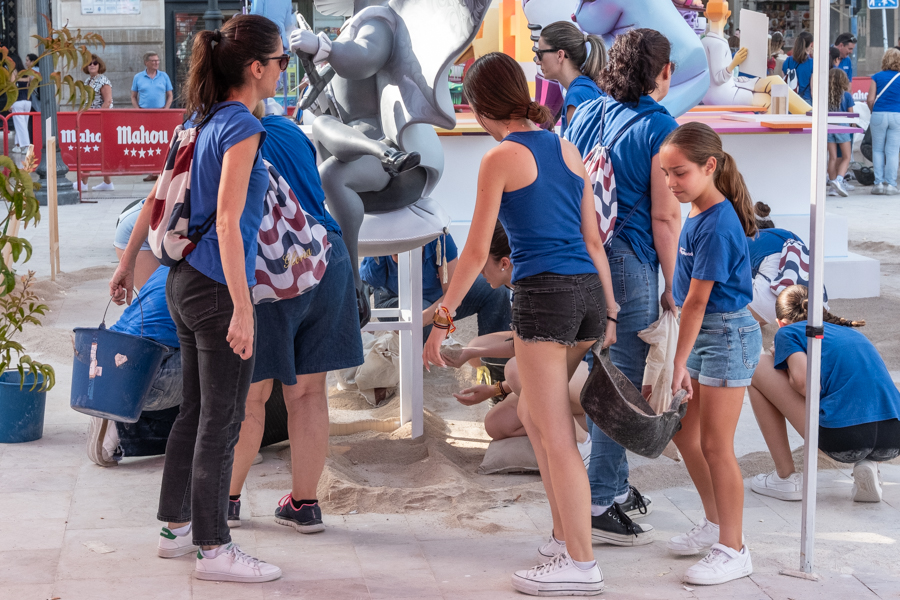
Like the other hogueras I saw during my walk, this one was still work in progress:
25_46
25_47
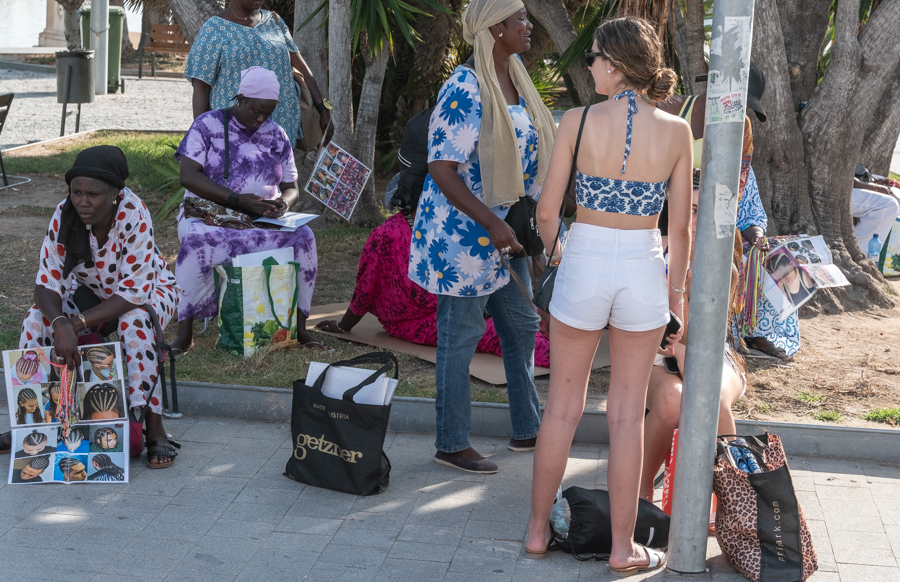
Just before descending into the parking garage at Plaza Puerta del Mar, I snapped this photo of the African women offering braiding services in a spot where many tourists pass by. It is strictly speaking not legal, and occasionally they are chased away by police, but most of the time they are able to ply their trade:
25_48
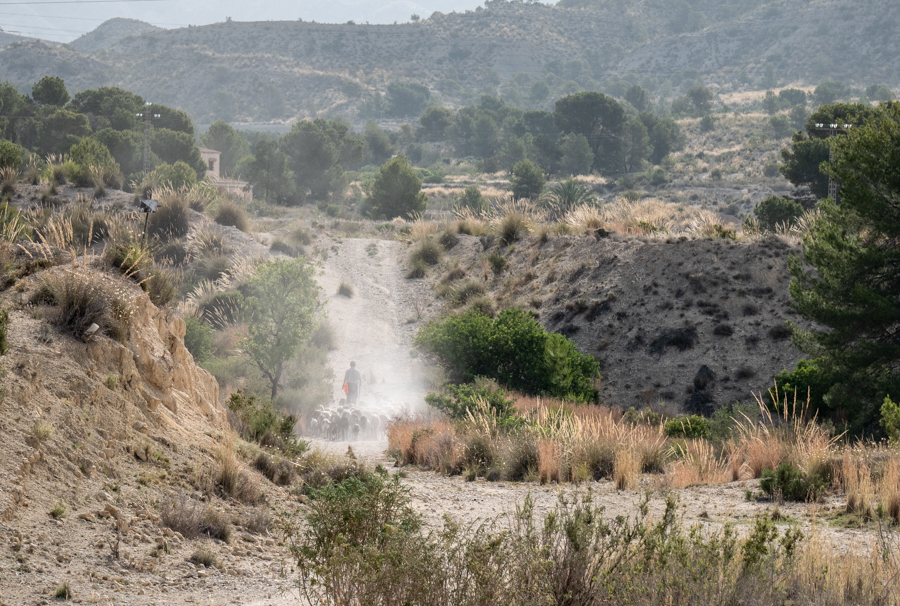
I finish with the some photos from the weekend’s cycling. On the way to Jijona, I saw this scene. To me it says “hot and dusty”:
25_49
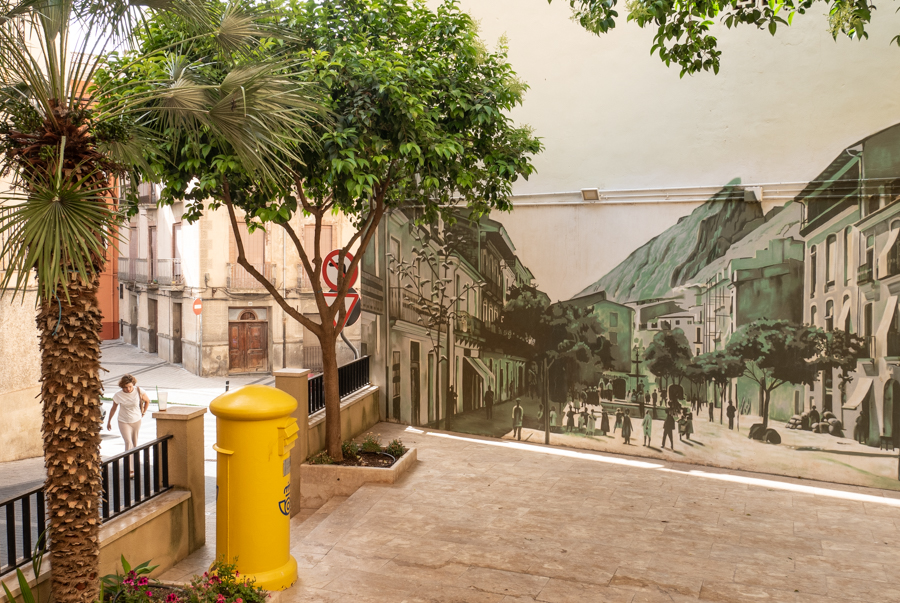
This little square with a mural is one of my favourite places to take a break in Jijona:
25_50
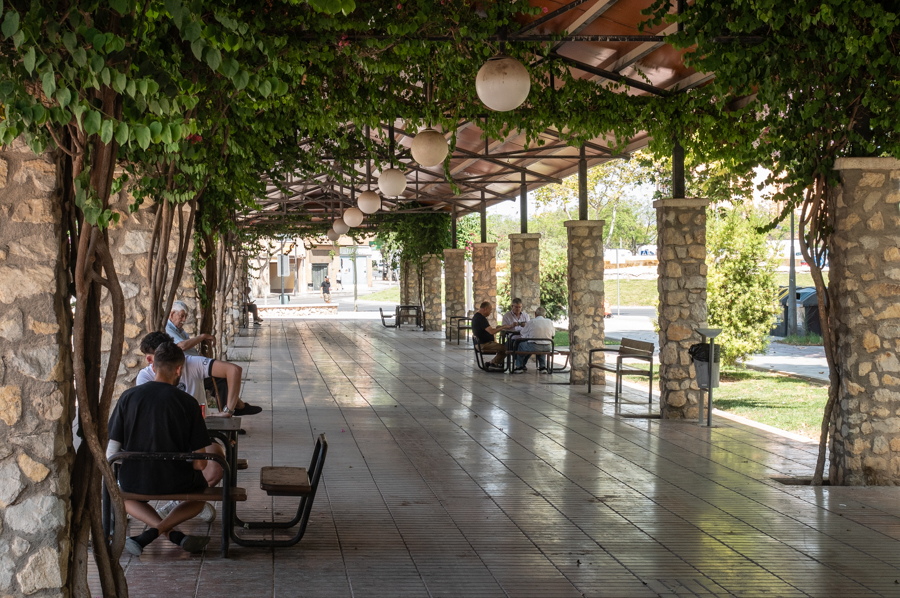
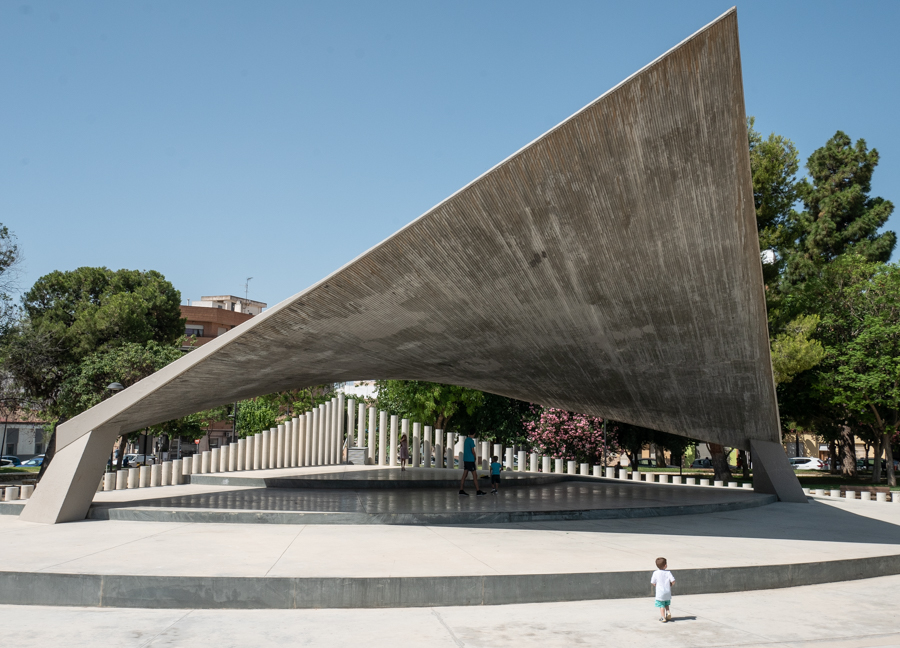
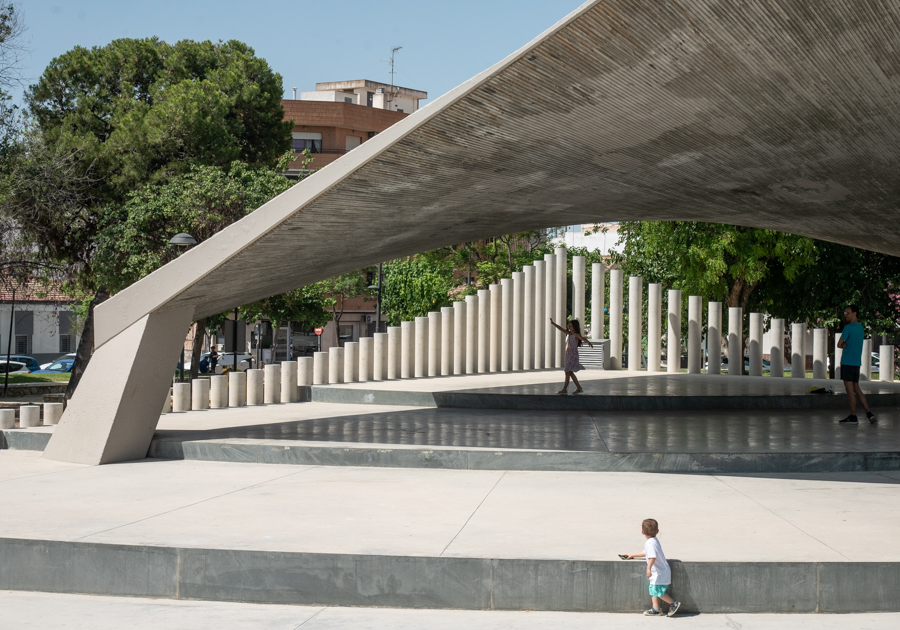
On my way back from another ride, I passed the town of San Vicente, in effect a suburb of Alicante and home of the main campus of the University of Alicante. I had passed this spot many times, but this time I stopped to have a look. There is a lovely covered area where people hang out on hot days to take advantage of the shade:
25_51
There is a stage of some sort, presumably used for performances, but on this day it was just a place for children to play:
25_52
25_53
I finish with a photo of Mochi, keeping me company while I edit my photos: